
iHeartDogs is reader-supported. When you buy via links on our site, we may earn an affiliate commission at no extra cost to you.
The best dog strollers make it easier for dogs to enjoy outdoor adventures when long walks aren’t comfortable or practical. Whether you’re shopping for a senior dog stroller, a lightweight pet stroller for a small breed, or a heavy-duty dog stroller for larger pups, the right model can help your companion enjoy fresh air, neighborhood walks, and family outings without having to keep up on foot.
Dog strollers aren’t just for pampered pups. They can be especially helpful for older dogs with reduced stamina, small dogs that tire on long outings, and dogs recovering from certain injuries or procedures, with a veterinarian’s approval. They’re also convenient for navigating busy events, traveling with multiple pets, or bringing a dog along when the day’s activities involve more walking than they’re accustomed to.
With so many options available, choosing the best pet stroller means looking beyond appearance and price. Weight capacity, interior dimensions, wheel design, ventilation, safety restraints, and folding mechanisms all affect how comfortable and practical a stroller will be. From compact everyday models to all-terrain dog strollers and jogging-friendly designs, these dog strollers offer different features for different lifestyles.
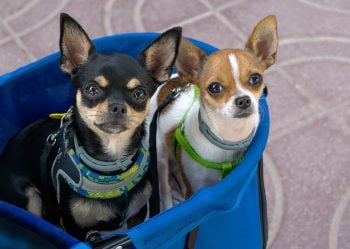
11 Best Dog Strollers for Everyday Walks, Travel, and Outdoor Adventures
The best dog stroller for your family depends on your dog’s size, mobility, and how you plan to use it. A lightweight stroller for neighborhood walks may be perfect for a small senior dog, while larger breeds or active families may need a roomier model with more substantial wheels and suspension.
1. Pet Gear No-Zip AT3 Pet Stroller
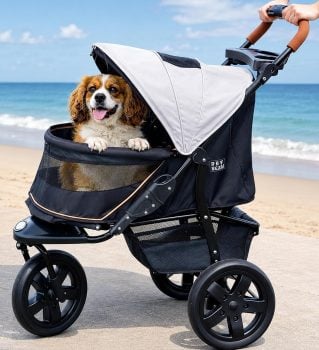
The Pet Gear No-Zip AT3 Pet Stroller is designed for dog parents who want easier access and outdoor versatility. Its zipperless entry system eliminates the need to line up and close a traditional zipper whenever your dog gets in or out, which can be particularly convenient for dogs who are impatient to get moving or for anyone who regularly opens the stroller during outings.
The AT3’s three-wheel design makes it worth considering for walks where maneuverability matters. It’s an appealing style for dog parents who want a stroller that can handle everyday outdoor adventures without feeling overly complicated to operate. Before purchasing, check the current model’s weight limit, interior measurements, wheel specifications, and folding dimensions to ensure it suits your dog and your vehicle.


2. Gen7Pets Regal Plus Pet Stroller
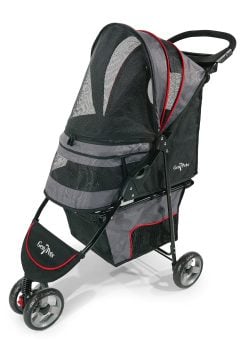
A compact pet stroller can make a big difference for little dogs with short legs. The Gen7Pets Regal Plus Pet Stroller is an everyday stroller option for dog parents who want to bring their companions along on neighborhood outings, shopping trips where pets are permitted, and leisurely outdoor walks.
A stroller in this category can be especially appealing for small dogs who enjoy being outdoors but can’t comfortably walk for extended periods. When comparing the Regal Plus with other models, pay attention to the usable cabin space, ventilation, storage features, and how easily it folds for transportation. A stroller that’s comfortable for your dog but difficult to lift or store may become less convenient over time.
3. Pet Gear No-Zip Happy Trails Lite Pet Stroller
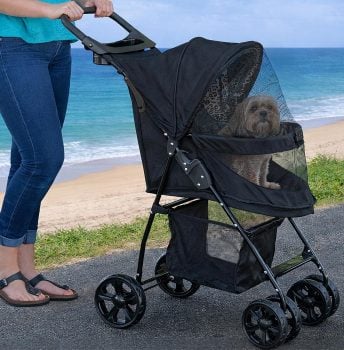
For pups who love tagging along but appreciate a little help with the journey, the Pet Gear No-Zip Happy Trails Lite Pet Stroller offers another zipperless option from Pet Gear. Its design is intended for everyday pet transportation, and the No-Zip concept is particularly convenient when you’re making frequent stops or helping a dog settle into the stroller.
This model is worth exploring for smaller dogs who need a comfortable place to rest during outings. When choosing between the Happy Trails Lite and larger Pet Gear models, compare the weight capacity, cabin dimensions, wheel design, and folded size rather than assuming all No-Zip strollers offer the same features. A properly sized stroller should allow your dog to sit, turn around, and settle comfortably.
4. Pawccoli Pet Stroller
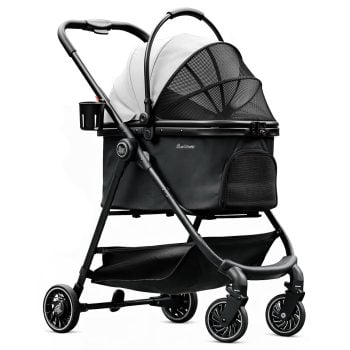
A detachable carrier can make outings feel a little less complicated, and the Pawccoli Pet Stroller is designed with that kind of convenience in mind. This model is marketed with a detachable carrier, one-click functionality, and breathable construction, making it an interesting choice for dog parents who want a more flexible pet transportation setup.
Detachable-carrier designs can be useful when transitioning between walking and other activities, although the exact ways a carrier may be used depend on the manufacturer’s instructions. Before buying, verify how the carrier attaches, whether it can be safely used independently, and how much weight the stroller supports. It’s also important to check the interior space, ventilation, and locking mechanisms to make sure your dog can ride comfortably and securely.
5. Bicystar Dog Stroller with Detachable Carrier
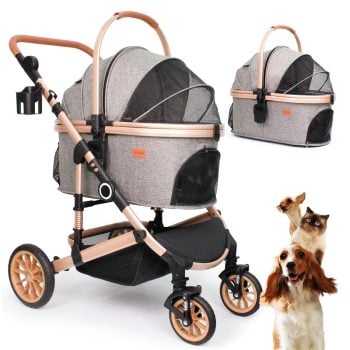
The Bicystar Dog Stroller with Detachable Carrier combines a wheeled stroller design with a removable pet compartment. This type of setup can be appealing when you want a convenient way to transport your dog without relying on a separate carrier for every outing.
The biggest consideration with a detachable stroller is how securely the carrier connects to the frame and how easy it is to remove and reinstall. Look closely at the manufacturer’s instructions for proper use, along with the stroller’s capacity, cabin dimensions, ventilation, and folding mechanism. A removable carrier is only a practical advantage when the entire system is comfortable for your dog and manageable for you.
6. VIVO Four-Wheel Pet Stroller
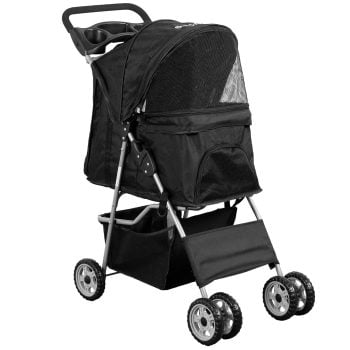
Sometimes a simple four-wheel design is exactly what a dog parent needs. The VIVO Four-Wheel Pet Stroller offers a traditional stroller layout for transporting smaller pets during everyday outings. For dogs who enjoy observing their surroundings while riding, a comfortable stroller can provide a convenient alternative when walking the entire route isn’t practical.
Four-wheel pet strollers are worth comparing for their stability, steering, and performance on the surfaces you use most often. The wheel layout alone doesn’t determine how smoothly a stroller rides, so check the tires, turning mechanism, brakes, and construction. Also consider whether the stroller folds compactly enough to fit in your car or storage space.
7. Pet Gear Expedition No-Zip Stroller
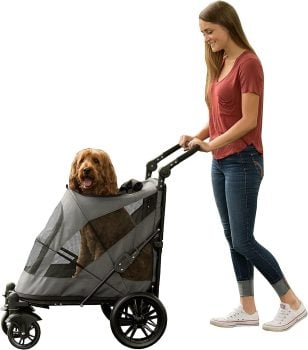
Bigger adventures sometimes call for a roomier ride, and the Pet Gear Expedition No-Zip Stroller is a model worth considering when your dog needs more space than a compact stroller can provide. Its zipperless design also offers convenient access, which can be helpful when assisting a dog into or out of the cabin.
Larger dog strollers are particularly important for dogs who cannot comfortably fit into standard small-pet models. However, a stroller marketed for bigger pets still needs to be evaluated against your dog’s actual weight, height, length, and ability to enter safely. Check the Expedition’s current weight rating, cabin dimensions, entry height, wheel design, and braking system before purchasing.
8. Best Choice Products 2-in-1 Pet Stroller and Trailer
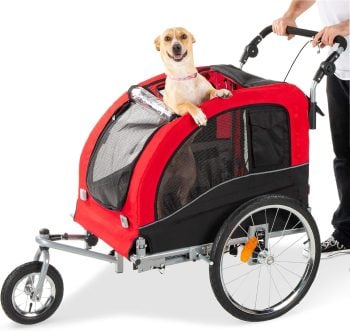
For families whose adventures don’t always happen on foot, the Best Choice Products 2-in-1 Pet Stroller and Trailer offers a versatile design intended to accommodate different outdoor activities. Combining stroller and trailer functionality can be appealing to dog parents who enjoy walking and cycling, provided the model is used only in its manufacturer-approved configurations.
Convertible pet transportation equipment requires special attention to safety. Check the permitted uses, attachment system, weight limits, wheel specifications, and any restrictions involving bicycles or speed. Never assume a stroller is suitable for jogging, cycling, or other higher-speed activities simply because it has large wheels or a sporty appearance.
9. ROODO 3 Wheel Pet Stroller
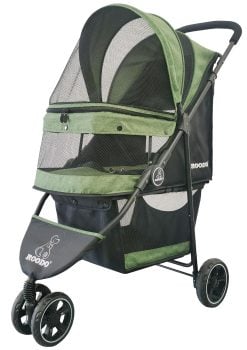
A lightweight stroller can make spontaneous outings much easier, and the ROODO 3 Wheel Pet Stroller is marketed as a lightweight, multifunctional three-wheeled option. This style may appeal to dog parents who want something manageable for routine walks, short trips, and everyday adventures.
When shopping for a lightweight dog stroller, consider more than the number on the scale. A stroller should still feel stable when turning, offer reliable brakes, and provide enough space for your dog to ride comfortably. Check its actual assembled and folded dimensions, weight capacity, and wheel specifications before deciding whether it’s the right match for your routine.
10. Ibiyaya The Beast Dog Jogging Stroller
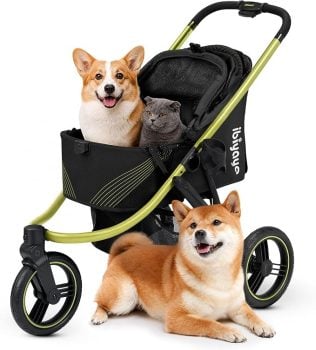
For dogs who love being part of the adventure, even when they’re not doing the running, the Ibiyaya The Beast Dog Jogging Stroller is designed for more active outdoor use. Its model description emphasizes different terrains and zipperless access, making it worth exploring for dog parents who want something beyond a basic neighborhood stroller.
Jogging strollers need to be evaluated differently from ordinary pet strollers. Wheel stability, steering, suspension, braking, and manufacturer-approved jogging speeds all matter, particularly when traveling over uneven surfaces. Check the current specifications and safety instructions carefully before jogging with your dog aboard, and never exceed the model’s stated operating limits.
11. Zoosky Dog Stroller
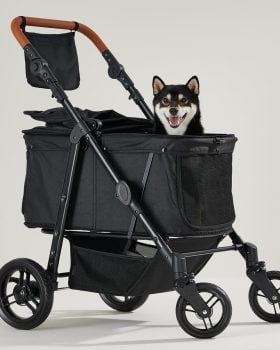
For pups who need a comfortable ride when the sidewalk ends, the Zoosky Dog Stroller is marketed as an all-terrain model with adjustable, dual-opening, and waterproof-related features. These are useful characteristics to investigate when shopping for a stroller intended for varied outdoor conditions.
All-terrain dog strollers can be appealing for families who walk on park paths, grass, or uneven pavement. However, the phrase all-terrain doesn’t guarantee that a stroller will handle every surface safely. Compare the wheel size, suspension, braking system, cabin dimensions, and manufacturer-approved terrain before purchasing, especially if you plan to use it away from smooth sidewalks.
Dog Stroller Comparison Guide
Different dog stroller styles solve different problems. This quick comparison can help narrow your choices before you start looking at specific models.
| Stroller Type | Main Advantage | Things to Consider |
| Lightweight dog stroller | Easier to lift, store, and transport | Weight capacity, cabin size, stability |
| Four-wheel dog stroller | Familiar stroller layout for everyday outings | Steering, wheel quality, brakes |
| Three-wheel dog stroller | Often designed with maneuverability in mind | Front-wheel design and terrain suitability |
| Large dog stroller | More room for bigger or multiple pets | Interior dimensions, entry height, total weight |
| Detachable-carrier stroller | More flexible transportation setup | Carrier locking mechanism and approved uses |
| All-terrain dog stroller | Intended for more varied outdoor surfaces | Suspension, tires, brakes, terrain limitations |
| Dog jogging stroller | Designed for more active outings | Approved speeds, wheel stability, jogging safety |
| Stroller-trailer combination | Multiple transportation configurations | Conversion instructions, attachments, safety restrictions |
Why Use a Dog Stroller?
Dog strollers can make outdoor activities more accessible for dogs who cannot comfortably walk as far as their humans. They’re also useful for certain travel situations, crowded environments, and families with dogs who have very different exercise needs.
Dog Strollers for Senior Dogs
Older dogs may still enjoy the sights, sounds, and smells of outdoor adventures even when their stamina has declined. A stroller can allow them to participate in family walks without requiring them to cover the entire distance on foot.
This can be especially useful for senior dogs who tire more quickly or need frequent breaks. However, older dogs still benefit from appropriate movement when they’re physically able, so a stroller should complement rather than automatically replace exercise.
Dog Strollers for Dogs With Arthritis
Dogs with arthritis may have difficulty walking long distances or navigating uneven ground. A stroller can sometimes help them enjoy outdoor time while reducing the amount of walking required.
However, arthritis management typically involves an individualized plan that may include veterinary care, weight management, appropriate exercise, and other treatments. A stroller doesn’t treat arthritis, and dogs with mobility problems may need a low-entry model or assistance getting into the cabin.
Dog Strollers for Small Dogs
Small dogs can enjoy long walks, but their shorter legs may make certain outings more demanding. A stroller can be helpful during extended shopping trips, outdoor events, or family walks that involve more distance than a particular dog comfortably handles.
A compact dog stroller may also be easier to maneuver and store than a heavy-duty model. Still, small size doesn’t automatically mean a dog needs a stroller, and healthy dogs should continue getting suitable exercise.
Dog Strollers for Puppies
A stroller may be useful for certain puppy outings when walking the entire route isn’t appropriate. It can provide a way to observe the environment while remaining contained, although puppies still need safe, positive opportunities to explore and learn.
Talk with your veterinarian about vaccination status and exposure risks before visiting busy dog areas. A stroller should not replace age-appropriate socialization, supervised exploration, or opportunities for normal movement.
Dog Strollers for Injured or Recovering Dogs
Some dogs recovering from surgery or injury may need restricted activity. In certain cases, a veterinarian may approve a stroller for transportation or carefully managed outdoor time.
Always follow the veterinarian’s specific instructions, since some injuries require strict rest or special handling. A stroller is not automatically appropriate for every recovering dog, particularly if movement, jostling, or getting in and out could interfere with healing.
How to Choose the Best Dog Stroller
Choosing a dog stroller starts with understanding your dog’s needs and how you plan to use it. The following features can make a major difference in comfort, safety, and everyday convenience.
1. Check the Weight Capacity
Every dog stroller has a maximum recommended weight capacity. Your dog’s weight should fall within the manufacturer’s limit, and any additional items carried in the cabin must be considered.
Don’t choose a stroller solely because its weight rating seems sufficient. A dog can be under the weight limit and still be too tall or long to ride comfortably.
2. Measure the Interior Cabin
Interior dimensions are among the most important specifications when comparing dog strollers. Measure your dog and look for enough usable room to sit naturally, turn around, and settle into a comfortable resting position.
The exterior dimensions of a stroller can be misleading because the frame, padding, and canopy take up space. Always compare your dog’s measurements with the actual interior compartment.
3. Consider Wheel Size and Terrain
Small wheels may work well on smooth sidewalks and indoor surfaces, while larger wheels can be useful on uneven pavement or outdoor paths. Tire construction, suspension, and steering design also influence how smoothly a stroller moves.
If you frequently visit parks, trails, or grassy areas, look for a model specifically approved for those surfaces. Don’t assume that every three-wheel stroller is designed for jogging or that every all-terrain stroller can safely travel over rough ground.
4. Look for Reliable Brakes and Safety Tethers
A secure braking system is essential for preventing unintended movement when the stroller is parked. Check how the brakes operate and whether they’re easy to engage and release.
An interior tether can help prevent a dog from unexpectedly jumping out, but it should be attached to a properly fitted harness rather than a neck collar. Follow the manufacturer’s restraint instructions and never leave your dog unattended in a stroller.
5. Prioritize Ventilation and Visibility
Dogs need adequate airflow while riding, especially in warm weather. Mesh panels can provide ventilation and allow curious pups to observe their surroundings.
A stroller canopy may provide shade, but it doesn’t make the enclosed space safe in high temperatures. Avoid using a stroller in conditions where your dog could overheat, and monitor for signs of heat stress.
6. Check the Entry Height
Entry height is particularly important for senior dogs and those with mobility limitations. A low-entry stroller may be easier for a dog to use than a design that requires stepping over a tall frame.
For larger dogs, consider how you will safely assist them into the cabin if they cannot climb in independently. Lifting a heavy dog into a stroller may be difficult or unsafe for some households.
7. Compare Folding and Storage Features
A dog stroller should fit comfortably into your everyday routine. If you plan to transport it frequently, check the folded dimensions, total weight, and whether the folding process requires removing accessories.
Storage baskets, cup holders, and removable carriers may add convenience, but they shouldn’t outweigh the importance of a secure, comfortable cabin. Choose features you’ll actually use rather than paying for extras that don’t suit your lifestyle.
Dog Strollers for Small Dogs vs. Large Dogs
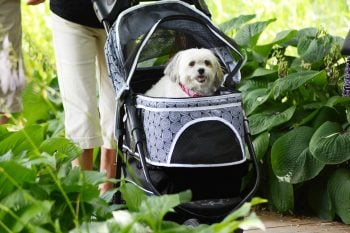
Small and large dogs often need very different stroller designs. Understanding those differences can help prevent purchasing a model that’s technically within the weight limit but uncomfortable in practice.
Best Features for Small Dog Strollers
Small dogs may do well in lightweight, compact strollers with appropriately sized cabins. Easy folding, manageable stroller weight, and secure interior restraints are often particularly useful.
However, a very small cabin can feel restrictive even for a lightweight dog. Make sure your pup can change positions comfortably rather than remaining confined to a single posture.
Best Features for Large Dog Strollers
Large dogs need adequate interior length, width, and height in addition to sufficient weight capacity. Strong construction, dependable brakes, and a stable wheelbase become especially important as the total load increases.
Low-entry designs can be particularly helpful for larger senior dogs who have difficulty stepping or jumping. Consider the weight of the stroller itself, since transporting a heavy-duty model may require additional effort.
Can Two Dogs Share One Stroller?
Some dog strollers are designed to accommodate multiple pets, but the total weight and usable space must be sufficient for both animals. Each dog should be able to sit or lie comfortably without being crowded.
It’s also important to consider how well the dogs tolerate close contact. Even dogs who get along at home may prefer separate spaces during travel, especially if they’re nervous or easily overstimulated.
Are Dog Strollers Safe?
Dog strollers can be a practical transportation option when they’re appropriately sized, securely constructed, and used according to the manufacturer’s instructions. Safety depends on the specific stroller, the dog riding inside, the environment, and the way the stroller is operated.
Before every outing, check the wheels, brakes, frame locks, canopy, and restraint attachments. Make sure the stroller is fully opened and secured before placing your dog inside.
Use an appropriate harness and any manufacturer-provided interior tether according to the instructions. Avoid attaching restraints in ways that could create an entanglement hazard or put pressure on your dog’s neck.
Never leave a dog unattended in a stroller, especially on an incline or in warm weather. Keep the stroller away from unsafe traffic situations and avoid surfaces or speeds the manufacturer hasn’t approved.
Can You Jog With a Dog Stroller?
Not every dog stroller is suitable for jogging. Even models with three wheels or large tires may be intended only for walking speeds.
A dog jogging stroller should be specifically approved by its manufacturer for jogging and used within the stated operating limits. Look for appropriate wheel stability, braking features, and instructions for safe operation.
If your dog is a senior, recovering from an injury, or sensitive to movement, discuss the suitability of jogging-stroller rides with your veterinarian. A faster ride may not be comfortable or appropriate for every dog.
How to Get Your Dog Comfortable Riding in a Stroller
Some dogs settle into a stroller almost immediately, while others need time to understand that the new equipment is safe. A gradual introduction can help create a more positive experience.
Start With the Stroller Parked
Place the stroller on a flat, stable surface and engage the brakes. Let your dog investigate it without pressure, rewarding calm curiosity with treats or praise.
Avoid forcing your dog inside if they seem frightened. Give them time to approach and explore at their own pace.
Make the Cabin Comfortable
Add an appropriate, secure mat or familiar blanket if the manufacturer permits it. Familiar scents and a comfortable resting surface may help your dog feel more relaxed.
Make sure any added bedding doesn’t interfere with restraints, ventilation, or the stroller’s safe operation. Avoid loose items that could become tangled around your dog.
Practice Very Short Rides
Once your dog is comfortable sitting inside the stationary stroller, try moving it slowly for a short distance. Reward relaxed behavior and stop if your dog shows signs of distress.
Gradually increase the length of rides as your dog becomes more comfortable. A positive experience is more important than covering a particular distance.
Watch Your Dog’s Body Language
A relaxed dog may sit or lie comfortably, look around, and respond normally to their surroundings. A frightened dog may pant excessively, tremble, attempt to escape, or remain unusually tense.
If your dog seems distressed, stop and reassess the situation. Some dogs need a slower introduction, while others may simply prefer walking or a different form of transportation.
Frequently Asked Questions About Dog Strollers
1. Are Dog Strollers Worth It?
Dog strollers can be worth considering for senior dogs, small dogs, dogs with limited stamina, and families who enjoy longer outings. The value depends on how often you’ll use the stroller and whether it genuinely makes activities more comfortable for your dog.
2. What Is the Best Dog Stroller for Small Dogs?
The best stroller for a small dog offers adequate interior space, secure restraints, good ventilation, and a manageable design for everyday use. Lightweight models may be convenient, but stability and fit should take priority over portability alone.
3. What Is the Best Dog Stroller for Large Dogs?
Large dogs need a stroller with a suitable weight capacity, spacious interior, stable construction, and dependable brakes. A low-entry design may also be useful for larger dogs with mobility limitations.
4. Are Dog Strollers Good for Senior Dogs?
Dog strollers can help senior dogs participate in outdoor activities when they tire easily or cannot walk long distances comfortably. They should still receive appropriate exercise and movement according to their health and veterinary recommendations.
5. Can Dogs With Arthritis Use Strollers?
Some dogs with arthritis may benefit from stroller rides that reduce the amount of walking required during longer outings. However, a stroller doesn’t treat arthritis, and a veterinarian can help determine whether it’s appropriate for your dog’s mobility needs.
6. How Do I Know What Size Dog Stroller to Buy?
Start by checking your dog’s weight and measuring their body dimensions. Compare those measurements with the stroller’s interior cabin size and weight capacity rather than relying only on breed recommendations.
7. Are Three-Wheel Dog Strollers Better Than Four-Wheel Models?
Neither wheel configuration is automatically better for every situation. Steering, stability, tire quality, suspension, and intended terrain matter more than the number of wheels alone.
8. Can You Take a Dog Stroller on a Plane?
Airline policies vary, and a regular dog stroller is not necessarily approved as an in-cabin pet carrier. Contact your airline before traveling and verify the rules for both pet carriers and stroller equipment.
9. Can You Use a Dog Stroller on Hiking Trails?
Some all-terrain dog strollers may be suitable for certain maintained trails, depending on the manufacturer’s instructions and trail conditions. Rough terrain, steep slopes, and obstacles can create stability and safety concerns, so check both the stroller’s limitations and the trail’s rules.
10. Can You Put Two Dogs in One Stroller?
Some models can accommodate two dogs if the combined weight and interior space meet the manufacturer’s requirements. Both dogs should be comfortable sharing the cabin, and each should be appropriately secured when required.
11. Do Dog Strollers Need Safety Tethers?
An appropriate interior restraint can help reduce the risk of a dog jumping out unexpectedly. Follow the stroller manufacturer’s instructions and attach approved tethers to a properly fitted harness rather than directly to a neck collar.
12. How Do You Clean a Dog Stroller?
Cleaning requirements depend on the stroller’s materials and whether the padding or liners are removable. Follow the manufacturer’s care instructions and regularly remove fur, dirt, and debris from the cabin and wheels.
13. Should Dogs Walk or Ride in a Stroller?
Most healthy dogs benefit from regular opportunities to walk, sniff, explore, and exercise. A stroller can complement those activities when distance, mobility, or environmental conditions make walking the entire route impractical.
Make More Adventures Possible With the Right Dog Stroller
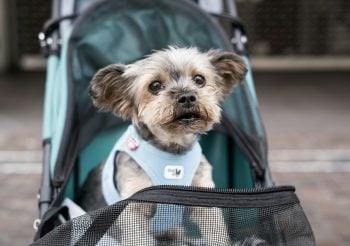
A good dog stroller can help make everyday outings more accessible for dogs who need a little extra support. Whether you’re exploring the neighborhood with a senior companion, taking a small dog on a longer adventure, or looking for a more spacious ride for a larger pup, the right stroller can help keep your dog included in family activities.
The best choice comes down to comfort, safety, and practicality rather than appearance alone. Compare weight limits, interior dimensions, wheel design, entry height, and folding features before buying, and always consider your dog’s individual needs. With a well-fitting stroller and a gradual introduction, you can make room for more fresh air, more shared experiences, and more time enjoying the world together.
This content was created with AI assistance and edited by the iHeartDogs team.
 Toledo, United States.