
Dogs are members of our families, our constant companions, and often our favorite travel partners. Whether we’re heading to the park, visiting friends, or embarking on a cross-country adventure, we want our dogs right there beside us. But have you ever considered what might happen to your dog if you had to slam on the brakes or were involved in a car accident?
Most of us would never dream of driving without buckling our own seat belts, yet many dogs ride in vehicles without any protection at all. Even a well-behaved dog who sits quietly in the back seat can suffer serious injuries during a sudden stop or collision. An unrestrained dog can also become a dangerous distraction or projectile, potentially injuring other passengers.
Fortunately, there are products designed to help protect our four-legged passengers. But with so many harnesses, tethers, and restraints available, how do you choose the best dog seat belt? As with many pet safety products, the answer requires looking beyond the packaging.

Why Your Dog Needs a Seat Belt
When I talk to dog owners about car safety, I encourage them to think about their pets the same way they think about other vulnerable passengers. Dogs cannot anticipate a collision, brace themselves for impact, or understand why the vehicle has suddenly changed direction.
Without proper restraint, a dog can be thrown against the dashboard, windshield, or back of a seat. Even a relatively minor accident can result in painful injuries. And because dogs may panic after a collision, there is also the possibility that an unrestrained pet could escape through an open door or broken window.
There is another important consideration: driver distraction. A dog who unexpectedly climbs into the front seat, paws at the driver, or attempts to squeeze beneath the pedals can create a dangerous situation for everyone on the road.
I love seeing dogs enjoying adventures with their families, but I want those adventures to end with everyone arriving home safely.
What Makes the Best Dog Seat Belt?
One of the biggest misconceptions about dog seat belts is that any product designed to attach a dog to a vehicle will provide adequate protection during a crash. Unfortunately, that is not necessarily true.
Many products marketed as dog seat belts are simply short leashes with buckles that fit into a vehicle’s seat belt receptacle. These devices may keep a dog from wandering around the car, but that does not automatically mean they can withstand the tremendous forces generated during a collision.
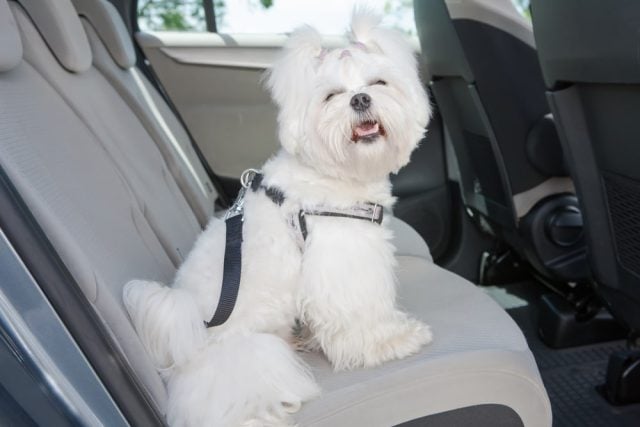
When evaluating a dog seat belt, I recommend paying particular attention to the following features.
1. Independent Crash Testing
This is one of the most important considerations when choosing a car restraint for your dog. Unlike human seat belts, pet restraints are not subject to the same mandatory federal crash-testing requirements. Manufacturers may advertise products as “crash-tested,” but that description alone does not tell us how the testing was conducted or whether the product passed meaningful safety standards.
The Center for Pet Safety is an independent nonprofit organization that evaluates pet travel products using standardized testing procedures. Its research has demonstrated that some commercially available restraints fail to provide adequate protection during simulated collisions.
I strongly encourage dog owners to look for products with documented independent testing and, ideally, certification from the Center for Pet Safety. A manufacturer’s claim that a product has been tested is not the same as proof that it performed successfully.
2. A Harness Designed Specifically for Car Travel
A regular walking harness and a vehicle safety harness serve very different purposes. Walking harnesses are generally designed for comfort, leash control, and distributing pressure during everyday activities. They are not necessarily constructed to withstand the forces of a car accident.
A properly designed vehicle harness should distribute restraint forces across stronger areas of the dog’s body, particularly the chest and shoulders. It should also have durable materials, secure hardware, and a connection system that has been evaluated for vehicle use.
I never recommend attaching a car seat belt tether directly to a dog’s collar. During a sudden stop, the resulting force could place dangerous pressure on the neck and potentially cause severe injuries.
3. Proper Fit for Your Dog’s Body
Even an excellent safety harness cannot do its job properly if it does not fit. Dogs come in an incredible variety of shapes and sizes. A deep-chested Greyhound, a broad-shouldered Bulldog, and a tiny Chihuahua have very different body structures. A restraint that fits one dog beautifully may be completely inappropriate for another.
Before purchasing a harness, carefully measure your dog’s chest and compare those measurements with the manufacturer’s sizing recommendations. Check the weight limits and make sure the product is appropriate for your dog’s build. The harness should fit securely without restricting breathing or causing discomfort. It should not slide excessively, twist around the body, or allow your dog to slip out.
As a veterinarian, I also encourage owners to consider their dogs’ individual medical needs. Dogs with arthritis, spinal problems, respiratory difficulties, or other physical limitations may require special consideration when selecting a restraint.
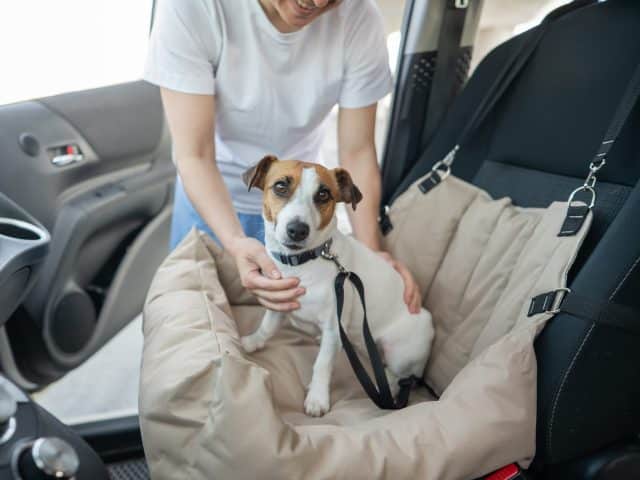
4. A Secure Connection to the Vehicle
How a restraint attaches to your vehicle is just as important as the harness itself.
Some crash-tested harnesses use the vehicle’s existing seat belt, while others have specific attachment systems. The important thing is to follow the manufacturer’s instructions exactly.
I would be cautious about purchasing long, adjustable tethers that allow dogs to move freely across the back seat. Although they may seem more comfortable, excessive movement can increase the risk of injury during sudden braking or a collision.
Long tethers may also become tangled around a dog’s legs or body.
Remember that a dog seat belt should limit dangerous movement, not simply prevent your dog from jumping into the front seat. Never add an extension tether or change the attachment method unless the manufacturer specifically approves that configuration.
Is a Dog Seat Belt Better Than a Travel Crate?
This is a question I think deserves more attention because a seat belt harness is not necessarily the best option for every dog.
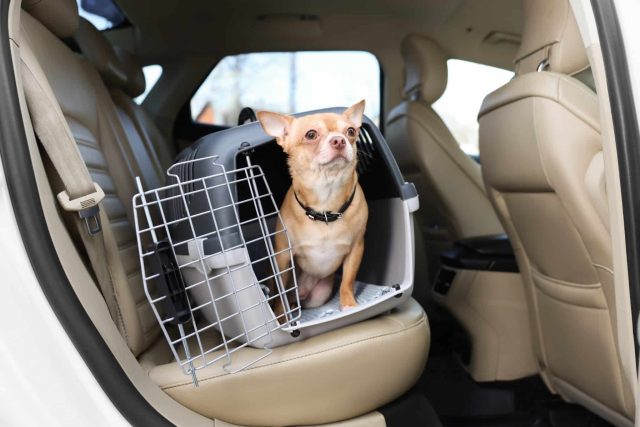
A properly secured, crash-tested travel crate can also provide valuable protection. For some dogs, particularly smaller breeds, a suitable carrier may be a more practical option than a traditional seat belt harness.
Crates can help contain dogs during travel and reduce the likelihood of escape following an accident. However, just like harnesses, not all travel crates are designed or tested to withstand collisions.
A lightweight household crate placed loosely in the back of an SUV should not be considered equivalent to a crash-tested travel kennel that has been properly secured according to the manufacturer’s instructions.
Ultimately, I recommend choosing a restraint based on your dog’s size, physical needs, your vehicle’s configuration, and the available independent safety testing.
Where Should Your Dog Sit in the Car?
Regardless of which restraint you choose, I recommend keeping dogs securely positioned in the back seat whenever possible.
The front passenger seat presents additional dangers because airbags are designed to protect adult humans, not animals. A deploying airbag can seriously injure a dog, even one wearing a safety harness.
I also discourage allowing dogs to ride on the driver’s lap. I understand the appeal of having your little companion curled up against you, but it creates an unnecessary risk for both of you.
Dogs should never be allowed to roam freely through the vehicle while it is moving.
For owners who drive SUVs or larger vehicles, the cargo area may accommodate a properly secured, crash-tested crate. However, a loose dog riding behind a cargo barrier is not necessarily protected during a collision. Barriers can help prevent distractions, but they should not be mistaken for crash protection.
Helping Your Dog Get Comfortable Wearing a Seat Belt
Some dogs accept a car harness immediately, while others need a little encouragement. If your dog has never worn a vehicle restraint, I recommend introducing it gradually rather than expecting immediate cooperation.
Start by allowing your dog to investigate the harness at home. Offer treats, praise, and gentle encouragement while putting it on and taking it off. Once your dog seems comfortable wearing it, practice sitting together in the parked vehicle.
When your dog is relaxed, begin with short trips and gradually increase the duration.
I always remind owners that positive experiences are especially important for dogs who already associate car rides with stressful events, such as veterinary visits. A few enjoyable trips to a favorite walking trail or park can help your dog develop a more positive relationship with traveling.
If your dog becomes extremely anxious or experiences motion sickness, speak with your veterinarian. There may be additional strategies or treatments that can make car travel more comfortable.
My Advice: Choose Safety Over Convenience
As a veterinarian, I understand that dog owners have many expenses to consider. It can be tempting to purchase an inexpensive seat belt attachment and assume that your dog is adequately protected.
But when it comes to vehicle safety, I encourage you to consider the potential consequences of choosing a product based on price or convenience alone.
A restraint that keeps your dog from climbing into your lap may help reduce distractions, but that does not necessarily mean it will protect your dog during an accident. Those are two different safety concerns, and ideally, the product you choose should address both.
Before purchasing a dog seat belt, take a few minutes to investigate the manufacturer’s testing information, review independent safety evaluations, and confirm that the product is suitable for your dog and vehicle.
Most importantly, use the restraint consistently. A trip around the corner can be just as unpredictable as a long drive on the highway.
The Best Dog Seat Belt Is One That Offers Proven Protection
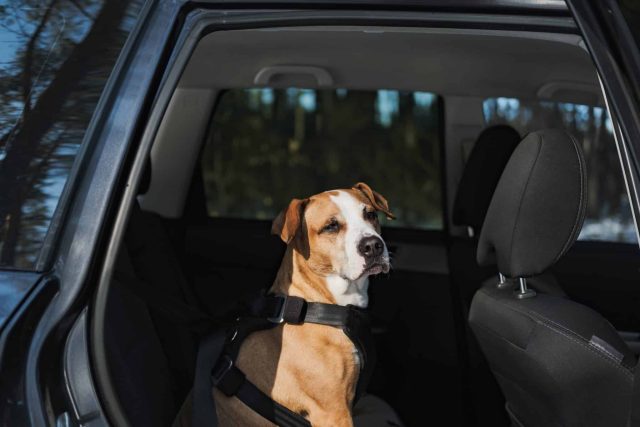
Our dogs trust us to make decisions that keep them safe, even when they cannot understand the dangers themselves. We carefully select their food, monitor their health, and protect them from hazards around the home. I believe vehicle safety deserves that same level of attention.
The best dog seat belt is not necessarily the most expensive, the most comfortable-looking, or the one with the highest number of online reviews. It is a properly fitted restraint with credible safety testing that is installed and used exactly as intended.
I encourage every dog owner to visit the Center for Pet Safety and review its testing information before selecting a car restraint. Taking a little extra time to make an informed decision could make an enormous difference when it matters most.
After all, the goal of every car ride should be simple: enjoying the journey together and bringing our beloved companions home safely.
