
iHeartDogs is reader-supported. When you buy via links on our site, we may earn an affiliate commission at no extra cost to you.
Owners will invariably notice if their dogs urinate in odd places like a spare room, kitchen, or in their beds. It makes for a stressful morning when your pillow or bed linens are soiled, and no one wants to be getting ready for sleep at night only to find that they have to strip the whole bed before they can rest.
Unfortunately, there is no one answer to why a dog might urinate in odd places. There are a myriad of medical reasons for this sign. Urinary tract infections (UTIs) with or without urinary stones (called uroliths) can cause an affected dog to be unable to retain urine or choose to eliminate in unusual places. In these cases, the dogs can sometimes be seen straining to urinate or moving to several spots to go, with not much urine produced at each site. You might notice a reddish tinge to the urine spots on the bedding if there is blood in the urine. A urinalysis and maybe even radiographs will be required to be sure that a UTI or urolithiasis is the underlying issue. You will need your vet’s help to be sure that your dog is not in danger of urinary obstruction (complete urinary blockage), which is a life-threatening situation.
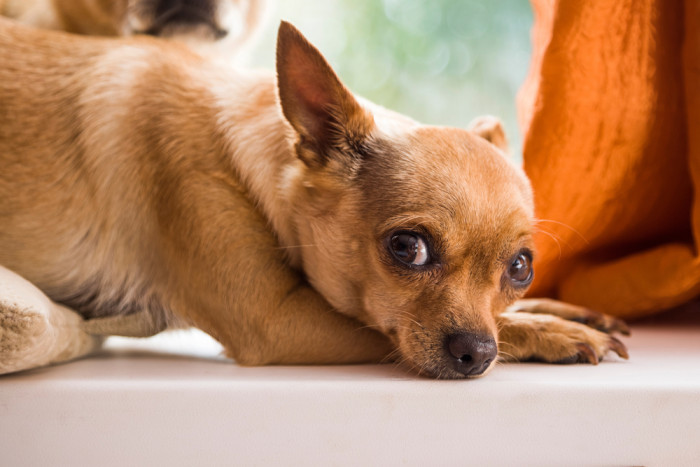
Urinary Incontinence
Urinary incontinence is when dogs unconsciously leak small amounts of urine. Ask your vet to help you figure out if your dog has an active infection or could just be leaking. There are treatments aimed at improving these problems. Some middle-aged female dogs experience urine leaking that can be managed medically with prescription medications. Some dogs lose sphincter tone as they age as an expected part of the aging process. Even though it can be a consequence of normal aging, there are still ways to manage or minimize urine leaking.
RELATED: Why is My Dog Peeing on Their Bed?
Congenital Abnormalities
Congenital abnormalities are issues that develop when structures fail to develop normally in a juvenile animal. Some of these are genetic abnormalities, and some are actual birth defects. If you have a young dog who pees in your bed or eliminates inappropriately and does not respond to the first-line treatments, he may need to have further imaging of his bladder and ureters to be sure that all is anatomically normal. In many cases, congenital problems can be addressed surgically and corrected.
Behavioral Reasons
Once you have ruled out all possible medical causes for urinating in your bed, it is time to consider a behavioral cause. Sometimes dogs are poorly house trained or have learned inappropriate habits from time in a shelter (with little one-on-one handling). Perhaps your dog has learned a marking habit or developed no habit at all and just goes wherever and whenever the urge hits. These situations may require a complete house training overhaul.
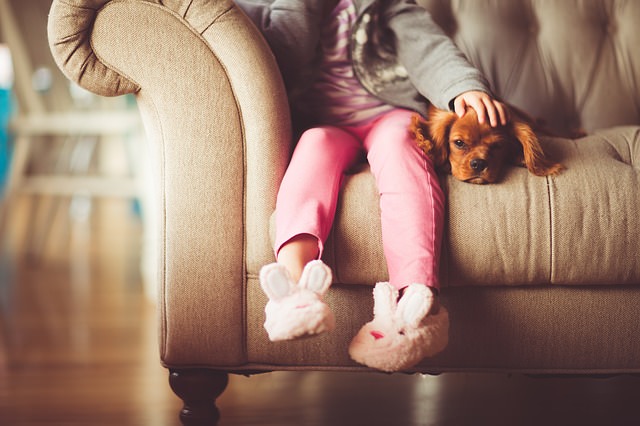
To start over with house training, your dog will have to be able to trust you completely to maintain the schedule of letting her out. If she thinks that there is no point in holding her urine because you will not come to let her out, she won’t. When she is not being watched, she should be in her crate (which needs to be small enough that she views it as her “den” and instinctively does not want to soil it) or tied to your belt loop, so you will quickly notice her if she seems like she needs to go out. When she does eliminate where you prefer, she should be quickly rewarded with a high-value treat. Reward must be consistent and fast so she associates the treat with the appropriate choice. If inappropriate elimination begins, immediately interrupt and remove her to a better place.
Crating her is not cruel when done correctly with consistent breaks. What is most cruel is allowing your bond to erode because she is wetting your bed. You owe it to her to get to the bottom of it and give her a chance to make better choices.
Remember, make sure all medical causes are discovered and addressed. Never scold your dog when you find a mistake. Once medical causes are dealt with, start over with house training completely. Consistently take the dog out attended and reward appropriate elimination. Mistakes might happen, but do not punish. Simply interrupt the behavior and move him to the spot you want. Your goal is to give your dog a chance to get the answer you want and encourage good choices moving forward. Once the choices are better, your bond with your dog is no longer in danger, and you can both be happier and healthier.
 Toledo, United States.