
Most people can name the Golden Retriever, the German Shepherd, the French Bulldog. But the dog world is enormous, and some of the most fascinating, beautiful, and downright charming breeds are flying way under the radar. These are the cute rare dog breeds that deserve a spotlight, the ones that make you stop and say, “Wait, what is that?”
Some of these breeds have populations in the hundreds worldwide. Others nearly disappeared from history entirely. A few have physical quirks so unusual you’d think they were invented. And every single one of them has devoted fans who will absolutely corner you at the dog park to tell you about them.
Here are 15 cute rare dog breeds you’ve probably never heard of. But you definitely should know about them.
1. Xoloitzcuintli (Mexican Hairless Dog)
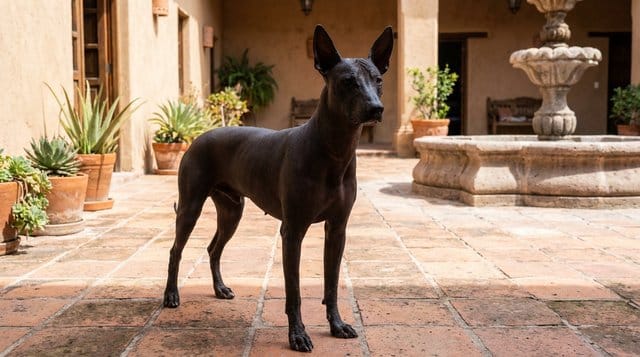
Pronounced “show-low-eats-QUEENT-lee” (most people just say Xolo), this breed is one of the oldest in the Americas. Aztecs kept them as sacred companions, and remains have been found in tombs dating back 3,000 years.
They’re hairless (completely, dramatically hairless on most of their body) with warm, smooth skin and a lean, athletic build. Some litters include a coated variety too, but the naked ones tend to steal the show. They come in three sizes (toy, miniature, and standard), so there’s a Xolo for just about any living situation.
Personality-wise, they’re calm and loyal but genuinely suspicious of strangers. Don’t mistake their reserve for unfriendliness; they just need to decide you’re trustworthy. Once they do, they’re devoted for life. They run warm, making them natural cuddle partners on cold nights.
| Quick Facts | Details |
|---|---|
| Origin | Mexico (3,000+ years of history) |
| Size | Toy, Miniature, or Standard |
| Coat | Hairless (or coated variety) |
| Best for | Allergy-prone households, calm owners |
2. Lagotto Romagnolo
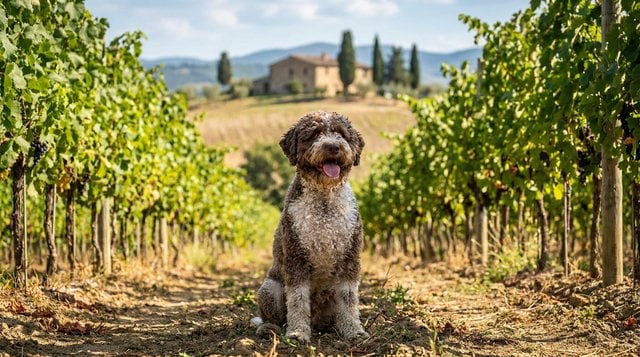
Looking for a dog with a curly coat, a big nose, and a hidden talent for hunting buried treasure? The Lagotto Romagnolo is the world’s only purebred dog officially recognized as a truffle hunter. That nose is not decorative.
These Italian water dogs originated in Romagna, bred for retrieving waterfowl. When the marshlands dried up, handlers redirected that powerful nose to truffle hunting. Today, a trained Lagotto can command thousands of dollars per session.
For a regular pet owner, what you get is a medium-sized, curly-coated dog that’s sharp, enthusiastic, and genuinely fun to train. They need mental stimulation badly. Give them a nose-work task, a puzzle toy, or a good sniffing walk and they’ll be thrilled. Leave them bored and they’ll dig up your yard, which is basically their version of truffle hunting.
3. Azawakh
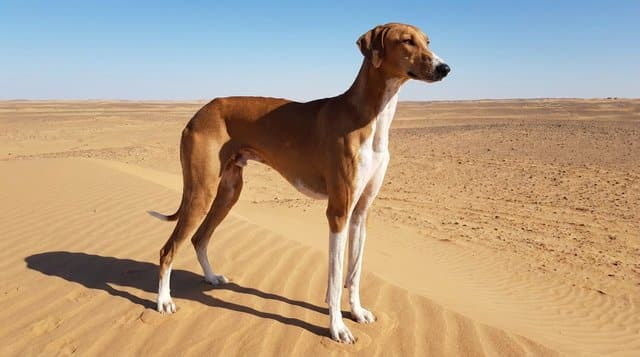
The Azawakh looks like a sculpture: impossibly lean, long-legged, skin draped so close to the body you can see the muscle beneath. They come from the Sahara and Sahel, running alongside nomadic Tuareg peoples for thousands of years.
They’re sighthounds, hunting by sight and reaching 40 mph. At home, they’re often compared to cats: aloof with strangers, fiercely bonded to family, independent, and fond of perching on high surfaces to survey their domain.
The Azawakh is not a beginner dog. They’re sensitive and don’t respond to harsh training. They’ll simply shut down. But with patient, positive handling, they become deeply devoted companions. They also do not love cold weather (they’re desert dogs, after all), so if you live somewhere with real winters, budget for a good dog coat.
4. Mudi
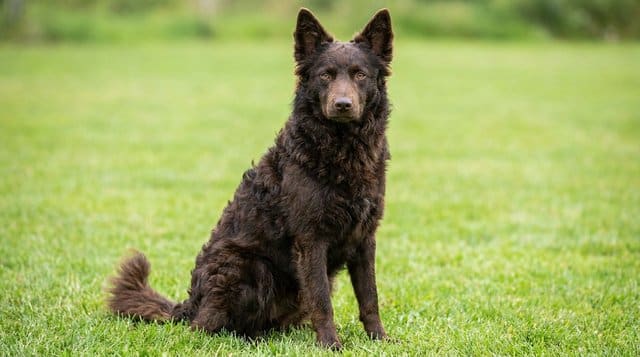
Hungary has given the dog world some real gems: the Puli, the Vizsla, the Komondor. The Mudi doesn’t get nearly as much attention, which is honestly a shame, because this medium-sized herding dog is one of the most capable working breeds alive.
There are only a few thousand Mudis on the planet. They nearly went extinct during World War II, and careful breeding efforts in Hungary brought them back from the edge. They’re versatile to a ridiculous degree: herding, hunting, search and rescue, agility, tracking. The Mudi doesn’t have a bad skill day.
At home, they’re energetic and smart, requiring a real outlet. They’re not a breed for apartment life. They’re known for extraordinary jumping ability and will use it to entertain themselves if you don’t give them something better. That said, they’re warm with family and adaptable once their exercise needs are met.
5. Bergamasco Sheepdog
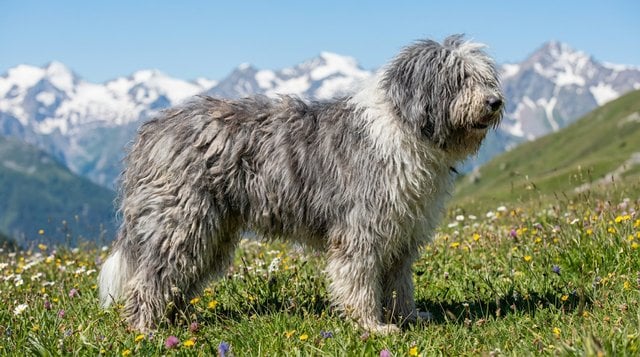
You’ve seen shaggy dogs. But the Bergamasco is something else. Its coat forms flat, felt-like mats called “flocks” that drape down the sides like a wearable carpet. Those mats protected Alpine herding dogs from cold, brush, and predators for centuries.
Here’s the surprising part: the Bergamasco is actually low-maintenance after the first couple of years. Once the flocks form (around age 1-2), you don’t brush them. You just let them be. They don’t mat further or trap debris the way you’d expect. The coat is self-maintaining.
Their personality matches the coat: patient, calm, thoughtful. They’re ancient problem-solvers used to making independent decisions on steep mountain terrain. They bond deeply with family but don’t need to be glued to your side. They also do well with children, making them an underrated family dog hiding in very unusual fur.
You can see how unique coats work across different breeds in our roundup of wire-haired dog breeds with distinctive textures.
| Coat Comparison | Bergamasco | Typical Sheepdog |
|---|---|---|
| Grooming frequency | Minimal after year 2 | Weekly brushing |
| Coat type | Matted flocks | Long flowing |
| Weather protection | Excellent (Alpine) | Moderate |
6. Berger Picard
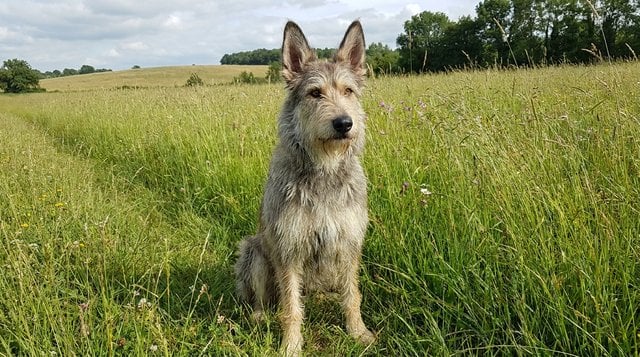
France’s oldest sheepdog breed fell to near-extinction twice during World Wars I and II. A dedicated group of French breeders pulled them back, but Berger Picards remain genuinely rare, even in France.
They’ve had a small pop-culture moment, you might recognize them from the 2005 film Because of Winn-Dixie and its 2016 remake Show Dogs. But real Picard fans will tell you the movies barely scratch the surface of what these dogs are like in person. Scruffy, lanky, with wiry fawn or brindle coats and expressive oval eyes that always look perpetually curious about something.
They’re active, independent, and stubborn enough to make training interesting. Not difficult, exactly, but they need a reason to do what you’re asking. Positive reinforcement clicks quickly once they decide you’re worth listening to. They’re deeply loyal to their family and somewhat selective about strangers. Classic French sheepdog energy.
7. Norwegian Lundehund
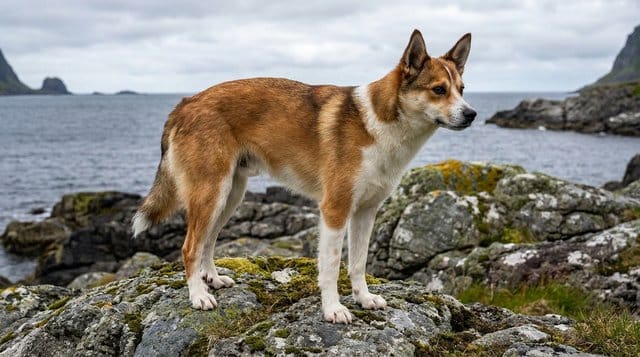
The Norwegian Lundehund has six fully articulated toes on each foot. Their neck bends backward far enough to touch the spine, and they can lay flat with front legs extended straight out. Every quirk was purpose-built for puffin hunting in narrow Norwegian sea caves.
Puffin hunting isn’t really a thing anymore, which puts the Lundehund in an odd spot. They’re fascinating to watch, endearing to live with, and extremely rare (the entire breed nearly collapsed to just a handful of dogs in the 1960s). What they need now is an owner who appreciates their weirdness and can keep them mentally occupied, because that ancient hunting brain doesn’t switch off just because the puffins are gone.
Health note: Lundehunds commonly develop a digestive condition called Lundehund Syndrome. Finding a breeder who tests for it is non-negotiable.
8. Leonberger
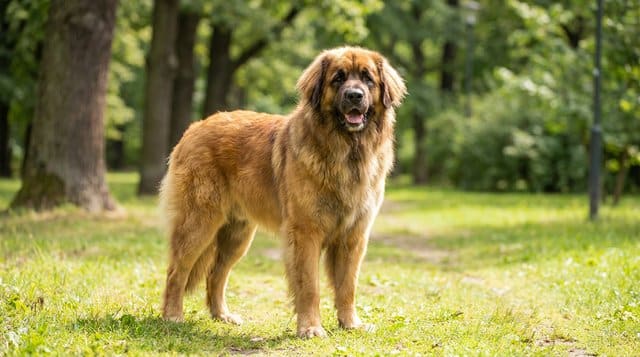
Want a dog that looks like a lion but acts like a golden retriever? The Leonberger was bred in Germany in the 1840s to resemble the lion on Leonberg’s coat of arms. Males run 100-170 pounds, with a flowing golden coat and black mask.
They’re calm in a way that defies their size. Leonbergers are used as therapy dogs, water rescue dogs, and family companions. Gentle with children, tolerant of household chaos, and genuinely easy-going once exercised.
The tradeoff: they’re not a long-lived breed (typically 8-9 years), they shed enormously, and they drool. Not a little. A lot. If you can make peace with that, you’re looking at one of the warmest, most affectionate dogs on this list.
If big, cuddly dogs are your thing, you’d probably also love our list of cuddly dog breeds perfect for chilly evenings.
9. Otterhound
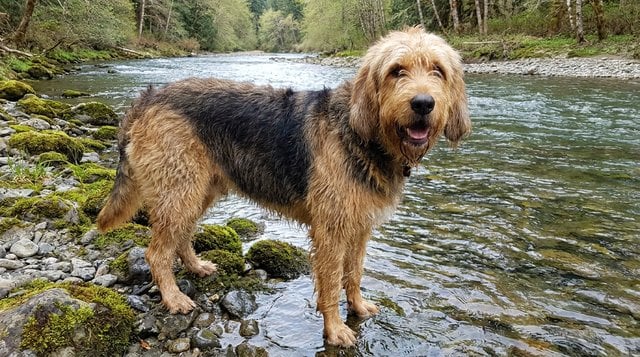
There are fewer than 1,000 Otterhounds in the world. That puts them at critically endangered status by Kennel Club standards, rarer than many wild animal species. And it’s a genuine shame, because Otterhounds are spectacular.
Bred in medieval England to hunt otters in rivers, their double coat is waterproof, their feet webbed, and their nose can track a scent trail 72 hours old. They can stay in cold water for hours. They’re basically the bear of dog breeds.
At home, they’re boisterous, affectionate, and extremely vocal. Otterhounds have a deep, melodious bay that carries for miles. They need space, exercise, and a securely fenced yard (they’ll follow a scent straight through a fence if given the chance). But for the right owner, they’re loyal, hilarious, and utterly devoted companions who happen to look like a big, shaggy, loveable mess.
10. Skye Terrier
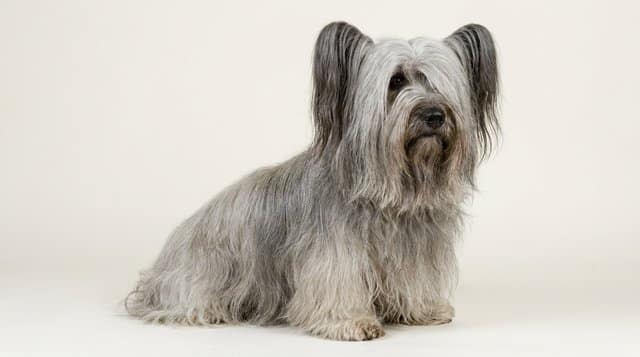
The Skye Terrier is one of those breeds you recognize immediately once you’ve seen it, but can almost never name. They’re long and low to the ground, with a coat so floor-length it hides their feet entirely, and large feathered ears that frame a silky curtain of hair covering the face. They look like a particularly elegant floor mop.
Queen Victoria kept them in the 19th century. The most famous Skye, Greyfriars Bobby, reportedly guarded his owner’s Edinburgh grave for 14 years. There’s a statue of him in Scotland.
Modern Skye Terriers are rare, stubborn, and devoted. They’re terriers, so they have that independent streak baked in. They’ll do things their way unless you’ve given them a really compelling reason to do it yours. But they’re also one-person-or-family dogs to the core. If a Skye chooses you, you have a loyal companion who will go to unreasonable lengths for you. Just maybe don’t die first.
11. Pumi
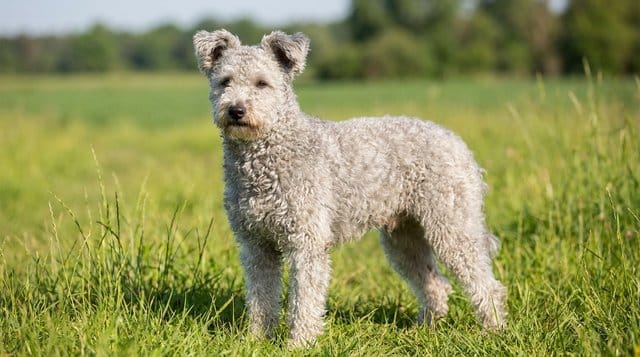
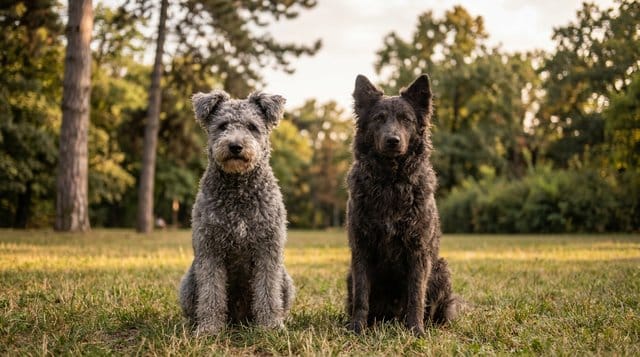
The Pumi looks like someone asked an artist to draw a cartoon dog and the result somehow came to life. Corkscrew curls. Semi-erect ears that fold forward at the tips. A fox-like muzzle. Alert, bright eyes that always look like they’re plotting something. They’re genuinely one of the most expressive-looking dogs out there.
Hungary developed the Pumi (related to the Puli and Pumi) as a versatile herding dog for sheep and cattle. They’re compact (usually 22-29 pounds), but they operate like a much larger dog. Fast, agile, and nearly tireless, the Pumi is one of those breeds that makes even experienced dog owners recalibrate what “high energy” means.
They’re also smart in the way that gets them into trouble: puzzle toys solved fast, commands learned quickly, boredom setting in just as fast. Agility training is practically designed for this breed. Not a couch dog, but a true partner in adventure.
| Activity Level Guide | Breed |
|---|---|
| Very high energy | Pumi, Mudi, Azawakh |
| Moderate-high energy | Lagotto Romagnolo, Berger Picard, Karelian Bear Dog |
| Moderate energy | Leonberger, Bergamasco, Otterhound |
| Lower energy (calmer) | Xoloitzcuintli, Skye Terrier, Thai Ridgeback (indoor) |
12. Chinook
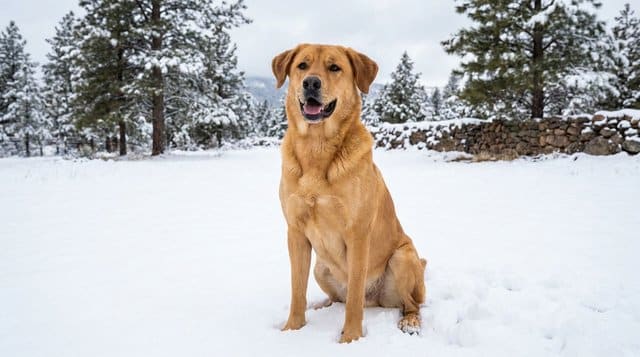
America’s only native sled dog breed traces to a single dog named Chinook, born in New Hampshire in 1917. He was lead dog on Admiral Byrd’s Antarctic expedition in 1928. When he went missing, a search was called. That’s the kind of dog he was.
The breed that carries his name is tawny-gold, athletic, and built for pulling. Males can weigh 70-90 pounds and are strong enough to haul serious loads, yet gentle and patient enough to be excellent with kids. By the 1960s, only 125 Chinooks existed on earth. Today, thanks to dedicated breeders, they’re recovering, though they’re still rare enough that you can expect a waitlist with any reputable breeder.
They’re calm, confident, and deeply family-oriented. Not reactive or nervous. They work alongside their people rather than independent of them, which makes training a pleasure. If you want a dog with an actual American origin story and a personality to match, patient, strong, warm, the Chinook is a genuinely great option.
13. Thai Ridgeback
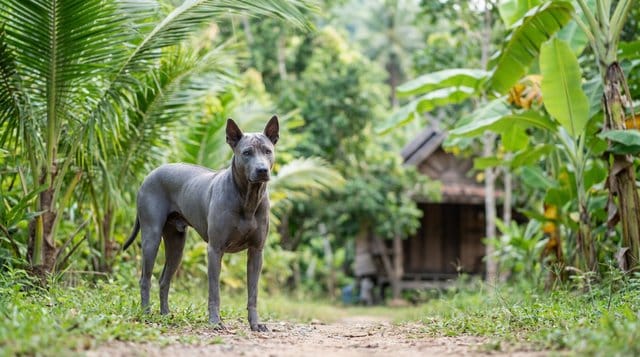
Like the Rhodesian Ridgeback, the Thai Ridgeback has a distinctive ridge of hair along the spine growing in the opposite direction. Unlike the Rhodesian, the Thai variety remained isolated in Eastern Thailand for centuries and is one of the most genetically primitive dog breeds alive.
They come in four colors (red, black, blue, and fawn), have a short sleek coat, and carry themselves with the regal self-assurance of a dog that has never had reason to doubt itself. They’re smart, athletic, and independent, but that independence comes with a catch. They were bred to think for themselves, which means they don’t automatically defer to humans the way many modern breeds do.
They’re best for experienced owners who can provide firm, consistent leadership. Not ideal for homes with small pets due to strong prey drive. Get the right match, and you have a loyal, protective companion that almost nobody on the street will recognize.
Ancient breeds like the Thai Ridgeback have traits that modern dogs often lack. Our piece on ancient dog breeds with traits that still shine today goes deep on why that matters.
14. Catahoula Leopard Dog
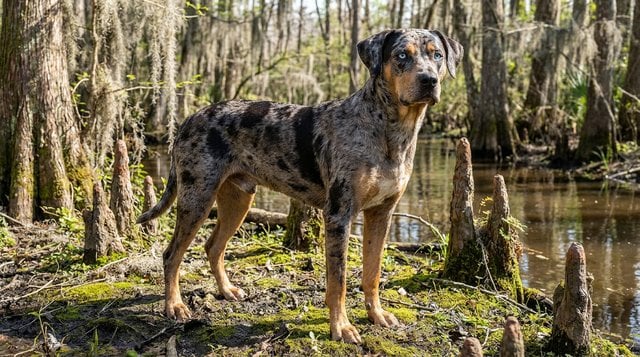
Louisiana’s state dog might be the most visually striking breed on this list. Merle coats in dozens of pattern combinations, “glass” blue eyes, “cracked glass” irises, webbed feet, and a hunting drive built for wild boar in bayou country. The Catahoula doesn’t look or behave like a typical pet.
They were developed from crosses between Native American dogs and dogs brought by Spanish explorers in the 1500s. They herd differently than most working dogs, they create a “canine fence” around animals by climbing trees, moving in a circle, and working as a pack. It’s wild to watch.
At home, they’re intense. They need a lot of exercise, a job, and an owner who won’t be walked all over. They can be strong-willed and dominant with other dogs, especially same-sex pairs. But they’re also whip-smart, deeply loyal to their people, and in the right household, active, experienced, with plenty of space, they’re an absolute blast to live with. You won’t find a more unique American breed.
15. Karelian Bear Dog
The name is not a metaphor. Karelian Bear Dogs were bred to hunt bears, moose, and wild boar, working right in a bear’s face to hold its attention. That takes a kind of courage most dogs simply don’t have.
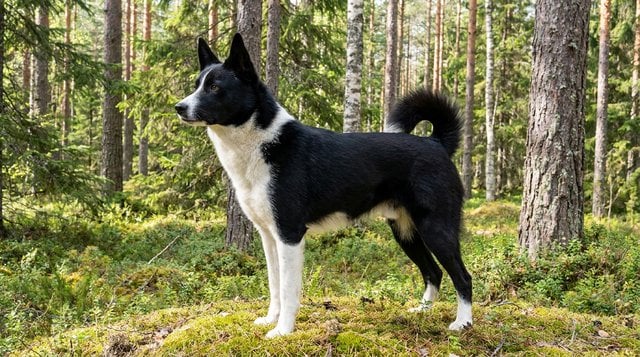
Physically, they’re classic Spitz-type: black and white coat, pointed ears, curled tail, compact and muscular. They’re used today by wildlife managers in places like Yosemite and Grand Teton National Parks to safely haze problem bears out of developed areas, a non-lethal tool that actually works because bears have a deeply hardwired fear of these dogs.
In a home, they’re loyal and responsive with their family, but fiercely independent when following a scent. They’re not social butterflies, they can be dog-aggressive, especially with males, and they’re vocal in a way that the neighbors will definitely notice. For hunters, rural homesteaders, or owners who can match their energy and structure, Karelian Bear Dogs are unmatched. For most suburban households, they’re probably not the right call.
If you’re drawn to breeds with unusual personalities, our article on dog breeds with a naturally mischievous look has plenty more to explore.
Frequently Asked Questions About Cute Rare Dog Breeds
What makes a dog breed “rare”?
A breed is generally considered rare when fewer than 1,000-2,000 registered dogs exist globally, or when AKC registration numbers are extremely low. Several breeds on this list, like the Otterhound and Chinook, fall into that range.
Are rare dog breeds harder to care for?
Not necessarily. Some are easy pets. Others (Azawakh, Thai Ridgeback, Catahoula) need experienced handling because their independent drives run deep. Research the breed, not just the “rare” label.
Where do you find breeders for rare breeds?
Start with the AKC’s parent club directory for each breed. Expect waitlists of 1-2 years for the rarest ones. Avoid anyone who has puppies available immediately with no questions asked, with breeds this rare, responsible breeders are careful about who their dogs go to.
Before You Go: Which One Is Right for You?
Every breed on this list exists because someone, somewhere, had a specific need, hunt truffles, guard sheep in the Alps, track otters through English rivers, or charge at bears without blinking. That history is written into each dog’s behavior, and it doesn’t disappear just because they’re now living in a suburban backyard.
The best fit comes from honest self-reflection. How much do you exercise? How much space do you have? Do you want a velcro dog or an independent thinker? Rare breeds also mean fewer vets with experience and probably a long wait for a puppy.
If you’re okay with all that, you’re the kind of dog person who’d thrive with one of these. You’ll spend a lot of time explaining what your dog is at the park. You’ll also spend a lot of time knowing you have something genuinely special.
Also worth reading: 10 dog breeds similar to Border Collies, great if you love the herding dog brain but want something a little different.
 Toledo, United States.