
Between different brands, recipes, formulas, and price ranges, every step down the dog food aisle is more overwhelming than the last. Puppy owners are responsible for doing what’s best for their pets, but sifting through bags of potential food options isn’t easy. Besides countless brands and recipes, there are two main types of dog food filling the shelves: puppy food and adult dog food.
After looking at how much more puppy food costs than the adult dog alternative, it’s natural to question its necessity. Is puppy food a marketing ploy to get responsible dog owners to pay more money? It wouldn’t be the first time a commercial product made a false claim, but when it comes to puppy food versus adult dog food, it’s simple. Puppies need puppy food, and it’s important to put your growing friend on the right diet.

Nutritional Needs Change With Age
There’s one big reason why puppies need a different kind of food than their big brothers and sisters. While adult dogs live their lives and maintain their health, puppies grow rapidly. All breeds and individual dogs are different, but in general, puppies gain several pounds a week for the first several months—and sometimes years—of their lives. Growing and developing that quickly is a lot of work, and it takes a special kind of fuel to do it right. The biological differences between puppies and adult dogs translate to different nutritional needs.
RELATED: Best Dog Foods for Allergies
Food for Thought
Puppy food is formulated to provide everything puppies need to grow into healthy, happy adult dogs. While a regular diet of puppy food is essential, the occasional dish of adult dog food won’t be detrimental to their health. They might experience minor digestive discomfort, but there are no severe risks to worry about. Feeding a puppy a diet of adult dog food every day, however, is robbing them of important nutrients. You risk delaying their development and causing long-term health concerns. If you’re not sure what type of food is best for a growing pup, your veterinarian is always the best resource.
Nom Nom provides a puppy guide on how much you should feed your pup.
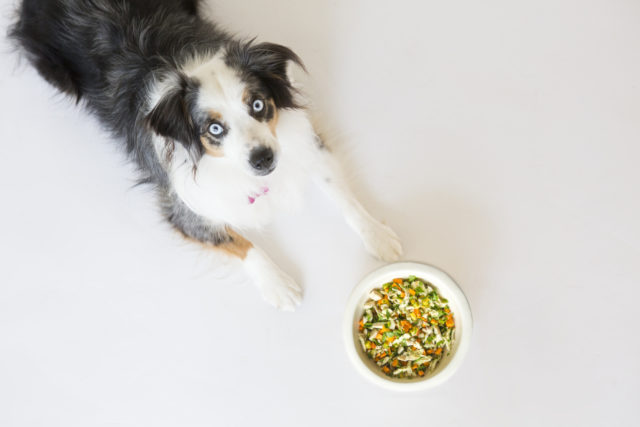
Adult and senior dogs are fed based on their current body condition, activity level, and body weight, and calculating their calories is pretty straightforward. Most people worry that they need to change their puppy’s calorie intake and food amount every day because they’re constantly growing. According to Dr. Justin Shmalberg, Nom Nom’s board-certified Veterinary Nutritionist and Chief Nutrition Officer, that’s not necessarily true. “To promote normal growth, most puppies need to be fed the same number of calories and food from about 4 months of age to 12 months of age,” he says. “Even though they’re getting bigger, they use fewer calories for growth as they age, which takes a lot of energy.” The net effect is that if a puppy eats 1,000 calories at 16 weeks, he’ll eat around 1,000 calories as a young adult. Keep in mind, this may vary from dog to dog—your puppy should be fed to maintain his body condition rather than just meet some calculated number.”
Their food comes right to your door and grows along with your dog, ensuring his nutritional needs are met at every stage of his life! Check out Nom Nom to see if their delicious, handmade food is the right fit for your pets!
Differences Between Puppy Food and Adult Dog Food
The Association of American Feed Control Officials (AAFCO) regulates dog food to ensure commercial products labeled “puppy food” are worth the money. Researchers have identified the nutritional needs of puppies and adult dogs and outlined requirements to promote health and wellness. Here are the three main differences between puppy food and adult dog food.
Amino Acids
While your puppy’s legs are getting longer, their muscles are getting stronger, and their brain is getting bigger, their body is using up amino acids to ensure development proceeds as it should. According to Dog Food Advisor, amino acids are the “basic building blocks of all protein.” They say,
“Think of protein as a freight train with each car of that train being an amino acid.”
Most of the amino acids needed for healthy canine development are manufactured right where they’re needed—in the dog’s body. There are some, however, that dogs are incapable of producing on their own. They rely on food to give them what they need. Arginine, histidine, isoleucine, and lysine are four out of ten essential amino acids that puppies can’t produce on their own.
These “protein building blocks” are important for all dogs, but especially puppies. AAFCO prescribes additional amino acids in puppy food recipes. The differences average out to about twice what’s required in adult dog foods. Without them, puppies are at risk for developmental delays and abnormalities.
Fats
Puppy food is what experts call “energy dense.” Between playing, learning, growing, and developing, being a puppy is hard work. They need energy to keep going, and, in nutritional terms, that means calories. Calories come from carbohydrates and proteins, but fats have the highest calorie density per pound.
Puppy foods have a higher fat content than adult dog foods, and those calories go toward rapid growth. As weight gain slows, their need for extra energy diminishes. Adult dogs with high-fat diets are most often obese, so the fat content of adult dog food is significantly lower than that of puppy food. At the same time, puppies that don’t get enough fat in their diets miss out on essential energy-related benefits.
RELATED: Best Probiotics for Puppies or Adult Dogs
Minerals
Out of the long list of minerals puppies need, calcium and phosphorus are at the top. According to AAFCO, puppy food is required to have at least 1.2% calcium content, while adult food only needs .5%. Pet Education says,
“Of all the minerals, calcium is required in the greatest amount. Calcium is essential in the body for many functions including bone formation, blood coagulation, muscle contraction, and nerve impulse transmission.”
These numbers, however, vary between small- and large-breed puppy food. Too much calcium for a rapidly growing puppy can lead to skeletal problems, like hip dysplasia. Large-breed dogs grow more than small dogs, and too much calcium can be dangerous. Large breed puppy food is lower in calcium to prevent bones from growing too fast. When picking out your puppy food, make note whether it’s for large or small breeds.
For phosphorus (another important mineral for bone growth), AAFCO calls for at least 1% in puppy food compared to .4% in adult food.
To see some great options for your growing puppy, check out our Best Puppy Dog Food list.

Transitioning to Adult Dog Food
People refer to “puppy” as being a specific developmental stage. Puppies start being puppies as soon as they’re born, but the line between puppy and adult dog is less clear. The Happy Puppy explains,
“Physical maturity is reached at different ages, depending largely on the size of your dog. Little dogs stop growing much sooner than big dogs.
Small and medium-sized dogs usually reach their adult size around 10-12 months old. Large dogs, like Labs, German Shepherds, and Rhodesian Ridgebacks, usually don’t stop growing until 12-18 months old. Moving up the scale, giant breed dogs, like Great Danes and Mastiffs, can continue putting on height and weight until they’re three years old.
These guidelines give dog owners a general idea of when it’s time to make the switch from puppy food to adult dog food. Weigh your pup regularly, and when you notice their weight leveling off, it’s usually safe to assume they’re ready for a change in diet. Pet MD advises dog owners to consult a veterinarian and ensure the dog’s growth plates are sealed before making the change.
 Toledo, United States.