
Last updated: September 15, 2026
Food alone won’t cure a dog’s anxiety, but diet influences the systems that regulate how dogs handle stress. The gut and brain communicate constantly through a network of nerves, hormones, and gut microbes called the gut-brain axis. A highly digestible diet, fed on a consistent schedule, supports comfortable digestion and steady energy: two of the physical foundations a nervous dog needs to settle.
That’s the short answer. Here’s what’s actually going on inside your dog, what the research supports, and what it means for the bowl.
How the Gut-Brain Axis Works in Dogs
The digestive system does far more than process food. It communicates with the brain along three main pathways, and each one helps explain why digestion and behavior sometimes appear closely linked.

The vagus nerve. This nerve runs directly between the brain and the digestive organs, coordinating digestion and relaying information about gut activity back to the brain. Because of this connection, the state of a dog’s digestive system can influence how their body responds to stress and comfort signals.
The gut microbiome. Every dog’s digestive tract houses a vast ecosystem of microorganisms that break down food, produce nutrients, and support immune function. Research published in Microbiological Research (2024) shows these microbes also produce compounds that interact with the nervous system and influence functions well beyond digestion.
Neurotransmitters. A large share of the body’s serotonin, the neurotransmitter associated with calmness and well-being, is produced within the digestive system. Serotonin’s role in canine behavior is complex, but its origin in the gut illustrates how tightly digestion and neurological signaling are intertwined.
Emerging research in Applied Animal Behaviour Science (2025) continues to explore the connection between nutrition, physiology, and canine behavior. The field is young, but the direction is consistent: what happens in the gut doesn’t stay in the gut.
Signs Your Dog’s Food May Not Be Agreeing With Them
Behavior changes are rarely caused by a single factor. Training history, environment, medical conditions, and routine all shape how a dog acts. But digestive discomfort can contribute to restlessness, and it’s one of the easier variables to check.
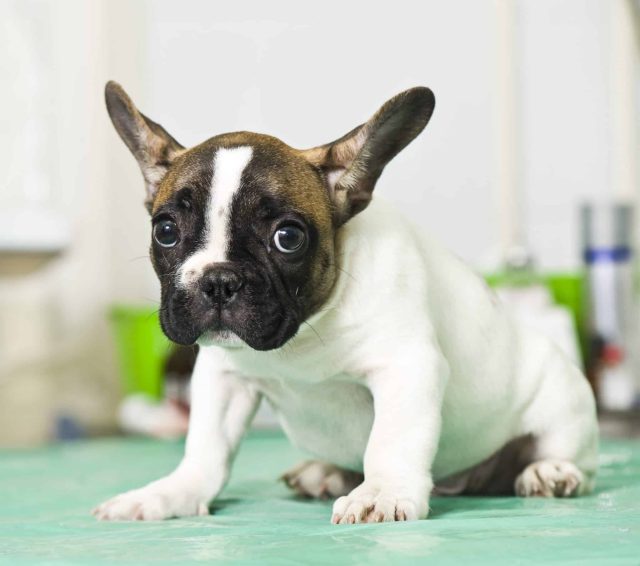
Physical signs worth monitoring:
- Digestive upset or irregular stools
- Inconsistent appetite
- Visible discomfort after meals (pacing, hunching, licking lips)
- Excess gas or gurgling
Behavioral signs that sometimes travel with digestive discomfort:
- Restlessness or pacing, especially after eating
- Difficulty settling at predictable times of day
- Irritability that doesn’t match the situation
None of these automatically means food is the cause. They mean nutrition is worth exploring alongside veterinary guidance, especially if the behavioral signs cluster around mealtimes.
If your dog’s anxiety is severe, sudden, or getting worse, see your veterinarian first. Pain, thyroid conditions, and other medical issues can present as anxiety, and no diet change substitutes for a diagnosis.
Recognize any of these signs in your dog?
A fresh, highly digestible diet may be worth exploring. It takes about two minutes to build your dog’s personalized plan, and your first box is 50% off.
Why Digestibility Is the Metric That Matters
Digestibility measures how much of a food’s nutrition a dog’s body can actually absorb and use. It’s one of the most important indicators of food quality, and it’s where fresh and ultra-processed foods diverge most.
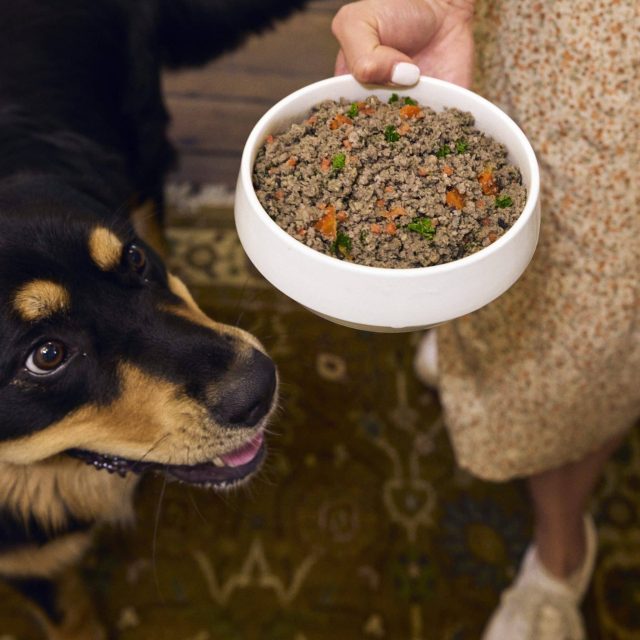
| Fresh, gently cooked food | Conventional dry kibble | |
|---|---|---|
| Cooking method | Low-temperature, gentle cooking | High-heat extrusion |
| Moisture content | High (approx. 70%+) | Low (approx. 6–10%) |
| Nutrient availability | More nutrients survive cooking and are absorbed | High heat can reduce bioavailability of some nutrients |
| Typical stool result | Smaller, firmer stools (less passes through unused) | Larger stool volume |
When dogs digest food efficiently, more nutrients reach the bloodstream to support cellular function, immune health, and steady energy. When digestion is uncomfortable (bloating, gas, inconsistent stools), that discomfort can make it harder for a dog to relax. Diet isn’t the whole puzzle of canine anxiety. It’s one piece you can actually control.
Consistency Calms: Why Routine Matters as Much as Ingredients
Dogs thrive on predictability. A reliable feeding routine, with the same times and the same portions every day, gives an anxious dog a stable anchor in their schedule and supports steady energy, comfortable digestion, and predictable potty patterns.
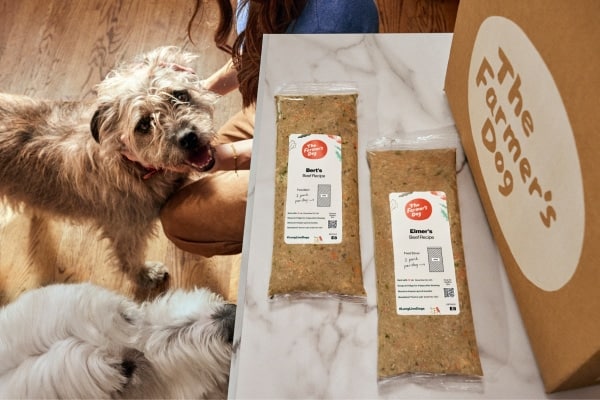
This is where pre-portioned meals earn their keep. When every serving is already measured, the routine stays identical no matter who feeds the dog. No scoop-size drift, no “did anyone feed him yet?”
A consistent transition matters too. When switching foods, move gradually over 7–10 days: roughly 25% new food for the first three days, then 50/50, then 75/25, then fully transitioned. A slow switch protects the digestive comfort you’re trying to build.
Where The Farmer’s Dog Fits
The Farmer’s Dog makes fresh, gently cooked meals designed around exactly the factors above:
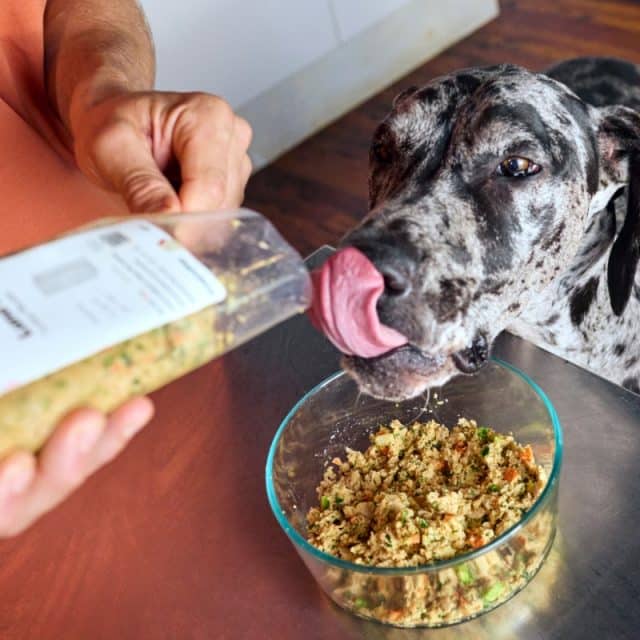
Highly digestible. Recipes start with whole meats and vegetables, gently cooked at low temperatures to eliminate pathogens while preserving nutrients and natural moisture, then quickly frozen for delivery.
Formulated by specialists. Every recipe is developed by on-staff Board Certified Veterinary Nutritionists® and formulated to meet AAFCO standards for complete and balanced nutrition.
Pre-portioned for your dog. Plans are built from your dog’s age, breed, weight, body condition, and activity level, and meals arrive pre-portioned to their calorie needs, which makes a consistent feeding routine nearly automatic.
A plan portioned for your dog, not the “average” dog.
Build your dog’s personalized plan in about two minutes and get 50% off your first box.
FAQ: Diet and Anxious Dogs
Can food really affect a dog’s anxiety?
Food is not a treatment for anxiety, but diet influences the gut-brain axis, the communication network between the digestive system and the brain that helps regulate stress responses. A highly digestible diet fed on a consistent schedule supports the physical comfort and routine that helps anxious dogs settle. Severe anxiety warrants a visit to a veterinarian or certified behaviorist.
What is the gut-brain axis in dogs?
The gut-brain axis is the two-way communication network linking a dog’s digestive system and central nervous system. It operates through the vagus nerve, the gut microbiome, and gut-produced chemical messengers like serotonin. It helps regulate appetite, energy, digestion, and aspects of the stress response.
What should I feed a dog with anxiety?
Prioritize a complete and balanced diet that is highly digestible, then feed it at the same times in the same portions every day. Fresh, gently cooked food tends to be more digestible than heavily processed alternatives, and pre-portioned plans make the routine easier to keep consistent. Ask your vet before making changes if your dog has health conditions.
Can changing my dog’s food make anxiety worse?
An abrupt switch can cause digestive upset, which adds physical discomfort on top of existing nervousness. Transition gradually over 7–10 days, mixing increasing amounts of the new food with the old, and keep meal times unchanged throughout.
How long until I see a difference after switching foods?
Digestive changes such as firmer, smaller stools and a more consistent appetite typically show up within the first few weeks. Behavioral changes tied to comfort and routine build more gradually and vary by dog. Track digestion first; it’s the earliest signal the food is working.
How much does The Farmer’s Dog cost?
Pricing depends on your dog, because every plan is portioned to their calorie needs: a small, low-key senior costs considerably less to feed than a large, active young dog. The fastest way to find out is to build your dog’s plan, which takes about two minutes and shows your exact price. New customers currently get 50% off their first box.
When is anxiety a vet problem instead of a food problem?
Immediately, if the anxiety is sudden, severe, or paired with other changes such as appetite loss, vomiting, lethargy, or aggression. Medical conditions, including pain and thyroid disease, can look like anxiety. Diet is a supporting factor, never a substitute for diagnosis or behavior treatment.
Sources
- Nutrition, physiology, and canine behavior. Applied Animal Behaviour Science (2025): https://www.sciencedirect.com/science/article/pii/S0168159125002539
- Gut microbiome and nervous system interaction. Microbiological Research (2024): https://www.sciencedirect.com/science/article/pii/S0944501324002593
- Fresh food and metabolic health in dogs. Yamka, R. et al. (2025), Metabolites, 15(10), 676: https://doi.org/10.3390/metabo15100676
- AAFCO nutritional standards: https://www.aafco.org
One Piece You Can Control
Anxiety in dogs has many inputs: training, environment, health, and history, to name a few. Diet won’t fix all of them, but it’s the one you decide every single day, and a highly digestible food served on a steady routine gives a nervous dog a calmer physical baseline to work from.

Ready to help your dog feel more balanced from the inside out?
Build your dog’s personalized plan and get 50% off your first order from The Farmer’s Dog.
 Toledo, United States.