
German Shepherd Colors 2026: Every Coat Color Explained (With Pictures)
If you’ve spent any time around German Shepherds, you know they turn heads. Part of that is their athletic build, their alert ears, and the way they carry themselves. But the coat? That’s where things get really interesting. Most people picture the classic black and tan saddle pattern, but German Shepherds actually come in nine recognized coat colors, ranging from the wolf-like sable to the ultra-rare panda pattern that shows up in maybe one dog out of tens of thousands.
This guide covers every German Shepherd color you’ll realistically encounter, plus a few you’ve probably never seen in person. For each one, you’ll find the AKC’s official stance, how common it actually is, what causes the color genetically, and whether those rumors about color affecting temperament hold any truth. Spoiler: they don’t.
Whether you’re picking a puppy, researching the breed, or just curious why your neighbor’s GSD looks nothing like the one on TV, you’re in the right place. Let’s get into it.
Quick Reference: All German Shepherd Colors at a Glance
| Color | AKC Accepted | Show Eligible | Rarity |
|---|---|---|---|
| Sable | Yes | Yes | Common |
| Black & Tan | Yes | Yes | Very Common |
| Black & Red | Yes | Yes | Uncommon |
| Bi-Color | Yes | Yes | Uncommon |
| Solid Black | Yes | Yes | Uncommon |
| Solid White | Yes (registration only) | No (disqualified) | Uncommon |
| Liver | Yes (registration only) | No (serious fault) | Rare |
| Blue | Yes (registration only) | No (serious fault) | Rare |
| Panda | Yes (registration only) | No (disqualified) | Extremely Rare |
1. Sable

Sable is the original German Shepherd color, and arguably the most genetically interesting one. Each individual hair on a sable dog has multiple color bands, darkening toward the tip. The result is a coat that shifts and changes depending on the light, anywhere from light tan to a deep charcoal that almost looks black. It’s the same pattern you’d see in wolves, which is no coincidence since the breed’s early ancestors shared that same genetic makeup.
This coloring comes from the dominant Agouti gene (Ay), so a sable dog only needs one copy from either parent to display it. That’s one reason sable pops up so often in working-line German Shepherds. Breeders prioritizing drive and health over conformation often trace their lines back to sable dogs from German and Czech working bloodlines.
The AKC fully accepts and show-qualifies sable. Puppies often look much darker at birth and lighten as they mature, sometimes dramatically. Don’t be surprised if a very dark sable puppy turns into a medium-tan adult by age two.
2. Black and Tan

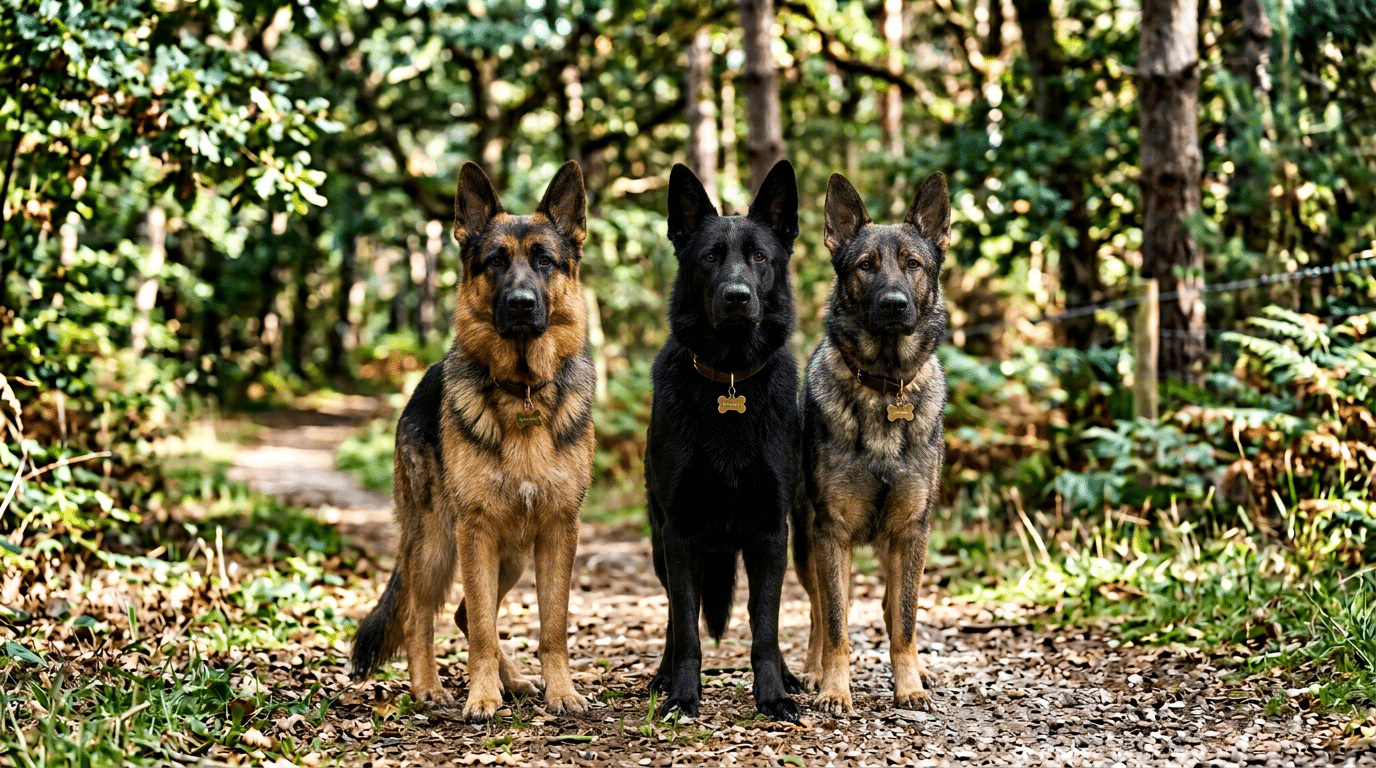
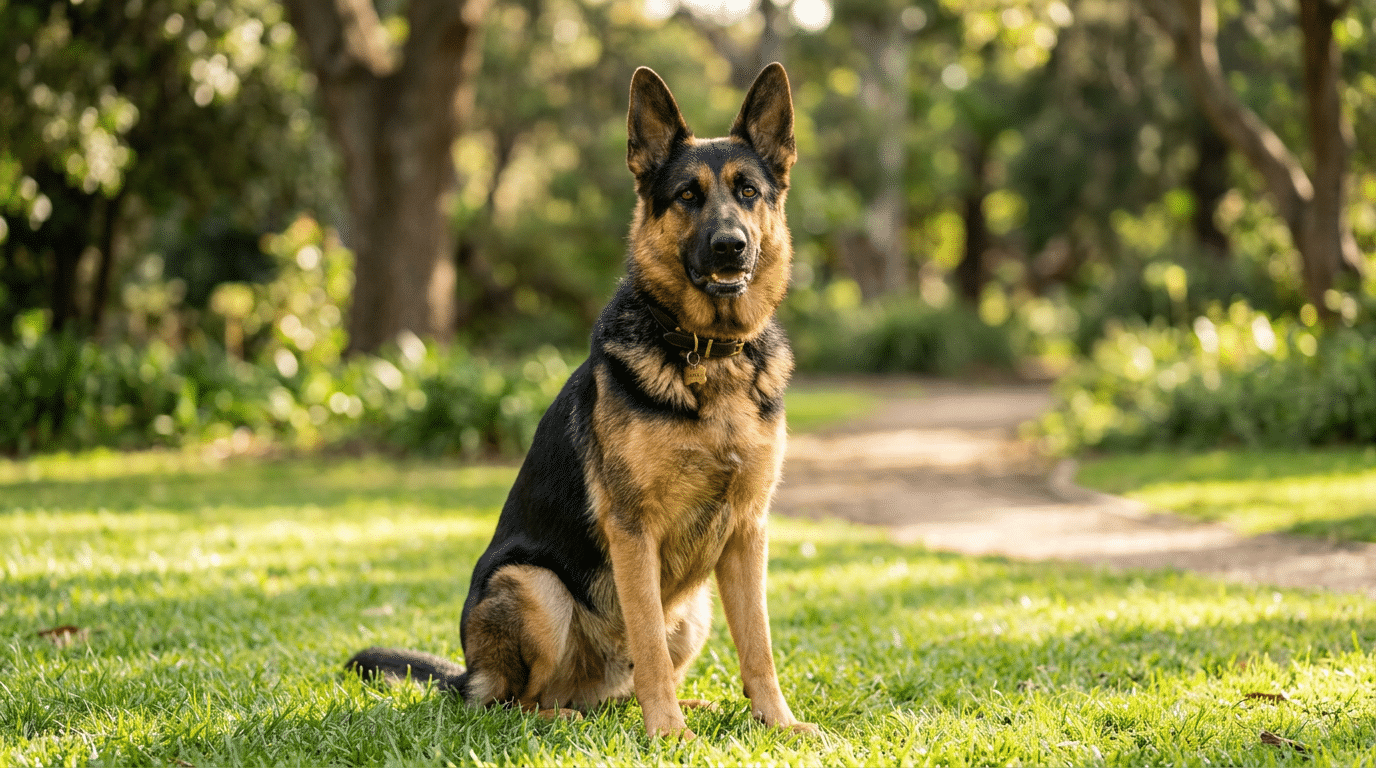
This is the one most people mean when they picture a German Shepherd. Black saddle across the back, tan or cream on the legs, chest, face, and under the tail. It’s the most common pattern in American show lines and the one you’ll see on most police K9 units on TV.
The black and tan pattern results from the At (tan point) gene on the Agouti locus, combined with a dog that isn’t expressing sable or another dominant pattern. The amount of black can vary quite a bit. Some dogs have a thick, wide saddle that covers most of their body. Others have a lighter, more scattered pattern that lets plenty of tan show through.
The AKC fully accepts this color for both registration and conformation showing. It’s the most frequently seen color in both show and companion lines. If you’re getting a German Shepherd puppy from a breeder who doesn’t specify bloodline type, there’s a good chance you’re getting a black and tan.
3. Black and Red
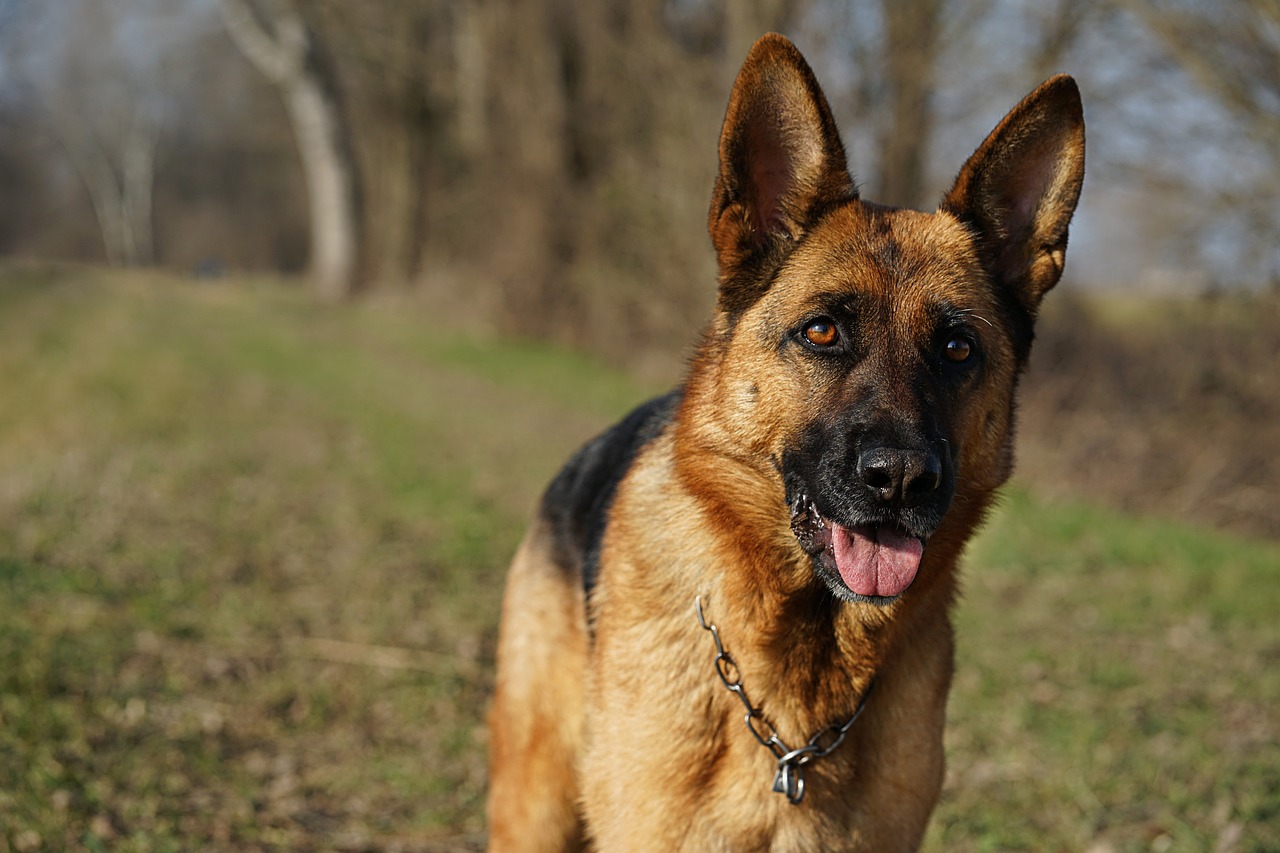
Black and red looks like the black and tan pattern turned up to maximum saturation. The markings are the same, but instead of pale tan or cream, you get a deep, rich rust that reads almost orange in bright sunlight. Show breeders love this coloring, and you’ll see it winning ribbons at major conformation events regularly.
The genetics are straightforward. The red shade sits within the phaeomelanin (yellow-red pigment) spectrum, and some dogs simply express a deeper, more saturated version of that pigment. It’s the same loci as black and tan, just with a stronger pigment expression in the tan areas.
This color is fully AKC-accepted and show-eligible. It’s more common in West German show lines than in working or American lines. Dogs bred specifically for the ring often show this vibrant coloring paired with a steep croup and heavily angulated rear, the classic show conformation look.
4. Bi-Color
Bi-color German Shepherds are often misidentified as solid black, and honestly, the mistake is understandable. These dogs are predominantly black, with tan showing only in small, specific spots: the toes, the area around the anus, maybe a faint hint on the cheeks. From a distance, they look black. Up close, you’ll spot those small patches of color.
The bi-color pattern is caused by a very heavy expression of the black pigment, suppressing the tan to minimal areas. Genetically it’s related to the At pattern, but modified by additional factors that restrict where the tan can appear. It’s sometimes called “patrol dog” coloring in working dog circles, and it’s historically been valued in German and European working lines.
The AKC accepts and show-qualifies bi-color. Working-line breeders and Schutzhund sport dog handlers often favor these dogs. They tend to come from serious working bloodlines, which probably contributes to their reputation as high-drive, intense workers, though that’s a function of breeding purpose, not coat color.
5. Solid Black

A fully black German Shepherd is striking in a way that’s hard to describe until you’ve seen one in person. No markings, no tan, no hint of another color. Just pure, deep black from nose to tail. These dogs turn heads everywhere they go, and they know it.
The solid black color is recessive. To produce a black puppy, both parents must carry the recessive ‘a’ allele (the recessive black allele on the Agouti locus). That’s why even two black and tan parents can produce a black puppy if both carry the gene. It comes as a surprise to plenty of first-time GSD owners.
The AKC accepts solid black for both registration and conformation showing. Black GSDs are roughly 6-8% of the breed population, making them uncommon but not rare. They shed just as much as any other color (which is a lot, so be ready for that), and they have no health disadvantages tied to their coloring. If you’re wondering about German Shepherd shedding, it’s consistent regardless of coat color.
6. Solid White
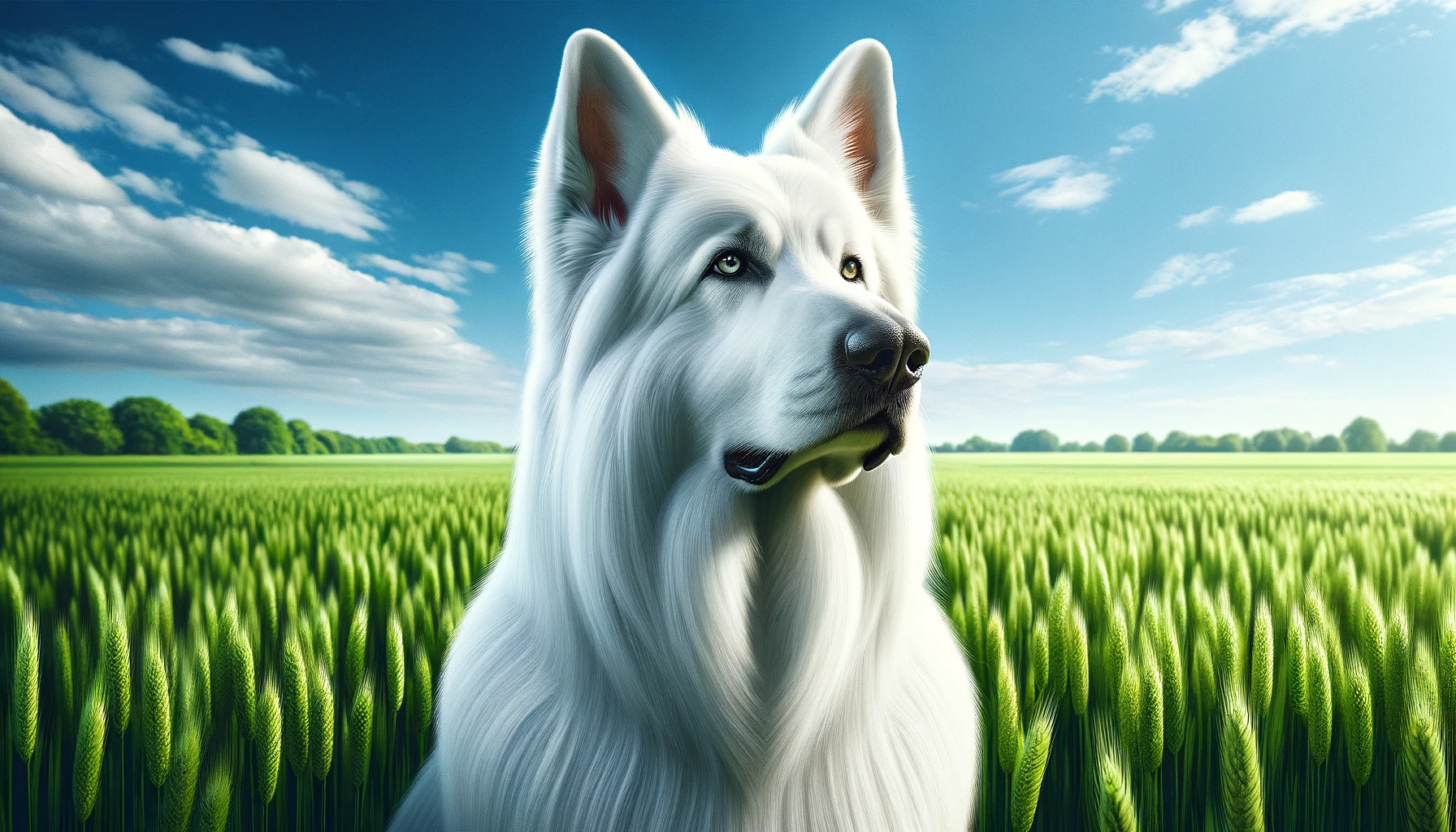
White German Shepherds have a confusing reputation, and a lot of it is unfair. They’re not albinos. They don’t have vision or hearing problems tied to their white coat. They’re just German Shepherds with a recessive masking gene (the ‘e’ allele on the Extension locus) that prevents any color pigment from showing in the coat, while leaving the skin and eyes normally pigmented. They have dark eyes, dark nose, dark paw pads.
Here’s the thing about white in the show ring: the AKC allows white GSDs to register but lists white as a disqualifying fault in conformation. The German Shepherd Dog Club of Germany (SV) is even stricter. So these dogs can’t compete in traditional breed shows. But white Shepherds have their own dedicated fan base and breed clubs, and they do compete in obedience, herding, and other performance events without any restrictions.
They’re gentle and loyal dogs, same as any other GSD. If you’re considering one, just know you’ll spend a lot of time on German Shepherd grooming keeping that white coat clean.
7. Liver

Liver is one of those colors that catches people off guard. Instead of the standard black-based pigment, a liver GSD has a warm brown that replaces every black area on the dog. The saddle becomes chocolate. The muzzle, paws, and nose turn brown. The eyes often shift toward amber or hazel, which gives these dogs a surprisingly soft, almost honey-like look.
The liver gene (bb, homozygous recessive at the B locus) converts the eumelanin (black pigment) in the coat and skin to a brown shade. Both parents must carry the gene for a liver puppy to appear. This recessive nature is why you don’t see liver GSDs very often, even when breeders specifically try to produce them.
The AKC classifies liver as a serious fault in conformation showing, though liver dogs can be registered. Reputable show breeders avoid the color, but for companion dogs, liver GSDs are healthy, capable, and genuinely beautiful in their own right. They don’t have any liver-related health issues because of their coloring, despite what the name might suggest.
8. Blue
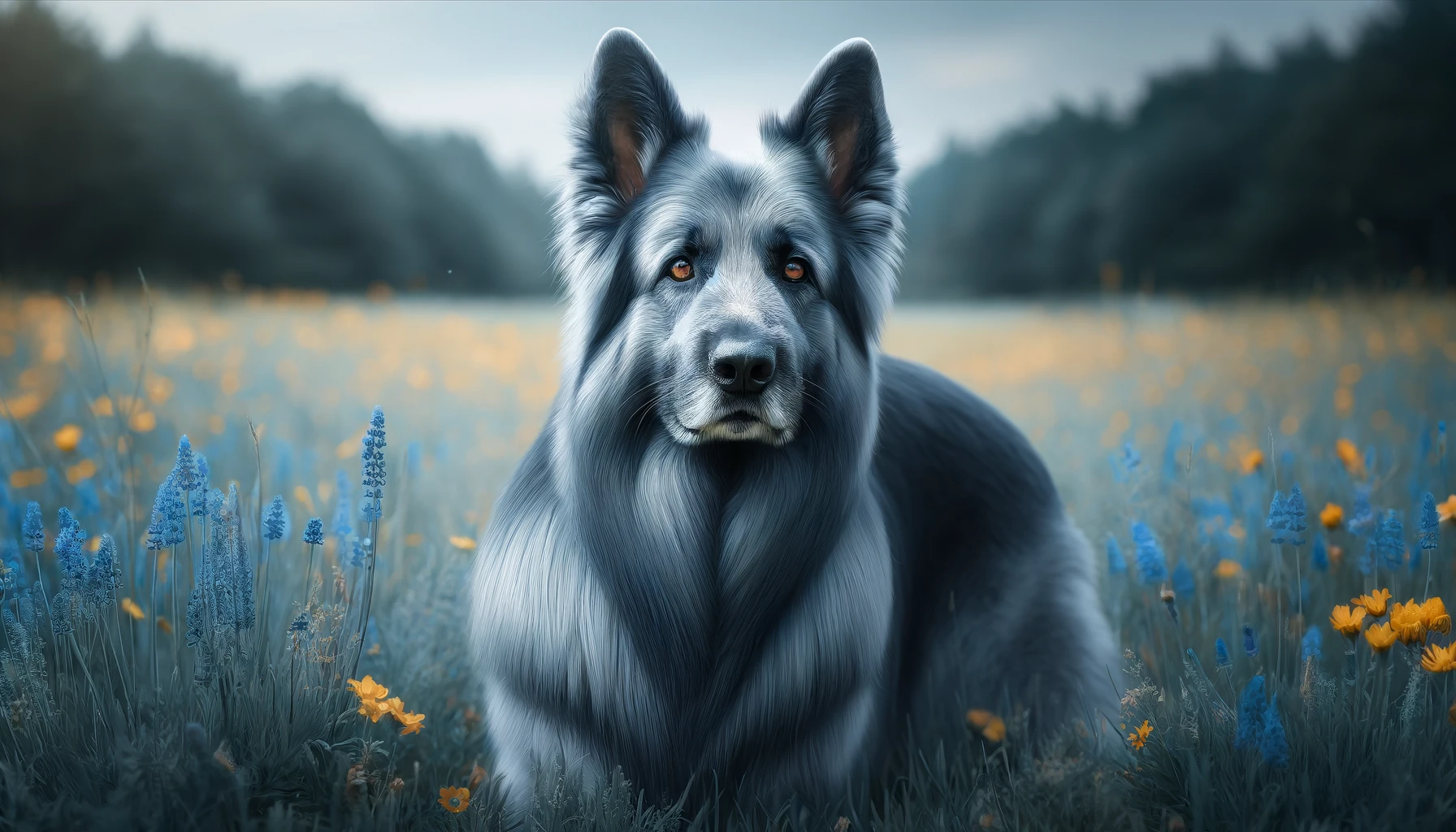
Blue isn’t actually blue. Don’t go in expecting a Weimaraner-type steel blue, because that’s not quite what you’re getting. A blue German Shepherd has a diluted black pigment that reads as a cool gray, sometimes with a faint blue tint in bright light. Their nose leather is a slate gray instead of black, and their eyes can appear lighter than standard.
The color comes from the dilution gene (dd, homozygous recessive at the D locus). This gene doesn’t create a new color, it just dilutes the existing black pigment to a softer shade. Blue and tan, blue sable, and solid blue variations are all possible.
Blue is a serious fault under AKC conformation standards, same as liver. Both colors are associated with “Color Dilution Alopecia” (CDA) in some breeds, a condition that can cause hair thinning and skin issues. In German Shepherds, this is less commonly reported than in Dobermans or Great Danes, but it’s worth discussing with your vet if you get a blue GSD. Ask about their German Shepherd health history and whether CDA has appeared in the lineage.
9. Panda
Panda German Shepherds are the rarest of all, and their story is unusual. The panda pattern, showing patches of white, black, and tan in a distribution that looks nothing like any other GSD, doesn’t come from the expected GSD gene pool at all. It’s caused by a spontaneous mutation in the KIT gene (the same gene involved in white spotting in many species), and it was first documented in a single bloodline in the early 2000s.
A panda GSD typically has white on the muzzle, chest, belly, and tip of the tail, with black and tan covering the rest of the body. The white areas can vary, but the overall impression is striking and genuinely panda-like.
These dogs are AKC-registerable but disqualified from conformation showing. The breeding pool is small, because the panda mutation is a dominant trait carried by very few dogs. That rarity has attracted a dedicated enthusiast community, but it’s also led to some irresponsible pricing. You’ll sometimes see “rare panda puppies” listed at extreme prices. Be cautious. A reputable breeder prioritizes health and temperament, not exotic coloring. Check their German Shepherd breeder credentials carefully before committing.
Does Color Affect Temperament? Let’s Clear This Up
You’ll hear it in online forums, from breeders, from dog park regulars: black GSDs are more aggressive, white ones are calmer, sables are smarter. None of this is supported by science.
Coat color in German Shepherds is controlled by pigment genes on a handful of loci. These genes have nothing to do with the neurological development, hormonal profile, or behavioral tendencies of the dog. A black GSD isn’t more intense because of its color. A white GSD isn’t gentler because of its color.
What does affect temperament: breeding purpose (working vs. show vs. companion lines), individual genetics, early socialization, training, and your relationship with the dog. A high-drive sable from Czech working lines will behave very differently from a laid-back sable from American companion lines, and it has everything to do with what the dog was bred to do, not its coat pattern.
So when you’re picking a puppy, focus on German Shepherd temperament traits by bloodline, not color. Choose a responsible breeder, meet the parents if possible, and ask about health testing. Color is fun to think about. It just shouldn’t be your deciding factor.
One more thing worth addressing: some buyers chase rare colors thinking they’re getting something special that justifies a premium price. A blue or liver GSD is genuinely unusual, and that’s interesting. But rarity doesn’t mean better. These colors exist because of recessive or dilution genes, not because they indicate superior breeding. A well-bred black and tan from health-tested parents is worth more than a poorly-bred “rare” panda from an irresponsible litter.
If you’re thinking about health costs down the road, it’s smart to look at the German Shepherd lifespan and common health concerns by bloodline. That matters a lot more than coat color when you’re planning a 10-13 year commitment.
Frequently Asked Questions About German Shepherd Colors
What is the most common German Shepherd color?
Black and tan is the most common German Shepherd color in the United States. It’s what most people picture when they think of the breed, and it’s the dominant pattern in both American show lines and many companion breeding programs. Sable runs a close second, especially in working-line dogs.
What German Shepherd color is the rarest?
Panda is the rarest German Shepherd color, caused by a spontaneous mutation in the KIT gene that only affects a handful of bloodlines worldwide. After panda, blue and liver are the next rarest, both requiring two copies of recessive genes to appear. A healthy, well-socialized panda GSD from a reputable breeder is genuinely hard to find.
Can two black and tan German Shepherds produce a solid black puppy?
Yes, they can. The solid black color is recessive, so both parents need to carry the recessive black allele (a) to produce a black puppy. Two black and tan parents who each carry one copy of this allele have about a 25% chance of producing a solid black puppy in any given litter. Many black GSD owners are surprised to learn their puppy’s parents weren’t black at all.
Are white German Shepherds albino?
No. White German Shepherds have dark eyes, dark nose leather, and normal pigmentation in their skin. Their white coat is caused by a masking gene that prevents color from expressing in the fur, but the dog itself is fully pigmented. True albinism is extremely rare in dogs and would result in pink eyes and very pale skin. A white GSD’s eyes are typically brown, gold, or hazel.
Do certain German Shepherd colors have more health problems?
There’s no strong evidence that most coat colors affect health in German Shepherds. The exception worth monitoring is Color Dilution Alopecia (CDA), which has been documented in blue GSDs and causes patchy hair thinning and skin issues. Liver dogs don’t seem to carry the same elevated CDA risk. All GSDs are prone to hip dysplasia, degenerative myelopathy, and bloat, which are lineage-related concerns, not color-related ones. Talk to your vet about German Shepherd health screening regardless of your dog’s color.
Why does the AKC disqualify some German Shepherd colors from shows?
The AKC breed standard defines white and some diluted colors (blue, liver) as faults or disqualifying faults in conformation showing. This is purely an aesthetic standard based on what early breed founders considered “correct” for the breed. It doesn’t mean these dogs are unhealthy or bad pets. They can still be AKC-registered and compete in obedience, agility, tracking, and herding events without restriction.
Do German Shepherd puppies change color as they grow?
Yes, often dramatically. Sable puppies can look very dark at birth and lighten to a medium tan-gray by age two. Black and tan puppies may start with muted, washed-out colors that intensify as they mature. Even black puppies sometimes show faint tan areas at birth that fade as they develop their adult coat. You usually won’t see the final adult color until the puppy is 18-24 months old and has fully transitioned from puppy coat to adult coat.
What’s the difference between black and tan and bi-color German Shepherds?
Black and tan dogs have tan markings across significant portions of the body, including legs, chest, face, and under the tail. Bi-color dogs are predominantly black with tan restricted to very small areas, typically just the toes, a spot around the anus, and sometimes faint facial markings. From a distance, a bi-color GSD often looks like a solid black dog. Both patterns are fully AKC-accepted and show-eligible.
Bottom Line
German Shepherd colors run the full spectrum from common to genuinely extraordinary. Most dogs you’ll meet are sable, black and tan, or black and red. Solid black and bi-color are a bit harder to find but not difficult to source from a reputable breeder. White is accessible if you’re specifically looking. Liver, blue, and panda? Those take patience and a willingness to be picky about where the dog comes from.
Whatever color you’re drawn to, remember that coat color is the last thing you should be optimizing for. Health clearances, bloodline temperament, and breeder reputation matter so much more. A champion-colored dog from a bad breeder is a gamble you don’t want to take. Find a responsible breeder first. Let the color be a bonus, not the reason.
German Shepherds are one of the most versatile breeds ever developed, and that shows in everything about them, including their coat. Whatever color yours ends up being, you’re getting a dog that will work hard, love deeply, and be absolutely terrible at staying off the couch.
This article is reader-supported. iHeartDogs may earn a commission from purchases made through links on this page.
 Toledo, United States.