
You’re standing in the pet food aisle, comparing two bags. Both are covered in reassuring words: “human-quality,” “restaurant-grade,” “natural,” “premium.” They all feel like they’re promising the same thing.
They are not.
Of all the terms on a dog food label, only “human-grade” has a strict, enforceable definition, set by the Association of American Feed Control Officials (AAFCO). The rest are marketing language with no regulatory weight behind them. A bag can say “human-quality” or “restaurant-grade” without meeting a single sourcing or safety requirement that those words seem to imply.
This isn’t about carelessness. Roughly 80% of dog parents feed kibble, and decades of marketing have made these terms genuinely hard to tell apart. That’s not a reading-comprehension problem; it’s a labeling problem.
By the end of this article, you’ll be able to spot the one term that’s real, recognize the soundalikes on sight, and run a four-point check on any brand’s claim in under a minute. Only a small handful of brands actually meet the human-grade standard. The Farmer’s Dog is one of them, and rather than asking you to take anyone’s word for it, we’ll show you exactly how to confirm it for yourself.
Human-Grade Is the Only Label Term on This List With a Definition You Can Enforce

Here’s the definition, stated plainly: for a dog food to be labeled “human-grade,” every single ingredient must be fit for human consumption, and the finished product must be made, packaged, and handled in a facility licensed for human food production under federal human-food regulations (21 CFR part 117).
It’s a two-part bar. Not only do the ingredients have to clear it, but the facility has to clear it, too. Miss either one, and the food cannot legally carry the term.
One common misconception worth clearing up: human-grade doesn’t mean the food is “made for people,” and it doesn’t mean anyone is serving it at the dinner table. It describes the standard the ingredients and the manufacturing process meet, which happen to be the same safety and handling requirements that govern the food in your own kitchen. It’s a sourcing-and-manufacturing standard, full stop.
To understand why that standard matters, it helps to know the default. Most pet food is made with feed-grade ingredients, a legal category that permits materials not approved for human consumption, and produced in feed-grade facilities. That’s not unusual, and it’s not illegal. It’s simply the standard the pet food industry has operated under for decades.
Human-grade, by contrast, is a voluntary claim with teeth. A brand that uses it must be able to document it, and every facility that handles the finished product has to be registered as both an FDA food facility and an FDA feed facility. In other words, when a brand says “human-grade,” there’s a paper trail a regulator can follow. When a brand says “human-quality,” there’s nothing to follow at all.
That gap between the single term regulators can enforce, and the many terms they can’t is exactly where the copycats live.
“Human-Quality,” “Restaurant-Grade,” “Table-Grade”: Close Enough to Fool You, Empty Enough to Mean Nothing

The mechanism is simple. Because “human-grade” is legally constrained, marketers reach for terms that sound identical but sit outside the rules. That way, they can borrow the halo of the real standard without ever meeting the bar it sets.
Here’s the lineup of lookalikes, and what each one actually tells you:
- “Human-quality.” The most dangerous of the bunch, because it’s a single word off from the real thing. It has no AAFCO definition. Any brand can print it on any bag, regardless of how the food is sourced or where it’s made.
- “Restaurant-grade” and “table-grade.” These evoke a kitchen and a plate, and that’s all they do. Under pet food rules, they mean nothing.
- “Kitchen-fresh” and “chef-crafted.” Atmosphere, not standard. Neither term is defined anywhere, and neither tells you anything about ingredients or facilities.
- “Natural,” “premium,” “holistic,” “gourmet.” “Premium,” “holistic,” and “gourmet” have no regulatory definition at all. “Natural” is the lone exception in this group. It does have an AAFCO definition, but it speaks only to how ingredients are processed, not whether they’re fit for human consumption. A food can be labeled “natural” and still be entirely feed-grade.
- “Made in a USDA-inspected facility.” This is the sneakiest one, because it sounds like proof. It isn’t. Nearly all meat passes through a USDA-inspected facility at some point in the supply chain. What matters is whether the finished pet food is produced to human-food standards, not whether a building somewhere along the way was once inspected.
Here’s the whole picture at a glance:
| Label term | Legally defined? | What it actually tells you |
|---|---|---|
| Human-grade | Yes (AAFCO) | Every ingredient is human-edible AND the food is made in a human-food-licensed facility |
| Human-quality | No | Nothing enforceable; it just sounds like human-grade |
| Restaurant-grade / table-grade | No | Marketing imagery; no standard behind it |
| Kitchen-fresh / chef-crafted | No | Atmosphere, not a sourcing or facility standard |
| Premium / holistic / gourmet | No | No regulatory meaning whatsoever |
| Natural | Yes (AAFCO) | Limits processing and synthetics; NOT a human-edible or facility standard |
| “USDA-inspected facility” | Misleading | Most meat passes through one; says nothing about the finished food |
The simple test: only “human-grade” requires both human-edible ingredients and a human-food-licensed facility. If a term doesn’t guarantee both, it’s atmosphere, not a standard.
|
Tired of decoding labels? Skip straight to food that meets the real standard. The Farmer’s Dog is freshly made, human-grade food, made in facilities that meet human-food safety standards. Tell us about your dog and see a plan built just for them. |
The Label Was Built to Reassure You, Not to Inform You
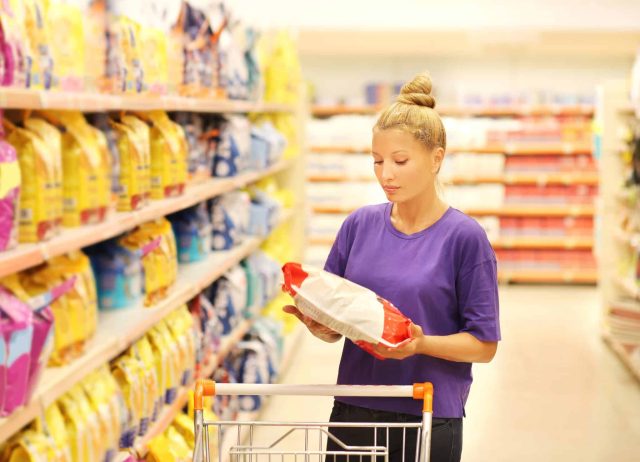
If you’ve ever picked up a bag because it said “premium” or “restaurant-grade,” you’re not gullible. You’re responding to a system that was designed to work exactly that way.
The pet food aisle is one of the few grocery categories where the shopper can’t taste, test, or easily verify the product. You can’t sample it, and your dog can’t file a review. So trust gets outsourced to the words on the bag, and that is precisely the gap soundalike terms are built to exploit.
There’s a second layer to the confusion: most owners reasonably assume that “regulated” means “verified.” In reality, AAFCO sets model definitions and labeling rules, but it doesn’t test, approve, or certify any product. Enforcement falls to the FDA and individual state regulators. There is no “AAFCO-approved” seal to look for, because AAFCO doesn’t approve anything.
Put those two facts together, and you get the modern pet food shelf: loosely policed categories like “natural” and “premium” sitting next to entirely undefined inventions like “human-quality,” all printed in the same confident fonts. Two bags that look equally trustworthy can be worlds apart in sourcing and facility standards. And nothing on the front of the package will tell you which is which.
The fix isn’t feeling guilty about past choices. Every owner reading this wants to do right by their dog; that’s why you’re reading it. The fix is knowing the one term that’s real and how to confirm it, which only takes about a minute, once you know what to look for.
Four Checks That Separate the Real Standard From the Soundalikes
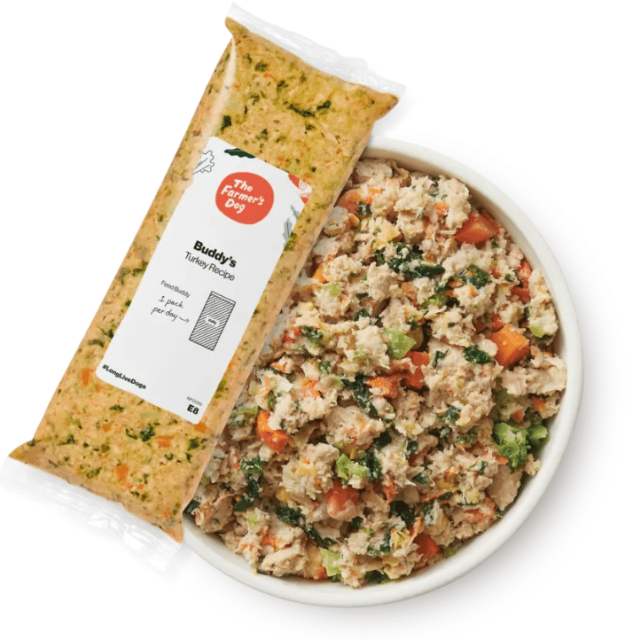
Use this checklist on any brand making a human-grade claim (or a claim that sounds like one). It works on a website, a package, or a customer service chat.
- Look for the exact words “human-grade,” paired with the intended use. AAFCO requires the claim to read like “human-grade dog food.” The term plus what the food is for. Vague cousins like “human-quality” or “made with human-grade ingredients” (note: ingredients, not the finished food) don’t clear the bar.
- Read the ingredient list like a grocery list. On a genuine human-grade food, you should recognize the ingredients as foods. Rendered-ingredient terms like “meal,” “by-product,” or “digest” are signals of a feed-grade product. Those categories don’t exist in human food production.
- Ask where the finished food is made. A genuine human-grade brand can tell you its meals are produced in a facility licensed for human food. “Our meat comes from USDA-inspected suppliers” is not the same answer. Remember that phrasing describes the supply chain, not the finished product.
- Ask the company directly. This is the fastest tell of all. Brands that meet the standard answer sourcing and facility questions readily, because the answers are their proudest selling point. Vague, defensive, or deflecting answers are a red flag.
That’s the whole skill. Four questions, under a minute, and no marketing department can talk its way around them.
|
Want a food that passes all four checks, without the detective work? The Farmer’s Dog is freshly made, human-grade food, made in facilities that meet human-food safety and handling standards, with recipes developed by On-Staff Board Certified Veterinary Nutritionists® to be complete and balanced. Build your dog’s profile and see their plan in about 2 minutes, no guesswork. |
FAQ: Human-Grade and Other Dog Food Label Terms, Answered

What does “human-grade” dog food actually mean?
It means every ingredient is fit for human consumption, and the finished food is made and handled in a facility licensed for human food production, under AAFCO’s human-grade standard. It’s the only common pet food label term with a strict, enforceable definition. It describes a sourcing-and-manufacturing standard, not that the food is made for people to eat.
Is “human-quality” the same as “human-grade”?
No. “Human-quality” has no legal or AAFCO definition. It’s one word away from “human-grade” but carries none of the requirements. Any brand can use it regardless of how the food is sourced or made. Only “human-grade” requires both human-edible ingredients and a human-food-licensed facility.
Are “restaurant-grade” and “table-grade” regulated terms?
No. They’re marketing imagery with no regulatory standard behind them. They’re designed to evoke a kitchen and a plate, but they guarantee nothing about ingredient quality or where the food is made.
Does “natural” or “premium” mean human-grade?
No. “Premium,” “holistic,” and “gourmet” have no regulatory definition at all. “Natural” does have an AAFCO definition, but it only limits how ingredients are processed. A food can be labeled “natural” and still be feed-grade. None of these terms guarantee human-edible ingredients or a human-food facility.
Isn’t “made in a USDA-inspected facility” proof that a food is human-grade?
No. Nearly all meat passes through a USDA-inspected facility at some point, so the phrase says very little. What matters is whether the finished pet food is produced to human-food standards in a facility licensed for human food, not whether a building in the supply chain was inspected.
How can I verify a brand’s human-grade claim?
Use four checks: (1) look for the exact words “human-grade” paired with the intended use; (2) make sure you recognize the ingredients as foods, with no “meal,” “by-product,” or “digest”; (3) confirm the finished food is made in a facility licensed for human food; and (4) ask the company directly. A real human-grade brand answers readily.
Is The Farmer’s Dog human-grade?
Yes. The Farmer’s Dog is freshly made, human-grade food produced in facilities that meet human-food safety and handling standards, with recipes developed by On-Staff Board Certified Veterinary Nutritionists® to be AAFCO complete and balanced. It arrives pre-portioned to your dog’s needs, so you can skip the label decoding entirely.
Is fresh, human-grade food only for “spoiling” your dog?
No. Meeting the human-grade standard isn’t about being fancy or premium — it’s simply food made to the same safety standards as food for people. The Farmer’s Dog makes fresh, human-grade food accessible with pre-portioned packs personalized for each dog and delivered to your door.
Human-Grade Isn’t Fancy, It’s Just Food You Can Actually Trust
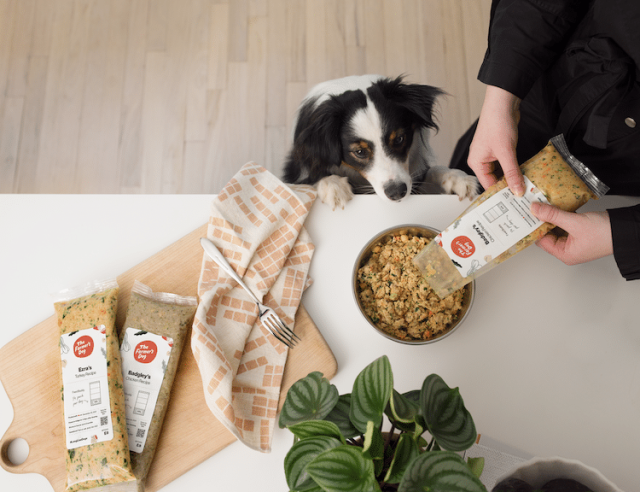
It’s worth saying clearly: meeting the human-grade standard isn’t about being boutique, and it isn’t about spoiling anyone. It’s about a basic, reasonable idea: that what goes in the bowl should be made to the same safety standards as the food on your own counter.
For your dog, the standard translates into real, everyday benefits. Fresh, gently cooked food retains natural nutrients and moisture and is clinically proven to be highly digestible, meaning your dog absorbs more of the food’s nutrients than from highly processed options (and that can mean smaller poops). Human-grade ingredients and handling ensure that what’s going in the bowl is safe to eat.
For you, the standard means the end of label decoding. Instead of parsing marketing terms in an aisle, you get pre-portioned packs tailored to your dog’s age, breed, weight, and activity level, delivered to your door fully cooked and ready to serve. Pre-portioned packs also make weight management easier, and maintaining a healthy weight is a proven longevity booster: lean dogs can live up to 2.5 years longer. (As with any health outcome, results may vary from dog to dog.)

And you don’t have to take a marketing page’s word for the science. The Farmer’s Dog’s recipes are developed by On-Staff Board Certified Veterinary Nutritionists® to meet AAFCO complete and balanced standards. Thousands of vets, including The Farmer’s Dog’s own, not only recommend the food but feed it to their own dogs.
Run The Farmer’s Dog through the four-point checklist yourself. The exact term, the recognizable ingredients, the human-food-licensed facilities, the ready answers: it passes every check. That’s not an accident; it’s the entire point of the company.
|
The Farmer’s Dog removes the hardest part: the guessing. Freshly made, human-grade food, not feed-grade dressed up in soundalike words. Recipes developed by On-Staff Board Certified Veterinary Nutritionists®, AAFCO complete and balanced, pre-portioned for your dog and delivered to your door, backed by 24/7 support from real people. |
 Toledo, United States.