
If you’ve got a Staffy puppy at home, you’re probably checking their growth every few weeks and wondering if they’re on track. It’s one of the most common questions new Staffy owners have, and for good reason. These compact, muscular dogs pack a lot of body into a relatively small frame, and knowing what’s normal makes a huge difference in how you feed, exercise, and care for them.
This guide covers Staffordshire Bull Terrier weight by age for both males and females, from newborn all the way through adulthood. You’ll find detailed growth charts, feeding amounts, a breakdown of muscle development, and tips for keeping your Staffy at a healthy weight.
Keep in mind these are averages based on breed standards. Every dog is different, and genetics play a big role. If your Staffy is running a bit ahead or behind these numbers, that’s usually fine. What matters most is consistent, steady growth and a body condition your vet is happy with.
📊 Quick Stats: Staffordshire Bull Terrier Size Overview
- Adult male weight: 28–38 lbs (13–17 kg)
- Adult female weight: 24–34 lbs (11–15.5 kg)
- Adult height (both sexes): 14–16 inches at the shoulder
- Full height reached: ~12 months
- Full muscle/weight maturity: 18–24 months
- AKC breed standard weight: 28–38 lbs (male), 24–34 lbs (female)
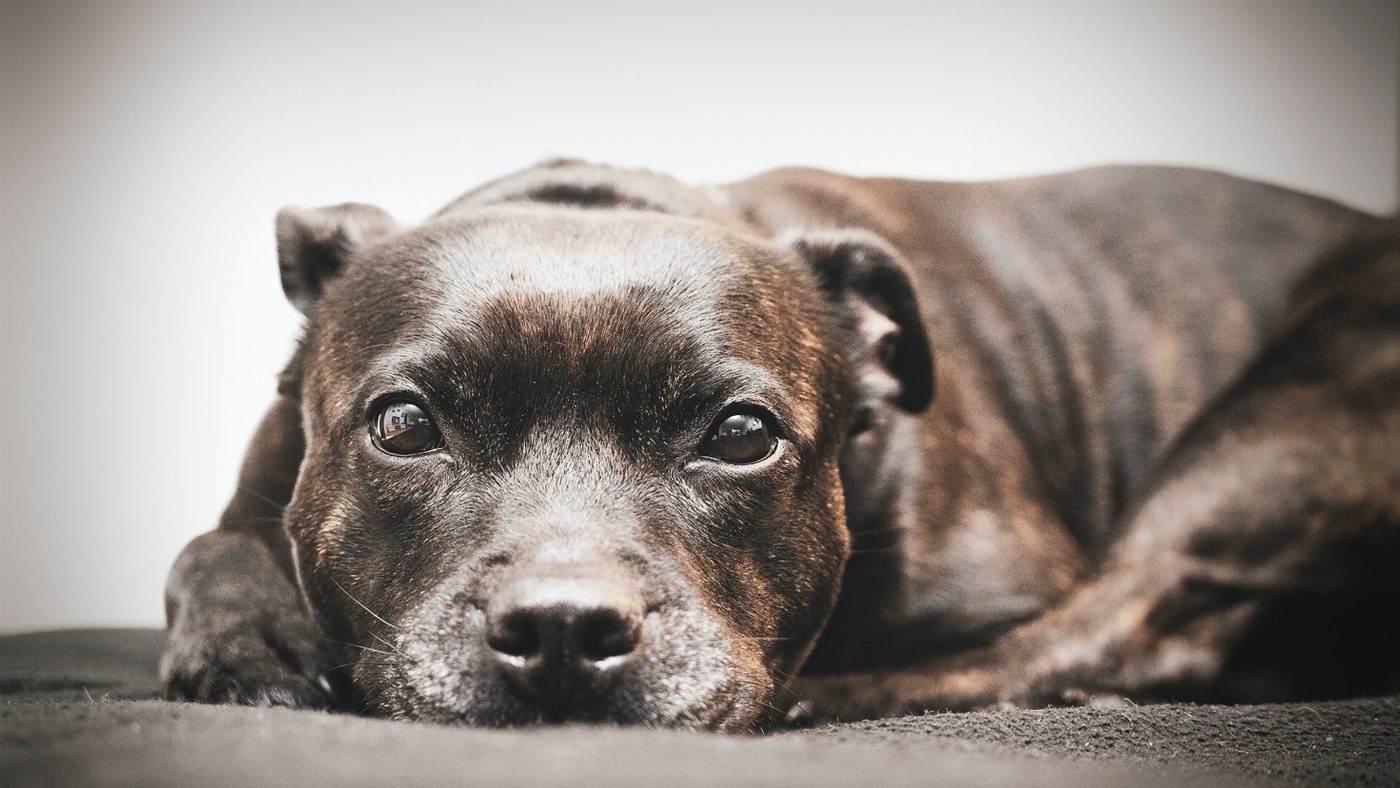
Male Staffordshire Bull Terrier Weight and Height by Age
Male Staffies grow quickly in their first six months, then slow down as they approach their first birthday. Their skeletal growth is mostly done by 12 months, but they’ll continue filling out with muscle for another 6 to 12 months after that. The table below shows average weight and height for male Staffies from birth to 3 years.
Always consult your vet if your dog is significantly outside these ranges. Genetics, diet, and activity level all affect where your individual dog lands.
| Age | Weight (lbs) | Weight (kg) | Height (inches) | Height (cm) |
|---|---|---|---|---|
| 0–1 months | 4–7 | 1.8–3.2 | 5–6 | 13–15 |
| 2 months | 9–13 | 4.1–5.9 | 7–8 | 18–20 |
| 3 months | 15–20 | 6.8–9.1 | 9–10 | 23–25 |
| 4 months | 20–25 | 9.1–11.3 | 10–11 | 25–28 |
| 5 months | 25–30 | 11.3–13.6 | 11–12 | 28–30 |
| 6 months | 28–34 | 12.7–15.4 | 12–13 | 30–33 |
| 7–9 months | 30–38 | 13.6–17.2 | 13–14 | 33–36 |
| 10–12 months | 32–40 | 14.5–18.1 | 14–16 | 36–41 |
| 18 months | 34–42 | 15.4–19.1 | 14–16 | 36–41 |
| 2 years | 28–38 | 12.7–17.2 | 14–16 | 36–41 |
| 3+ years | 28–38 | 12.7–17.2 | 14–16 | 36–41 |
Note: Adult weights at 2–3 years reflect the AKC breed standard range. Some Staffies, especially those bred for show vs. working lines, may fall slightly outside this range.
Female Staffordshire Bull Terrier Weight and Height by Age
Female Staffies follow a similar growth curve but typically run 3–6 lbs lighter than males at each stage. They also tend to reach their adult weight a bit earlier. Here’s what to expect from birth through adulthood.
| Age | Weight (lbs) | Weight (kg) | Height (inches) | Height (cm) |
|---|---|---|---|---|
| 0–1 months | 3–6 | 1.4–2.7 | 5–6 | 13–15 |
| 2 months | 8–12 | 3.6–5.4 | 7–8 | 18–20 |
| 3 months | 14–18 | 6.4–8.2 | 8–9 | 20–23 |
| 4 months | 18–22 | 8.2–10 | 9–10 | 23–25 |
| 5 months | 22–27 | 10–12.2 | 10–11 | 25–28 |
| 6 months | 24–30 | 10.9–13.6 | 11–12 | 28–30 |
| 7–9 months | 27–33 | 12.2–15 | 12–13 | 30–33 |
| 10–12 months | 28–36 | 12.7–16.3 | 13–15 | 33–38 |
| 18 months | 28–36 | 12.7–16.3 | 13–15 | 33–38 |
| 2 years | 24–34 | 10.9–15.4 | 13–15 | 33–38 |
| 3+ years | 24–34 | 10.9–15.4 | 13–15 | 33–38 |
Feeding Your Staffy Puppy: How Much at Each Stage
Getting nutrition right during the growth phase isn’t just about picking the right food. It’s also about feeding the right amount at the right times. Overfed puppies can develop joint problems, and underfed ones miss out on the muscle development Staffies are known for.
One of the smartest things you can do early on is find the best puppy food for your Staffordshire Bull Terrier. Look for formulas with real protein as the first ingredient and appropriate calcium-to-phosphorus ratios for medium breeds.
🍽️ Staffy Puppy Feeding Guide by Age
| Age | Daily Amount | Meals Per Day |
|---|---|---|
| 6–12 weeks | 0.5–1 cup | 4 meals |
| 3–6 months | 1–1.5 cups | 3 meals |
| 6–12 months | 1.5–2.5 cups | 2–3 meals |
| 12+ months (adult) | 1.5–2.5 cups | 2 meals |
Amounts are based on standard dry kibble. Adjust based on your dog’s activity level and the specific food’s calorie density. Always follow your vet’s guidance.
Adding the right supplements for your Staffy puppy during the growth phase can support bone density and joint health. Just don’t overdo calcium; excess calcium in large or medium breeds during puppyhood has actually been linked to bone abnormalities, so only supplement if your vet recommends it.
Muscle Development: When Do Staffies Fill Out?
Here’s something that surprises a lot of first-time Staffy owners: at 9 or 10 months, your dog might look lean or even a bit gangly. That’s completely normal.
Staffies go through a phase where their height is nearly finished but their muscle mass hasn’t caught up. The real filling-out happens between 12 and 24 months. During this period, your Staffy will develop the broad chest, thick neck, and powerful hindquarters the breed is known for.
A few things drive this muscle development:
- Protein intake: High-quality animal protein is essential. Look for foods with 25–30% crude protein at minimum.
- Exercise: Regular moderate activity builds muscle. Off-leash play, fetch, and swimming are all great options. Avoid repetitive high-impact exercise on hard surfaces until your dog is at least 12–18 months old, since growth plates are still developing.
- Sleep: Staffies, especially puppies, need 14–18 hours of sleep a day. Growth hormone is released during deep sleep, so rest is as important as exercise for muscle development.
- Neutering/spaying timing: Early spay/neuter (before 12 months) can delay growth plate closure and sometimes results in a leggier, less muscular build. This is worth discussing with your vet.
If you want to support your Staffy’s joints as they go through this growth phase, a quality joint supplement for Staffordshire Bull Terriers can help keep cartilage healthy during the high-growth period.
How to Tell If Your Staffy Is at a Healthy Weight
Tables and charts are great starting points, but your hands tell you more than any number on a scale.
Here’s a quick body condition check you can do at home:
- Ribs: You should be able to feel your Staffy’s ribs easily with light pressure, but they shouldn’t be visually poking out. If you can see ribs from across the room, your dog is underweight.
- Waist: Looking down from above, you should see a slight hourglass shape. No waist at all usually means overweight.
- Belly tuck: From the side, the abdomen should angle upward from the chest toward the hindquarters. A sagging belly or no tuck is a red flag.
- Back: Run your hand along the spine. You should feel the vertebrae but not see them prominently.
Staffies are prone to weight gain as they age, especially after spaying or neutering, and especially if their exercise decreases. A dog that’s 5–10 lbs overweight puts significant stress on joints that are already working hard to support a muscular frame. If your older Staffy is slowing down, it’s worth checking out the best supplements for senior Staffordshire Bull Terriers to help support mobility and energy levels.
Good training habits for your Staffordshire Bull Terrier also help with weight management. A well-trained Staffy gets more exercise because they’re easier to take out. Recall, leash manners, and basic obedience all open up more opportunities for off-leash time and longer walks.
Growth Spurts and What to Expect
Staffies don’t grow in a straight line. You’ll notice periods of rapid gain followed by weeks where the scale barely moves. That’s normal.
The fastest growth typically happens between 2 and 6 months. After that, gains slow but don’t stop. You’ll also notice behavioral changes during growth spurts. Some Staffies get hungrier, others seem clumsier as their legs catch up to their body, and a few get a bit moody (yes, really).
Growth spurts can also make puppies more tired than usual. Don’t be surprised if your normally bouncy Staffy sleeps more for a week or two during a rapid growth phase. Let them rest. That’s when the real growth work happens.
If your Staffy seems anxious during these big developmental changes, that’s worth addressing directly. Here are 7 proven ways to calm your Staffordshire Bull Terrier’s anxiety that work well during stressful growth periods.
When Do Staffordshire Bull Terriers Stop Growing?
Most Staffies reach their full height by 12 months. But “full grown” is a bit misleading for this breed because the physical maturation continues well past that point.
Here’s a rough breakdown:
- 6–9 months: Close to adult height, but still lean and lanky
- 12 months: Skeletal growth mostly complete
- 12–18 months: Rapid muscle development and chest broadening
- 18–24 months: Reaches full muscle maturity and adult proportions
- 2–3 years: Mental maturity fully settles in
Mentally, Staffies stay puppy-brained longer than their bodies suggest. Most owners describe their two-year-old Staffy as “physically an adult, emotionally still a goofy teenager.” Expect that to start settling around 2.5 to 3 years old.
One last thing worth mentioning: a Staffy’s coat can also go through changes during growth. If you want to support healthy skin and a shiny coat as your dog develops, there’s a simple approach to improving your Staffordshire Bull Terrier’s skin and coat that many owners swear by.
Frequently Asked Questions About Staffordshire Bull Terrier Weight
How much should a Staffordshire Bull Terrier weigh?
Adult males typically weigh 28–38 lbs (13–17 kg) and females weigh 24–34 lbs (11–15.5 kg). Both sexes stand 14–16 inches at the shoulder. These are the official AKC breed standard ranges. Individual dogs may fall slightly outside these numbers depending on genetics and build.
When do Staffordshire Bull Terriers stop growing?
They reach full height around 12 months. Muscle development and full body maturity happen between 18 and 24 months. Mental maturity typically settles in by age 2.5 to 3 years.
How fast do Staffy puppies grow?
Very fast in the first six months. A Staffy puppy can go from 4–7 lbs at birth to 28–34 lbs by six months. After that, growth slows as the dog approaches adult height. Weight gain continues more gradually through 18 months.
How much should a 6-month-old Staffy weigh?
A 6-month-old male Staffy typically weighs 28–34 lbs. Females at the same age are usually 24–30 lbs. If your puppy is a bit outside these ranges, check with your vet to rule out nutrition issues or health concerns.
Do male and female Staffies grow at different rates?
Yes. Males tend to be slightly heavier and take a little longer to reach full muscle maturity. Females often reach their adult weight a few months earlier than males do. Both follow similar height timelines.
How do I know if my Staffy is overweight?
The best check is the rib test. You should feel ribs easily with light pressure but not see them visibly. From above, there should be a slight waist tuck. If your dog has no visible waist and you’re having trouble feeling ribs, it’s time to talk to your vet about a diet plan.
When should I switch my Staffy from puppy food to adult food?
Most owners switch around 12 months. Since Staffies are a medium-sized breed, they don’t need to wait as long as large breeds before transitioning. Your vet can confirm the right timing based on your specific dog’s development.
Can over-exercising hurt my Staffy puppy’s growth?
Yes, especially before 12 months. High-impact repetitive exercise on hard surfaces (like long pavement runs) can stress developing growth plates and joints. Stick to moderate play sessions, fetch on grass, and short leash walks until your pup is at least 12 months old.
How much should I feed my Staffy puppy?
From 6–12 weeks, 0.5–1 cup of quality kibble split across 4 meals daily. From 3–6 months, 1–1.5 cups across 3 meals. From 6–12 months, 1.5–2.5 cups across 2–3 meals. Always adjust based on your dog’s energy level and the specific food’s calorie density.
Why does my Staffy look skinny even though I’m feeding the right amount?
Between 9 and 12 months, many Staffies go through a lean, leggy phase. It’s the same “teenager” look you see in a lot of breeds. As long as you can feel ribs with light pressure but not see them easily, your dog is probably fine. They’ll fill out as muscle development ramps up between 12 and 18 months.
Bottom Line
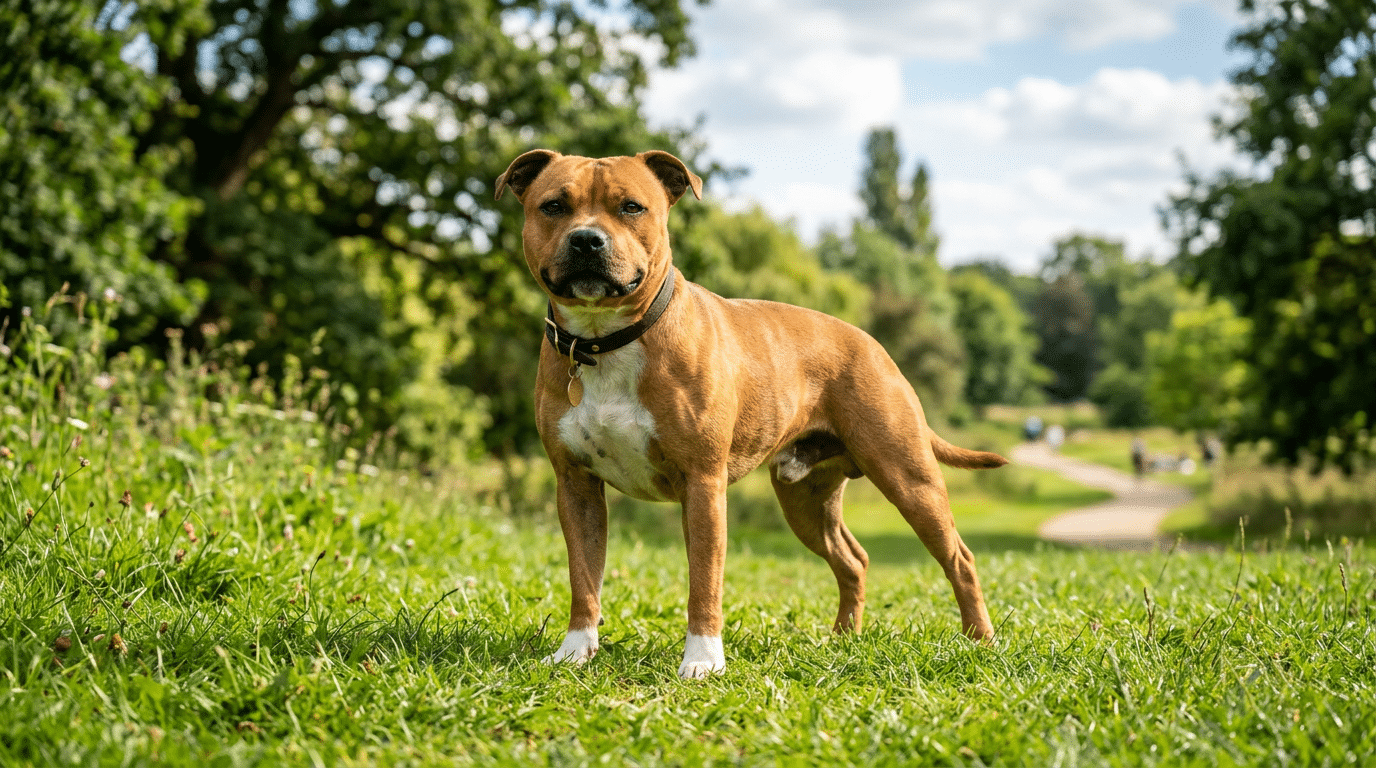
Staffordshire Bull Terriers are one of those breeds that look fully grown before they actually are. The charts above give you solid benchmarks to track your dog’s progress, but don’t get too hung up on hitting exact numbers. A Staffy that’s eating well, exercising appropriately, and getting regular vet checkups will find their ideal weight naturally.
What matters most is the long game: a lean, muscular dog with a defined waist, good energy, and no joint issues. That’s what a healthy Staffy looks like at any age, and it’s achievable with the right food, the right amount of exercise, and a little patience through those gangly puppy months.
Track their growth, trust the rib test, and check in with your vet annually. Your Staffy will thank you for it.
- Best Supplements for a Senior Staffordshire Bull Terrier
- Best Flea & Tick Products for Staffordshire Bull Terriers
- Best Online Dog Training Courses for Staffordshire Bull Terrier
- Best Hip & Joint Supplement for a Staffordshire Bull Terrier
- What Supplements Should I Give a Staffordshire Bull Terrier Puppy?
- The 9 Best Staffordshire Bull Terrier Puppy Foods
- Best Dog Beds for Staffordshire Bull Terriers
- Improve Your Staffordshire Bull Terrier’s Skin & Coat with This One Hack
- Giving This to Your Staffordshire Bull Terrier Daily Can Alleviate Itchy Allergies
- 6 Natural Ingredients to Fight Your Staffordshire Bull Terrier’s Allergies
- 7 Ways to Calm Your Staffordshire Bull Terrier’s Anxiety
- 6 Remedies for Your Staffordshire Bull Terrier’s Diarrhea, Gas, or Vomiting
- 7 Best Dental Chews for a Staffordshire Bull Terrier
 Toledo, United States.