
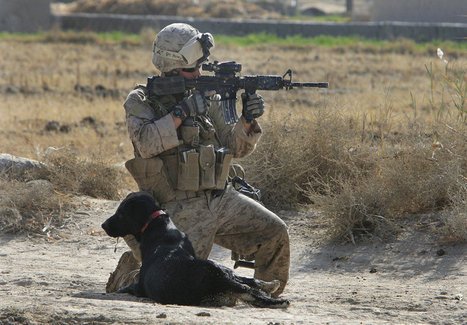
America’s four-legged warriors are one step closer to being guaranteed a ride home following service to their country, following the passage of the 2016 National Defense Authorization Act (NDAA) by both the House of Representatives and Senate. For the first time, language in the bill, supported by the American Humane Association, mandates that our heroic military working dogs will be returned to U.S. soil upon retirement, and that their human handlers and their families – to whom these dogs mean more than anyone else –will be given first right of adoption.
The language was introduced in the House and the Senate by Congressman Frank LoBiondo and Senator Claire McCaskill.
American Humane Association now calls on President Obama to sign the bill.
Why It’s Important
It is estimated that each Military War Dog (MWD) dog saves the lives of between 150-200 servicemen and women by detecting IEDs and hidden weapons caches.
Yet, when they have done their service, they are often just “cut loose.” And their fate is left undetermined.
“Many different things can happen: they can remain in the kennels for indeterminate lengths of time or occasionally they are adopted by local families,” a representative of the American Humane Association told iHeartDogs.com. “In the case of CWD Carlos, the 2013 Military Dog of the Year at the American Humane Association Hero Dog Awards®, he was adopted by a family overseas who abused him. He was later adopted by a family over here and they gave him a wonderful life until he sadly passed away. Because these dogs are so highly trained, there is concerns that they could wind up in the hands of terrorists or militant groups who could use them against our own military.”
Prior to the passage of this groundbreaking act, military working dogs were not guaranteed retirement on the home front, and some were retired overseas, making them civilians and rendering them ineligible for transportation home on military aircraft. Over the past year, American Humane Association has privately funded the transportation home of 21 military working dogs and contract working dogs and helped reunite them with their former human handlers. In July of 2014, American Humane Association held a congressional briefing on Capitol Hill to shed light on the need to bring home all our veterans and press for long-overdue changes to the NDAA.
“This is a momentous day for all veterans,” said Dr. Robin Ganzert, American Humane Association president and CEO. “We applaud Congress for including the language we provided and stepping up for our brave K-9 Battle Buddy teams who have benefited and will continue to benefit from their service together.”
Not Just a Piece of Equipment
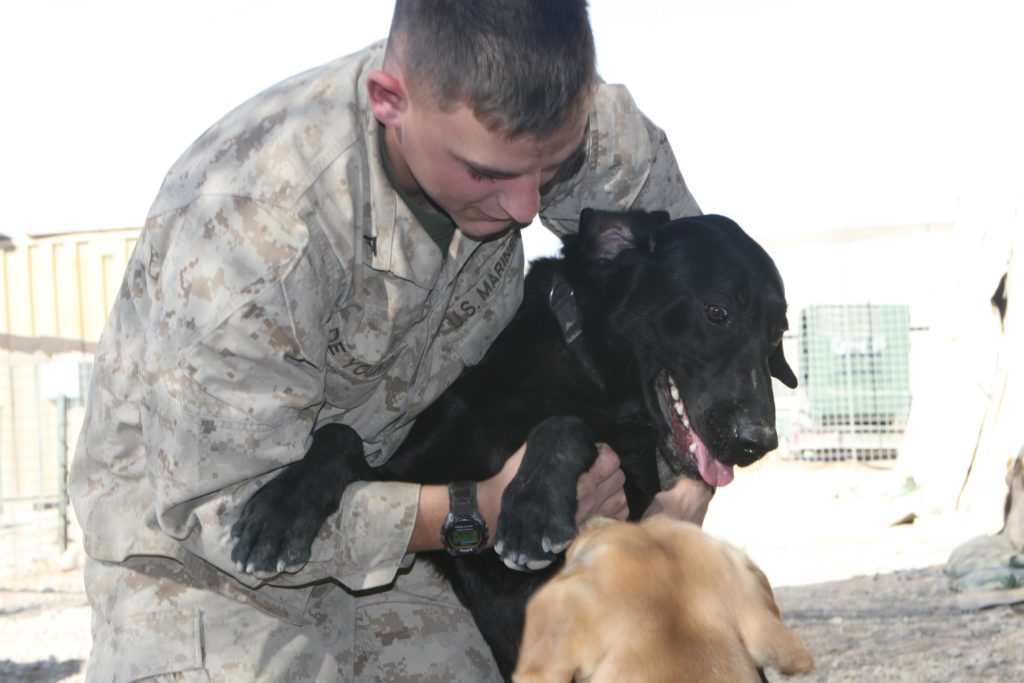
The men and women who handle these dogs do not see them as another piece of equipment, like a gun, but as a fellow soldier-at-arms and even family. When they leave them behind, it’s very hard on the soldiers – they are feeling a “man” behind.
Many have gone to great lengths, and incurred many costs, to get their partners back once they are stateside.
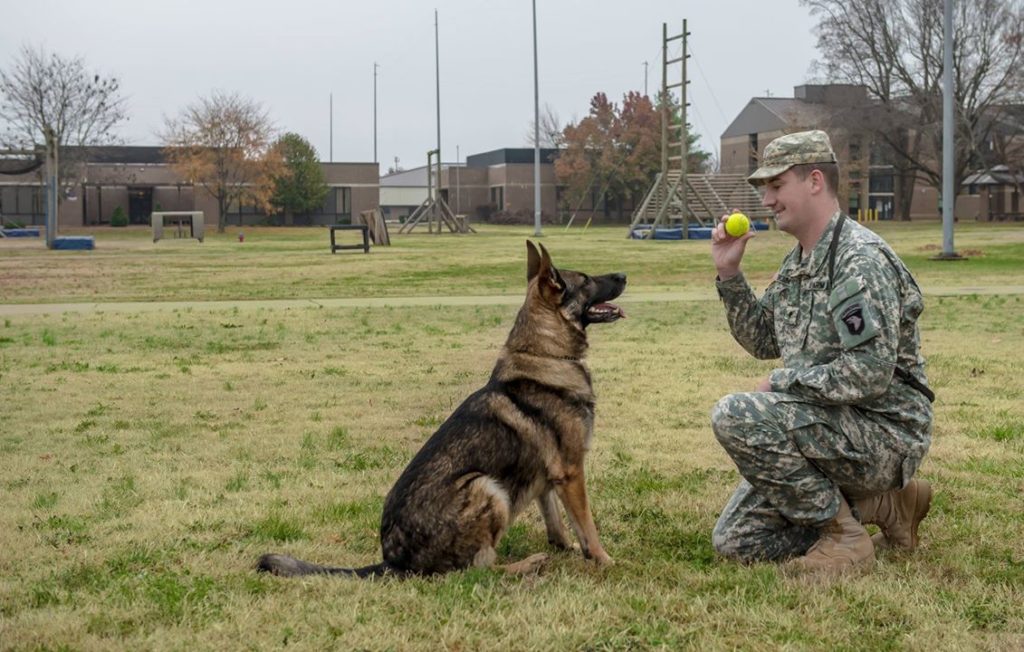
For example, Army Specialist Brent Grommet and his family were luckily enough to get back MWD Matty with the help of the American Humane Society. Grommet had been wounded in an explosion and sent back the United States, without Matty. He had been adopted to another family (even though Grommet has filled out adoption paperwork).
Lifesaving Work Continues at Home
For some of our brave servicemen and women, the return home from war is not the end of the battle.
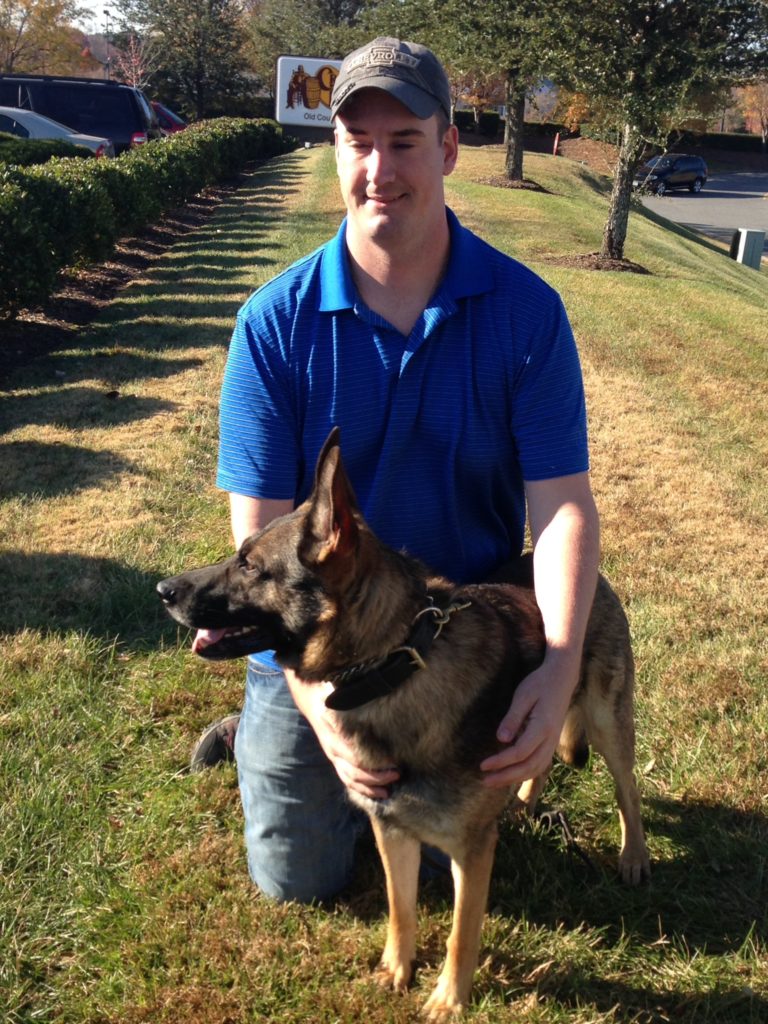
Every year thousands of our nation’s veterans are diagnosed with post-traumatic stress, and easing back into society is difficult or even terrifying. Reuniting handlers and war dogs (who themselves can suffer from PTS) helps both heal. In this way the bond between veterans that saved lives on the battlefield now saves lives at home.
A happy – and healthy – retirement for America’s military hero dogs
The passage of the 2016 NDAA is the second major victory for military dogs accomplished with the help of American Humane Association. In its July 2014 briefing, the organization called on the private sector to provide veterinary care for all retired military dogs. On Veterans Day 2014, American Humane Association and the United States War Dogs Association announced an arrangement with New Jersey’s Red Bank Veterinary Hospital to provide free specialized veterinary care to all retired canine veterans.
“These heroes have served their country with valor, and saved the lives of our servicemen and women while risking their own,” said John Payne, chairman of the board for American Humane Association. “It is essential that we step up and care for these warriors who did – and continue to do – so much for us and all those who served alongside them. We owe them a debt of gratitude.”
With their repatriation, handler adoption and specialized health care now assured, Dr. Ganzert declared, “This is a great day for military heroes on both ends of the leash. We believe ALL our veterans – two-footed and four-footed — should come back to a hero’s welcome, a loving, forever home, and the happy, healthy, and dignified retirement they so deserve after a lifetime of service to their country.”
A Battle We Can All Fight
It’s not over for these dogs just yet. We need to keep rallying and showing our support of this act.
“Just this week the House passed a new version of the NDAA with $5 billion less in spending, but it still has the provisions for MWDs,” a representative for American Humane Society told iHeartDogs.com “We hope the Senate will pass it either this week or next, then it can once again go to the president for his signature.”
To learn more about American Humane Association and how you can help, visit http://www.americanhumane.org/
 Toledo, United States.