
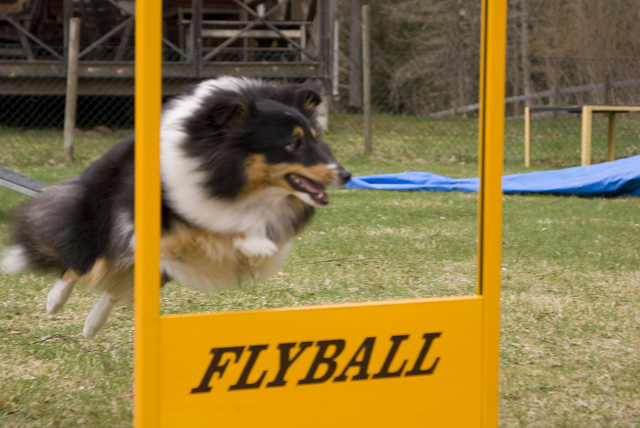
Whenever someone sees an owner struggling with a super active, high-energy dog they usually tell them, “your dog should do agility/flyball/frisbee/etc.” And it may make sense – your dog has lots of energy and you would love it if your dog was tired for once. Plus, dog trainers have used the slogan “a tired dog is a good dog” to sell classes forever, and that is definitely an appealing outcome. However, should every high-energy dog really do sports? Or can it make them worse? The question came to me first, when someone wanted help getting a dog adopted but said he couldn’t go to an agility home because the dog was just “too much.” And second, when I started noticing that trying to do herding with my own young Sheltie seemed to be making him worse, not better. Herding was clearly not an appropriate outlet for his energy. Jennifer Mauger, CPDT-KSA, owner of L’Chaim Canine , is an expert dog trainer specializing in positive training backed by scientific studies. We asked her about high-energy dogs and when a doing a dog sport may not be the best outlet for your dog’s energy.
What is a high-drive dog exactly?
JM: Sometimes it comes down to actual working drive versus hyperactivity, reactivity and/or lack of self-control. A truly high drive dog should be defined as a dog with a large desire to work and the ability to do so.
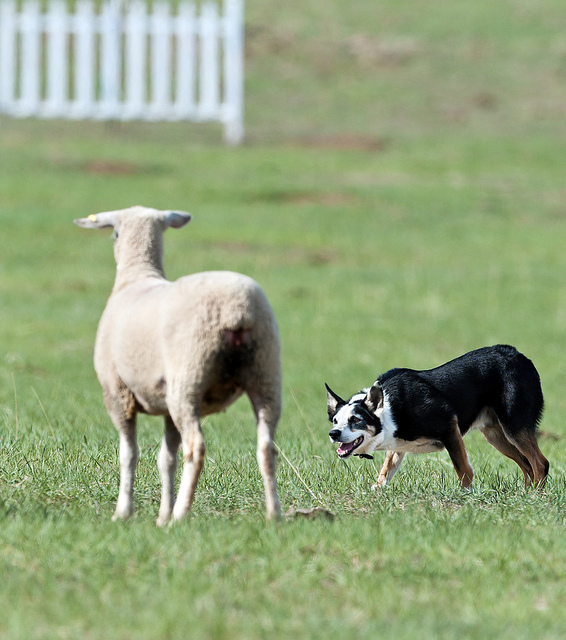
I see this often, not only with client dogs, but also other competition dogs. They go from 0 -60, and are then threshold and unable to focus, learn or compete. Some of these dogs I would classify as hyperactive versus high-drive. With these dogs it could be a genetic component. Or, in the case of rescues especially, lack of early socialization and education to dogs simply without self-control. That is usually a learned behavior. Schutzhund dogs come to mind.
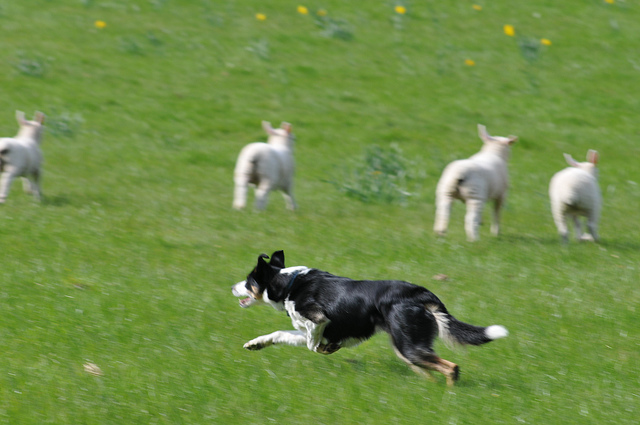
Some people think that their dog yelling and screaming in their vehicle is normal. A lot of times by the time these dogs hit the training field they are already spent. Had their person taught self-control early on this would not be a problem. Some dogs lack maturity. In this case working on self-control might be a process especially when it comes to activities they want to do instinctively such as herding.
If not all high-drive dogs should play sports how can you tell if your dog is ready to?
JM: I think all high drive dogs should be able to participate in sports. But with that said, if your dog lacks the self-control do be able to focus and learn in that environment then it is time to tack a big step back and do more ground work in self-control. You will know when your dog is ready when they can remain under threshold in the training environment. Or you may need to also utilize management techniques while training. For example my youngest Rottweiler, Tova, has an incredible amount of herding instinct and is high drive. She does not have the self-control to work off line. On line and worked in short increments she can remain under threshold and learn. Sometimes, we simply work our dogs too long and are over threshold due to simply being over stimulated or over tired. This can be remedied by keeping training short and sweet.
Are there dogs that will never be able to do a high drive sport?
JM: Yes. For those dogs that suffer anxiety and hyperactivity they may not be able to obtain the self-control necessary for a particular sport. If your dog is out of control and their behavior is worse with every attempt it is time to find something else to do.
If your dog is not ready for a high-drive sport, what should you do to prepare him?
JM: Work on self-control! Tova’s mom and sister competed in Schutzhund. When I got Tova at 14 weeks she would go nuts when she saw either of them walk on the field to work. Lunging, barking, crying etc. Instead of putting her away I worked on clicking and treating her for all appropriate and calm behavior. Within a couple of days she was able to lay down quietly on the edge of the field and watch them work. With herding, we are taking a step back and working on self-control. I will be doing the same as above. Clicking and treating for appropriate and calm behavior around livestock. This will become her key to work.
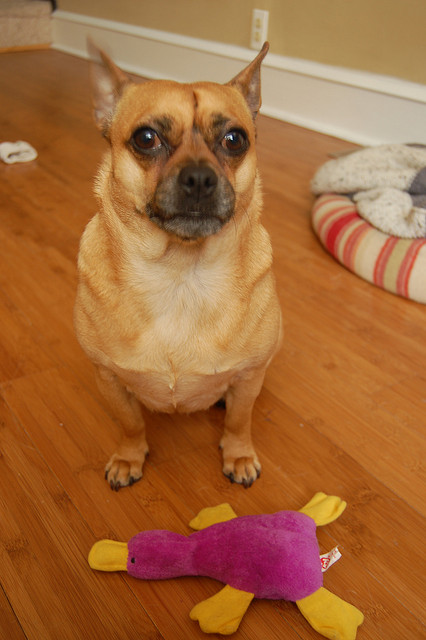
You can feel like a bad owner—for example not letting your border collie do agility—is it really necessary for them to have a happy life?
JM: Puppies do not come into the world wanting to do agility, etc. If they are not able to participate there are plenty of other things we can do to fulfill our dogs’ needs for mental and physical stimulation. Try a different or calmer sport such as tracking or nosework. Go for a hike and train some tricks. Herding too much? Try treiball.
Get a Trainer
This information is just the beginning. The best advice is to start working with a certified dog trainer as soon as possible, to help you with your dog. They will create a training plan that suits your particular dog’s needs and help you both live a better life together. Tracking can be a fun way to engage your dog without getting him to the put where he is over threshold. About the Author Based in Wilsonville, Ore., animal lover Kristina N. Lotz is a Certified Professional Dog Trainer – Knowledge Assessed (CPDT-KA) and a member of the Dog Writers Association of America. She is the founder of A Fairytail House. In her spare time, she trains and competes in a variety of performance events with her Shetland Sheepdogs and caters to her two rescue kitties. She smartly married a Veterinary Technician, who helps keep the fur kids happy and healthy, and provides a quick resource for articles.
 Toledo, United States.