
You’re standing in the pet store aisle, two premium dog food bags in your hands. Both have clean-looking labels. Both look healthy, but one costs nearly twice as much, and you’re honestly not sure why.
You flip one over. The ingredient list looks fine at a glance, but there, somewhere near the bottom of the guaranteed analysis, you notice a phrase that catches you: human grade. You’ve seen it before. I’m going to tell you what it really means.
I was a veterinary technician for more than 15 years. In that time, I saw thousands of dogs in exam rooms, and I watched diet quietly shape their health in ways owners often don’t connect until things have been off for a while.
I’m skeptical by default when it comes to pet food marketing. It takes a lot to impress me. But The Honest Kitchen’s focus on real, human grade ingredients made it a brand worth a closer look.
Before We Talk About Human Grade Dog Food, Meet Debbie

Debbie came to me from the Grand Strand Humane Society in South Carolina, rescued near a freeway on-ramp where she’d been surviving on fried chicken scraps tossed to her by kind gas station employees.
When she finally arrived at my house, she was thin, covered in flea and tick damage, and had a healed fracture in her right rear leg she’ll eventually need surgery to correct. Her coat was dry and patchy. She had rashes and abrasions all over from constant scratching, and her stools were soft and all over the place.
The only place she felt safe was in her crate, hiding under her dog bed. Every sound made her jump.
The food change I made for Debbie is part of why I’m writing this. But to understand why that change mattered, you first need to understand what human grade dog food actually is, and what it isn’t.
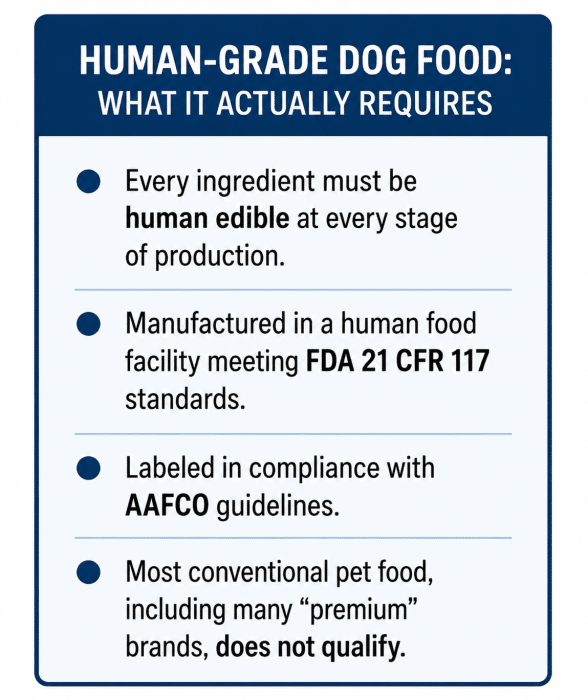
“Human grade” has a specific regulatory definition that determines everything from the ingredients used to the facility where the food is made.
What Does “Human Grade” Dog Food Really Mean?
Human grade dog food is a specific regulatory designation, not a marketing claim any brand can apply freely. To legally call a product human grade, two things must be true.
First, every single ingredient must be fit for human consumption at every stage of production, from the farm or supplier all the way to the bag. Not just “inspired by” human food. Actually human-edible, with documentation to back it up.
Second, the food must be manufactured in a facility that complies with FDA regulations for human food safety, specifically 21 CFR 117, the Current Good Manufacturing Practice standards for human food. That means the facility itself, the equipment, the sanitation protocols, the testing procedures, all of it has to meet the same standards as a factory making food for people.
The Association of American Feed Control Officials (AAFCO) sets the labeling requirements for the human grade designation. Brands that don’t meet both criteria can’t use the term.
So why don’t more brands qualify? Because sourcing human-edible ingredients is more expensive, and manufacturing in a human food facility costs more to operate and maintain than a conventional pet food facility.
The Honest Kitchen is the world’s first pet food company to earn the human grade designation through regulatory compliance. That happened because Lucy Postins, the founder, built the company around that standard from day one.
In 2002, she started dehydrating real ingredients in her San Diego kitchen to help her Rhodesian Ridgeback, Mosi, through chronic ear infections and skin problems. What she couldn’t find on the shelf, she made herself. The company that grew from that kitchen became The Honest Kitchen, and the human grade standard it established has been its baseline ever since.
Curious what human grade dog food actually looks like in the bowl?
Explore The Honest Kitchen’s Wholemade Dehydrated recipes made with the same quality standards as the food on your own table.
Feed-Grade vs. Human Grade: The Difference That Shows Up in the Bowl

Most pet food is made with feed-grade ingredients. That’s just a fact, and it’s worth understanding what “feed-grade” actually allows.
Feed-grade is the standard for ingredients intended for animal consumption. It’s a lower bar than human food in several specific ways. Feed-grade sourcing can include 4D meats (from dead, dying, diseased, or disabled animals), meat meals, and by-products from processing facilities that don’t meet human food standards. The ingredients don’t need to be documented the way human food ingredients do.
That’s not a scare tactic. I’m not telling you every feed-grade food is dangerous. I’m telling you that as a vet tech, when owners ask me why their dog’s skin or coat isn’t improving despite switching to something “premium,” one of the first questions I ask is what’s actually in the bag; not just the top ingredients, but the facility standards behind them.
The Honest Kitchen does something most pet food companies don’t: every ingredient supplier must provide a Certificate of Analysis from an accredited laboratory before that ingredient enters their facility. They run more than 1,500 laboratory tests per month across over 250 samples. Third-party audits of ingredient suppliers happen on an ongoing basis. That’s not typical.
Here’s how feed-grade and human grade compare side by side:
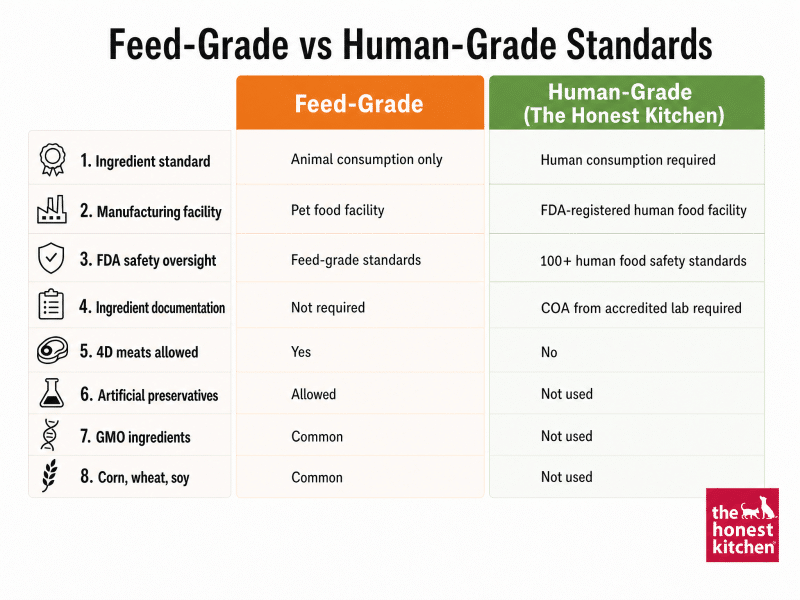 After 15 years in veterinary clinics, the feed-grade vs. human grade gap is the single distinction I wish more pet owners understood before they bought their next bag. It’s not about luxury. It’s about knowing what standard your dog’s food is actually held to.
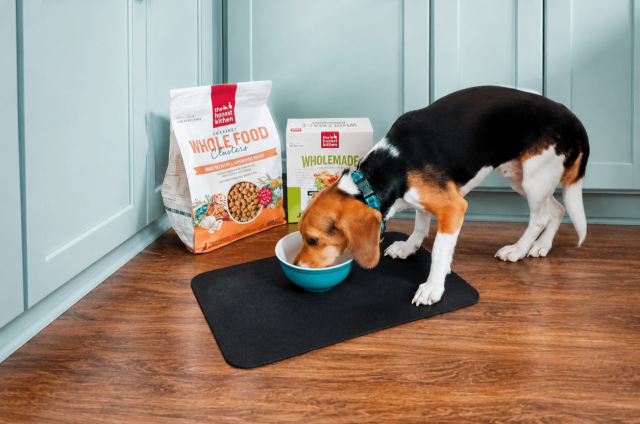
If you’ve been feeding conventional kibble and want to understand the difference firsthand, Whole Food Clusters is a natural starting point.
Use code IHEARTDOGS for 40% off your first order of $30+.
How Your Dog’s Food Is Made Matters as Much as What Goes Into it

Here’s something a lot of pet owners don’t think about: even if a food starts with quality ingredients, the way it’s processed determines how much of that quality actually makes it into your dog’s bowl.
Most conventional dry dog food is made through a process called extrusion. Ingredients are cooked and shaped under high heat and pressure in a matter of seconds. That process is efficient. It extends shelf life. It also degrades heat-sensitive vitamins, enzymes, and amino acids. Synthetic nutrients are typically added back in after extrusion to compensate for what the heat removed.
So you can have a bag that lists chicken as the first ingredient, and what ends up in the bowl is nutritionally closer to a supplement-fortified starch than to actual chicken.
Dehydration works differently. Moisture is removed using gentle, warm air at temperatures significantly lower than those used in extrusion. Because there’s no intense heat blast, the naturally occurring nutrients in whole food ingredients are better preserved, not replaced after the fact.
The Honest Kitchen’s Whole Food Clusters use a proprietary low-heat process: real whole food ingredients are cold-pressed into bite-sized clusters, then roasted and gently dehydrated until golden. The result is a dry food with shelf-stable convenience and far less processing than conventional kibble.
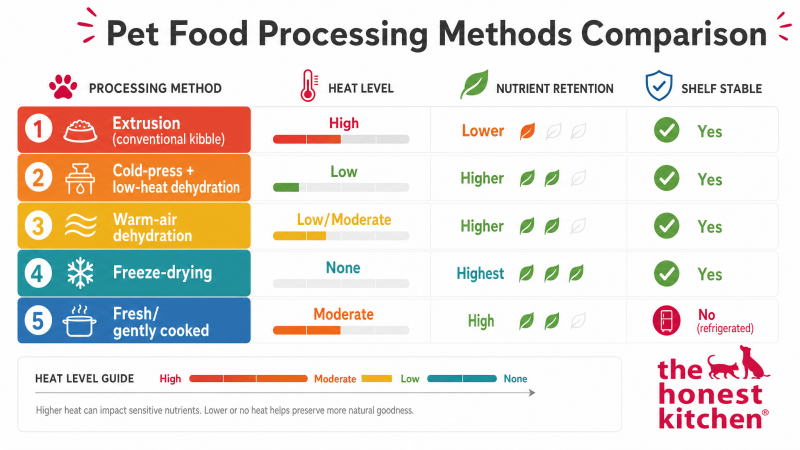
Both Wholemade Dehydrated and Whole Food Clusters are shelf-stable and do not require refrigeration. That’s real convenience without the processing tradeoff.
Which Dogs Tend to Thrive on Human Grade Whole-Food Nutrition?
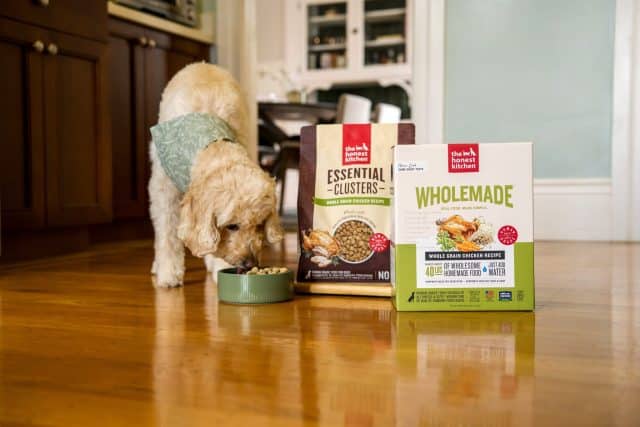
Not every dog shows dramatic changes from a food upgrade. But in my experience, certain dogs respond in ways that are hard to ignore.
Dogs with sensitive stomachs or recurring digestive issues are often the most obvious candidates. Chronic loose stools, inconsistent digestion, recurring GI flare-ups; these are dogs whose systems are often reacting to something in the feed-grade ingredient chain, even when owners have tried several “sensitive stomach” formulas.
Dogs with dull coats, persistent skin irritation, or itching without a clear allergy diagnosis are another group. I’ve seen dogs that went through months of allergy workups only to improve when the food changed. Not always. But often enough that food became the first thing I asked about.
Picky eaters who’ve cycled through multiple foods and lost enthusiasm for the bowl. Senior dogs who need clean, easy-to-digest nutrition. Active dogs that need sustained energy from quality protein. Pet parents who’ve read a dog food ingredient list, felt uneasy, and couldn’t shake it.
Any of that sound familiar?
Debbie’s Story

When I took Debbie in as a foster, she was eating a store-brand generic kibble from the shelter. Given everything she’d been through, I knew her gut would need some time, but I wanted to give her a better foundation.
I started transitioning her to The Honest Kitchen’s Wholemade Dehydrated Grain Free Chicken recipe, mixing it slowly into her existing food over about ten days.
By the end of the first week, her stools had noticeably firmed up. That alone was a relief. By week three, I started noticing new hair coming in on the bare patches along her sides, softer and shinier than the dry, brittle coat she arrived with. The redness and irritation around her belly and inner thighs began to calm down. She was scratching less.
The bigger surprise was behavioral. By week four, Debbie started coming out of her crate on her own at mealtimes, standing up instead of curling under her bed. She’d wag at the sound of the food being prepared. She was still skittish with sudden noises, but she was noticeably more engaged with the world around her. Good nutrition doesn’t fix fear, I know that. But a dog who feels better physically is more available emotionally. I’ve seen that pattern before.
By week six, you genuinely would not have recognized her coat. Still not fully filled in, but soft, shiny, and growing in evenly. Her energy during our short walks was consistent and bright.
*Individual results may vary. Consult your veterinarian for guidance specific to your dog’s health history.
Two Ways to Upgrade Your Dog’s Bowl
Wholemade Dehydrated Dog Food
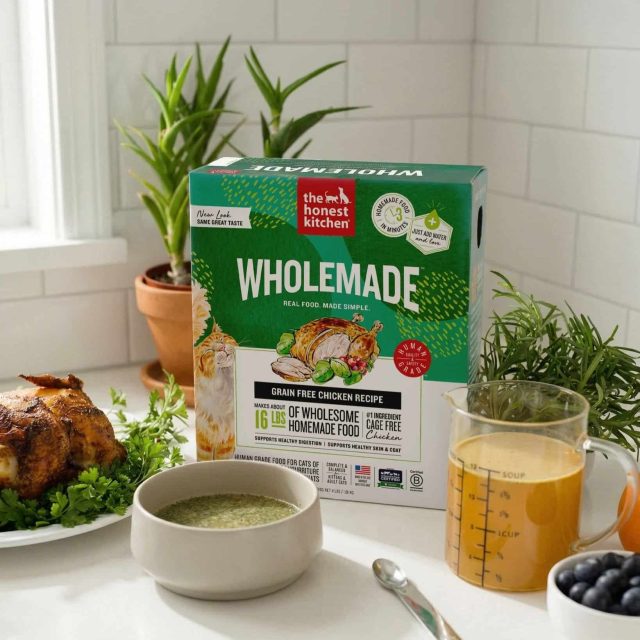
This is The Honest Kitchen’s foundational product line. Real, whole-food ingredients are gently dehydrated using warm air to preserve nutrients and flavor. Prep is simple: add warm water, let the food rehydrate for a few minutes, and serve. The result looks and smells like fresh food because the ingredients are genuinely of high quality.
Key things to know:
- Available in multiple protein options, including chicken, beef, turkey, and fish
- Both grain-inclusive and grain-free formulas available
- AAFCO complete and balanced, verified through in-home feeding trials (not just calculated on paper) that substantiate nutritional adequacy, overall health, and heart health
- No wheat, corn, soy, or GMO ingredients
- Shelf-stable and compact, which makes it travel-friendly
- Works as a complete daily meal or as a topper mixed over Whole Food Clusters or other food
Shop Wholemade Dehydrated Dog Food
Whole Food Clusters
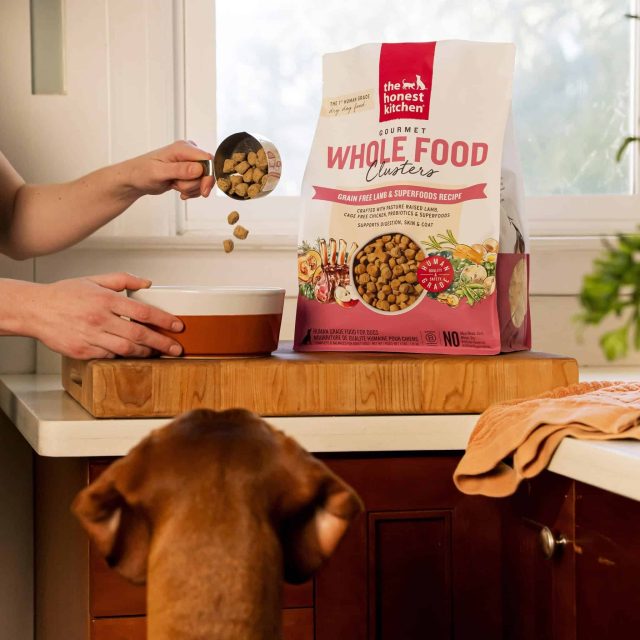
Launched in 2019 as the world’s first human grade dry dog food, a category that The Honest Kitchen invented. You scoop it and serve it exactly like kibble. No prep required.
The difference is in how it’s made. Real whole food ingredients are cold-pressed into bite-sized clusters, then roasted and gently dehydrated until golden, using The Honest Kitchen’s proprietary MadeHonest process. The result is a food that meets the same ingredient and manufacturing standards as the Wholemade line, just without the water-adding step.
Key things to know:
- Scoop-and-serve convenience, same as conventional kibble
- Human grade ingredients and FDA-compliant manufacturing
- AAFCO complete and balanced via feeding trials
- No wheat, corn, soy, or GMO ingredients
- Great entry point for owners transitioning from conventional dry food
- Can be mixed with Wholemade Dehydrated for variety and extra nutrition
Shop Whole Food Clusters
Which One Is Right for Your Dog?
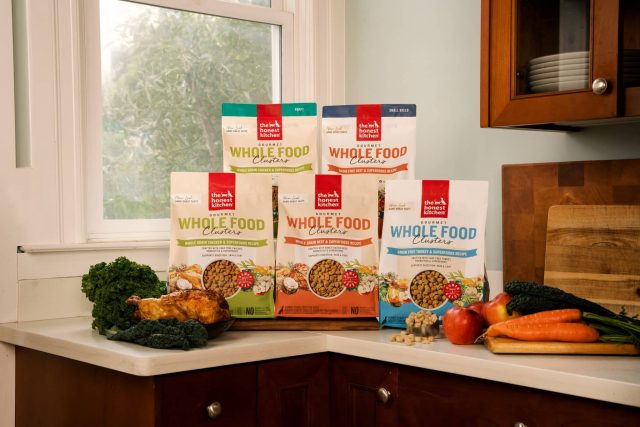
- Sensitive stomach or chronic digestive issues: Start with Wholemade Dehydrated. Gentle preparation, recognizable ingredients, and limited-ingredient options are available across several proteins.
- Used to dry kibble and want an easy transition: Whole Food Clusters scoop and serve like the food you’re already using. No learning curve.
- Want to add nutrition without a full switch: Use Wholemade Dehydrated as a topper or mixer over your dog’s current food.
- Picky eater: Rehydrated Wholemade has a fresh-food texture and aroma that tends to get even skeptical dogs excited at the bowl.
- Not sure: The Honest Kitchen’s recipe quiz matches your dog’s specific needs to the right formula in about two minutes. Take the quiz here.
Ready to See the Difference Human Grade Makes?
iHeartDogs Exclusive Offer: 40% off your first order of $30+ with code IHEARTDOGS
How to Read a Dog Food Label: What to Look For
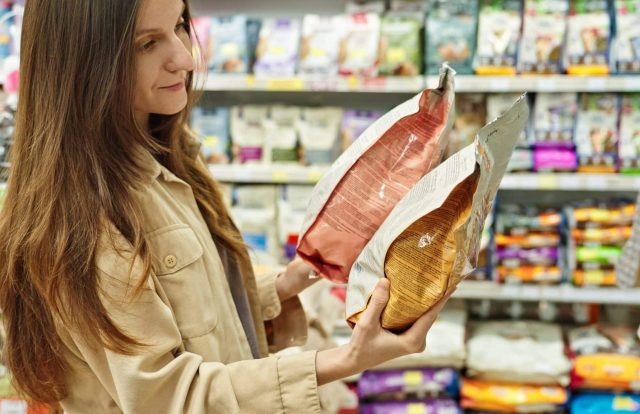
The ingredient list is where the real story lives. Here’s how to read it.
Ingredients are listed by weight before processing, so whole meats appear higher because they contain water weight. The first meaningful ingredient should be a named animal protein: chicken, beef, salmon, turkey. Not “meat.” Not “animal protein blend.” A protein you’d find in your own kitchen.
Green flags:
- Named protein as the first ingredient
- Whole vegetables and fruits you recognize by name
- A “human grade” designation on the label
- An AAFCO “complete and balanced” statement verified through feeding trials (stronger than “formulated to meet AAFCO nutrient profiles”)
- Short ingredient lists without unrecognizable items
- No wheat, corn, soy, artificial preservatives, or artificial colors
Red flags:
- Unnamed meat meals or “poultry by-product” as a primary protein
- Synthetic preservatives: BHA, BHT, or ethoxyquin
- Artificial colors or flavor enhancers
- Long ingredient lists packed with items you can’t identify
- No AAFCO statement, or one that only says “formulated to meet” (not verified by feeding trial)
- No indication of where the food was manufactured
One more note on AAFCO: there are two paths to earning the “complete and balanced” designation. The first is formulating to meet AAFCO nutrient profiles on paper. The second is verifying nutritional adequacy through in-home feeding trials with real dogs. Feeding trials are the higher standard. Both Wholemade Dehydrated and Whole Food Clusters from The Honest Kitchen carry feeding trial verification, including substantiation of heart health.
Making the Switch: A Practical Transition Guide
Switching dog food too quickly can upset your dog’s digestive system, even if the new food is better quality. A 7-10 day gradual transition gives their gut time to adjust.
Days 1-3: 25% The Honest Kitchen / 75% current food
Days 4-6: 50% The Honest Kitchen / 50% current food
Days 7-9: 75% The Honest Kitchen / 25% current food
Day 10+: 100% The Honest Kitchen
Some dogs show looser stools during the first few days of transition. That’s common when switching to cleaner, less processed food; their digestive systems are adjusting. Most dogs settle in within the first week.
Signs the transition is going well:
- Stools firming up and becoming more consistent
- More excitement at mealtime
- Coat appearance improving over the following weeks
- Steady, consistent energy throughout the day
If GI symptoms persist beyond two weeks, check in with your veterinarian. They can rule out any underlying issues and confirm the transition plan makes sense for your specific dog.
The Honest Kitchen backs every purchase with a 90-day satisfaction guarantee. If your dog doesn’t take to the food, contact their customer service team. They also offer free product consultations if you want personalized guidance based on your dog’s health history before you commit.
Not sure which recipe to start with? Take The Honest Kitchen’s recipe quiz for personalized guidance. Every first order is backed by their 90-day satisfaction guarantee, so there’s no risk in trying.
And don’t forget: use code IHEARTDOGS for 40% off your first order of $30+.
FAQ

What does “human grade” mean on dog food labels?
Human grade means every ingredient in the food meets FDA standards for human consumption, and the food is manufactured in a facility that complies with FDA human food safety regulations (21 CFR 117). It’s one of the most strictly regulated claims in pet food labeling, not a phrase brands can apply to whatever they want.
Is human grade dog food better than regular dog food?
Human-grade dog food is produced to a meaningfully higher standard than conventional feed-grade pet food. That difference affects ingredient sourcing, manufacturing conditions, and what ends up in your dog’s bowl. Many pet parents report visible changes in their dog’s coat, digestion, and energy levels after switching, though individual results vary.
What is Wholemade Dehydrated Dog Food?
Wholemade Dehydrated Dog Food is The Honest Kitchen’s foundational product line. Real, whole food ingredients are gently dehydrated using warm air to preserve nutrients. You add warm water at home, let the food rehydrate, and serve a complete meal. It comes in grain-inclusive and grain-free formulas across multiple proteins and is AAFCO complete and balanced via in-home feeding trials.
What are Whole Food Clusters?
Whole Food Clusters are The Honest Kitchen’s human grade dry dog food, launched in 2019 as the first product of their kind. Real whole food ingredients are cold-pressed into bite-sized clusters, then roasted and gently dehydrated. Scoop-and-serve, no prep required. Same human grade ingredients and manufacturing standards as the Wholemade line.
How is dehydrated dog food different from kibble?
Kibble is made through high-heat extrusion, which cooks ingredients quickly under intense heat and pressure. Dehydrated dog food removes moisture slowly using warm air at much lower temperatures, which preserves more of the naturally occurring nutrients in whole food ingredients without needing to add synthetic nutrients back after processing.
Is The Honest Kitchen AAFCO complete and balanced?
Yes. Both Wholemade Dehydrated Dog Food and Whole Food Clusters carry AAFCO complete and balanced designations verified through in-home feeding trials, confirming nutritional adequacy in actual dogs, including substantiation of overall and heart health.
What ingredients does The Honest Kitchen NOT use?
The Honest Kitchen does not use wheat, corn, soy, GMO ingredients, artificial preservatives, artificial colors, artificial flavor enhancers, or feed-grade ingredients of any kind. Every ingredient is required to meet human food standards.
Can I mix The Honest Kitchen with my dog’s current food?
Yes. Wholemade Dehydrated works especially well as a topper or meal enhancer over your dog’s existing food, making it a low-commitment way to introduce human grade nutrition before a full switch.
Does The Honest Kitchen offer a subscription discount?
Yes. The Honest Kitchen offers a Subscribe & Save option with 5% off every recurring order, plus free shipping on qualifying orders over $49.
Where can I buy The Honest Kitchen?
The Honest Kitchen is available directly at TheHonestKitchen.com and in more than 9,000 retail locations nationwide. Buying direct gives you access to the full product range, subscription pricing, and the recipe quiz.
Choosing Human Grade Dog Food Starts With Trust

“Human grade” is a regulated standard with a real legal definition. Not a marketing phrase, not a trend, not a luxury tier. It’s a specific set of requirements around ingredient sourcing and manufacturing that very few pet food brands actually meet.
Feed-grade and human grade aren’t two points on the same spectrum. They’re two different standards built for two different purposes. Processing methods matter, too. High heat gets food into a bag efficiently. It also changes what’s left of the ingredients by the time your dog eats them.
The Honest Kitchen has held to the human grade standard since Lucy Postins first started dehydrating real ingredients in her San Diego kitchen in 2002. Twenty-plus years later, the company still runs more than 1,500 laboratory tests per month and requires supplier documentation that most pet food companies don’t even ask for.
I think about Debbie a lot when I write about this stuff. She came to me thin, itchy, skittish, and eating whatever happened to be at the shelter. She’s not a clinical study. She’s one dog. But watching her coat come back in, watching her stools normalize, watching her start to choose connection over hiding, it reminded me why food being the foundation of good health isn’t just a tagline.
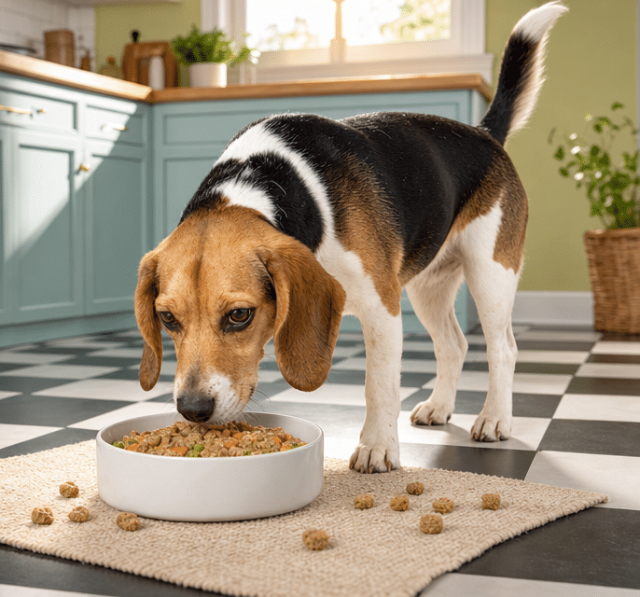
Your dog deserves food made with ingredients you’d feel comfortable serving at your own table. That’s what The Honest Kitchen has been doing since the beginning, and what you’ll find in every bag of Wholemade Dehydrated Dog Food and Whole Food Clusters.
If you’re ready to see the difference minimally processed, human grade nutrition can make, now is a great time to try The Honest Kitchen.
iHeartDogs readers can save 40% off their first order of $30 or more with code IHEARTDOGS, plus enjoy free U.S. shipping on orders over $49, 5% off future Subscribe & Save orders, and a 90-day satisfaction guarantee.
Not sure which recipe is the best fit for your pup? Take The Honest Kitchen’s free recipe quiz to get a personalized recommendation in about two minutes and find the formula that’s right for your dog’s unique needs.
 Toledo, United States.