
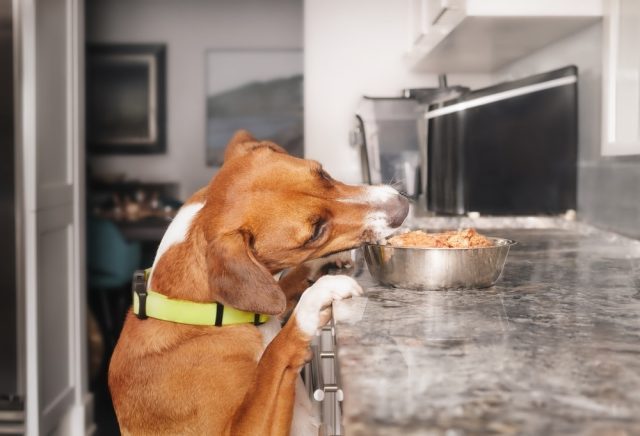
It’s a familiar scene for many dog parents. The table is set, the family is seated, and just as you prepare to take the first bite of a delicious meal, you notice your dog staring longingly at your plate. They may sit unusually still, nudge your leg, whine, paw at you, or even produce an impressive string of drool while waiting for a handout.
Begging for food is a common dog behavior, but it is rarely something dogs simply outgrow. In most cases, begging continues because it has been rewarded in the past. If staring, whining, or hovering near the table occasionally earns your dog a bite, they learn that persistence can pay off.
The good news is that you can teach your dog better mealtime manners. Consistent boundaries, positive reinforcement, enough physical and mental activity, and satisfying, nutritionally complete dog food can all help. Here are 11 effective ways to stop your dog from begging at the table.

#1: Teach Your Dog to Go to Their Place
“Place” is a useful command that teaches your dog to go to a designated spot, such as a bed, mat, or open crate, and remain there until released. With patience and positive reinforcement, most dogs can learn this skill relatively quickly.
Begin practicing away from mealtimes, when there are fewer distractions. Guide your dog to the chosen spot, say “place,” and reward them when all four paws are on it. Gradually increase the amount of time they remain there before receiving a release cue.
Once your dog understands the command, ask them to go to their place whenever the family eats. Reward calm behavior with praise or a dog-safe treat delivered to the mat. With consistent practice, your dog may eventually begin going there automatically when food is served.
#2: Never Feed Your Dog From the Table
If you give your dog food from the table, even occasionally, they learn that begging is worth trying. This is especially common with puppies because their hopeful expressions can be difficult to resist. Unfortunately, behavior that seems cute during puppyhood can become frustrating once it turns into a long-term habit.
Set your dog up for success by establishing a clear rule: human meals never result in food being handed down from the table. If you want to share a dog-safe bite, save it until the meal is over and place it in your dog’s bowl. This helps prevent your dog from associating hovering beside the table with receiving a reward.
Remember that some human foods can be dangerous to dogs. Avoid sharing anything unless you know it is safe and appropriate for your pet.
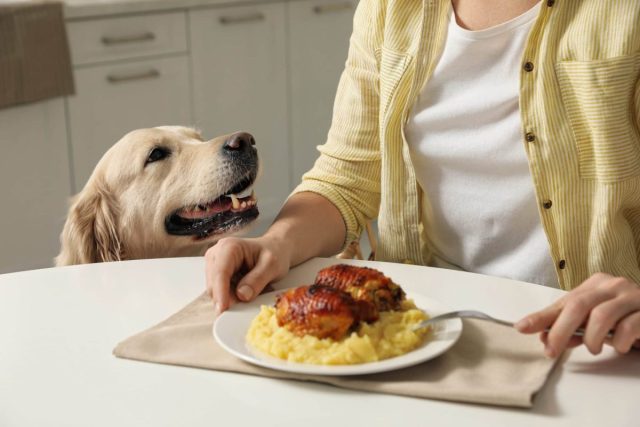
#3: Make Sure Children Follow the Rules
Training will be much harder if the adults ignore begging but the children regularly slip the dog a bite. Even occasional success can encourage your dog to continue staring, whining, or waiting beneath the table.
Explain to children that feeding the dog from their plates can interfere with training and may expose the dog to unsafe foods. Young children may need close supervision during meals, particularly if they enjoy sharing or frequently drop food.
Teaching your dog to remain on a designated mat can make this easier for everyone. Over time, both your children and your dog can become accustomed to the new mealtime routine.
#4: Feed Your Dog Around the Same Time You Eat
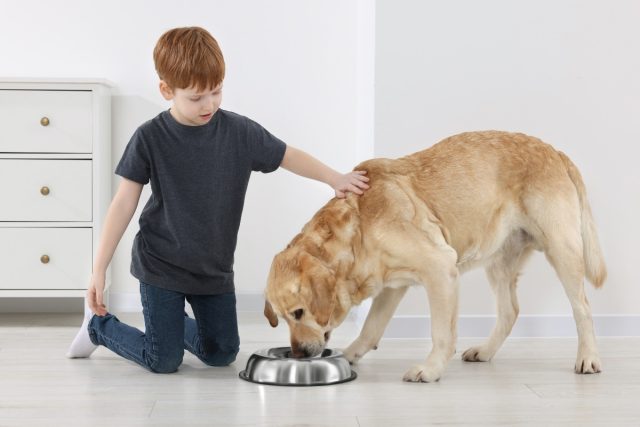
Consider serving your dog’s meal just before or at the same time as the family’s meal. A dog who is eating their own food is less likely to be focused entirely on what is happening at the table.
If your dog finishes quickly, try using a slow feeder, puzzle bowl, or food-dispensing toy to make the meal last longer. Once they are finished, ask them to settle on their bed or mat until you have cleared the table.
Feeding at the same time will not eliminate a well-established begging habit on its own, but it can make other training strategies easier to reinforce.
#5: Offer a Special Mealtime Distraction
Family mealtimes can be a great opportunity to give your dog a treat-stuffed toy, puzzle feeder, lick mat, long-lasting chew, or doggie toothbrush.
Choose an option that is safe for your dog’s size, age, and chewing habits. Supervise them with new toys and chews, and account for treats when calculating their total daily calories.
For the best results, reserve this special activity for family meals. The goal is to give your dog something rewarding to do away from the table while reinforcing calm, independent behavior.
#6: Do Not Reward Begging With Attention
Food is not the only reward that can reinforce begging. Looking at your dog, talking to them, pushing them away, or scolding them may still provide the attention they are seeking.
Once you have made sure your dog’s needs are met, avoid reacting to staring, whining, pawing, or nudging. Instead, reward the behavior you want, such as quietly lying on a mat away from the table.
Ignoring begging works best when everyone in the household is consistent. If your dog has received table scraps in the past, they may initially beg more intensely when the food stops coming. Remain patient and avoid giving in, since one successful attempt can teach your dog to try even harder next time.
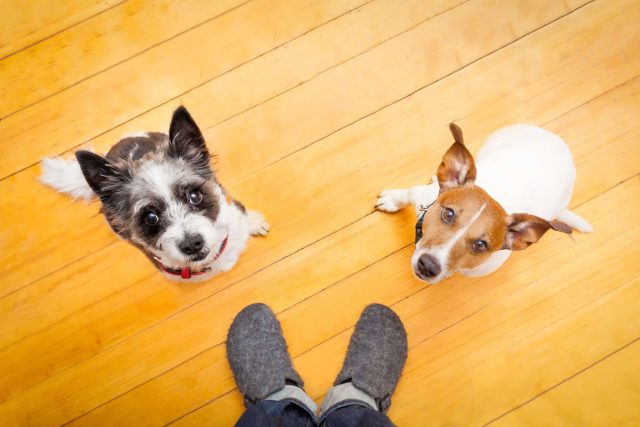
#7: Create a Safe Boundary Around the Table
If your dog struggles to remain away from the dining area, use a baby gate, exercise pen, closed door, or another safe barrier. This prevents them from repeatedly practicing unwanted behaviors while they are still learning.
A leash can also help guide your dog to a nearby mat, but it should only be used under direct adult supervision. Never leave a tethered dog unattended or attach a leash in a way that could create a choking or entanglement hazard.
A physical boundary is not a substitute for training, but it can make the desired behavior clearer and help your dog succeed while new habits are developing.
#8: Schedule Playtime or Exercise Before Dinner
A dog with excess energy may have a harder time settling quietly while everyone eats. Before dinner, try a brisk walk, a short game of fetch, a game of tug, or a brief training session.
Mental exercise can be just as valuable as physical activity. Nose work, food puzzles, and practicing obedience cues can help your dog feel calmer and more satisfied.
Choose activities appropriate for your dog’s age, health, and fitness level. Afterward, give them time to cool down and settle before serving their meal.
#9: Tell Guests About Your Dog’s Mealtime Rules
You and your dog may have worked hard to improve their manners, so do not let that progress disappear because of a well-intentioned guest.
Before serving food, politely explain that you are teaching your dog not to beg and ask everyone to avoid feeding them from the table. If guests want to offer a treat, give them an approved dog treat and ask them to provide it after the meal or reward your dog for remaining calmly in their designated place.
Clear instructions help guests participate in your dog’s training without feeling as though they are being unfriendly.
#10: Don’t Let Your Dog Clean Up Under the Table
Allowing your dog to eat dropped food teaches them that the dining area is a valuable place to investigate. This can lead to hovering, scavenging, or crowding around children during meals.
Clean up spills and dropped food before allowing your dog back into the area. This is especially important because common ingredients such as onions, garlic, grapes, raisins, chocolate, and certain sugar-free sweeteners can be dangerous to dogs.
If young children frequently drop food, consider keeping your dog behind a gate or in another comfortable area until the floor has been checked and cleaned.
#11: Feed a High-Quality Dog Food That Is Complete, Balanced, and Delicious
Your dog’s regular diet is an important part of managing food-seeking behavior. Choose a high-quality food with a nutritional adequacy statement showing that it is “complete and balanced” for your dog’s life stage.
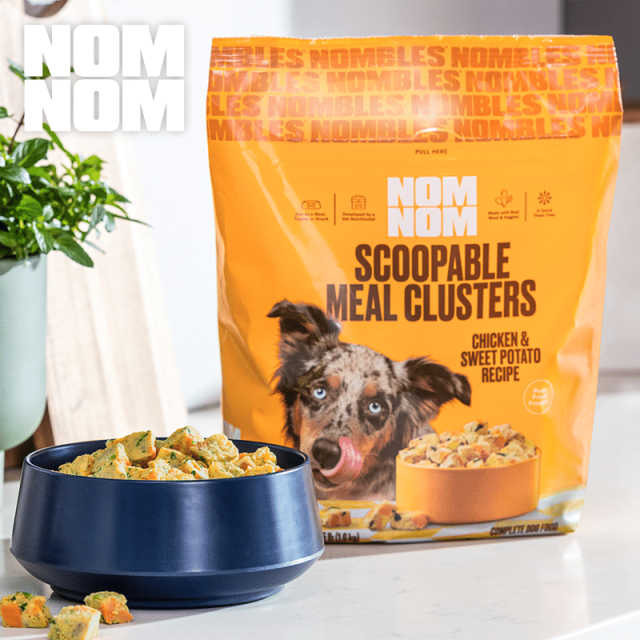
The food should also be delicious enough that your dog looks forward to eating their own meals. Nom Nom Scoopable Meal Clusters offer the flavor and recognizable ingredients of fresh-frozen food in small, individually frozen clusters. Available in Chicken & Sweet Potato and Beef & Potato recipes, both formulas were developed by a board-certified veterinary nutritionist and are complete and balanced according to AAFCO standards for all life stages.
Because the clusters pour loosely from a resealable bag, you can easily scoop the appropriate amount for your dog at each meal. This simple portioning format helps ensure your dog receives a satisfying meal, whether you are feeding one dog, several dogs with different needs, or portions that vary from day to day. Just scoop the desired amount, return the rest of the bag to the freezer, and thaw the serving for 15 minutes before placing it in your dog’s bowl.
How to Stop Dog Begging for Good
Stopping a dog from begging requires patience, clear expectations, and consistency from everyone in the household. Teach your dog what to do instead, reward calm behavior away from the table, prevent access to dropped food, and make sure guests and children follow the same rules. Punishment is unnecessary and may create stress without teaching your dog the behavior you want.
Do not overlook the importance of your dog’s regular meals. A high-quality, delicious food that is complete and balanced according to AAFCO standards and appropriate for your dog’s life stage helps provide the nutrients and satisfaction they need. While good nutrition cannot undo a learned begging habit by itself, it creates a strong foundation for training and makes it easier to establish a peaceful mealtime routine.
With practice and consistency, your dog can learn that begging no longer earns food and that relaxing in their own special place is far more rewarding.
 Toledo, United States.