
If your dog won’t stop licking one spot on their leg, you might brush it off as a quirky habit. But that relentless, focused licking can spiral into something far more serious: a lick granuloma. These stubborn skin wounds are one of the most frustrating conditions in veterinary dermatology, partly because they’re so difficult to treat and partly because dogs just keep making them worse. Here’s what every dog owner should know about lick granulomas, from what they look like to why they happen and what you can actually do about them.

5 Things Every Dog Owner Should Know About Lick Granulomas
#1: What Is a Lick Granuloma?
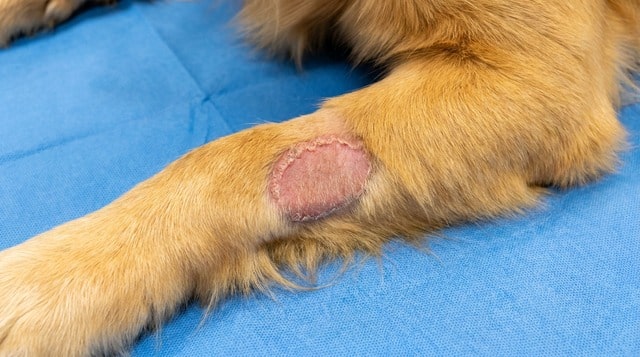
A lick granuloma is a chronic skin wound caused by a dog repeatedly licking the same area, usually on their front legs, just above the wrist or carpal joint. The constant friction strips away hair and damages every layer of skin, creating a thickened, raw, sometimes ulcerated lesion that can be incredibly hard to heal.
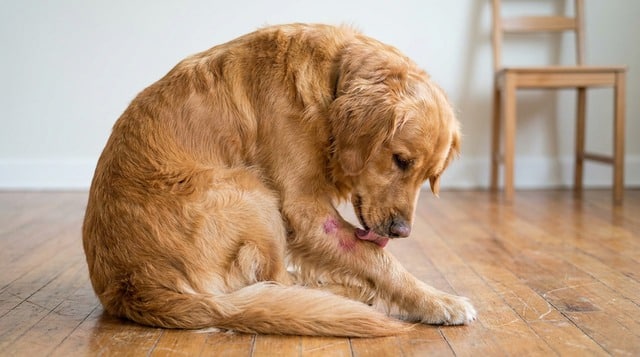
Also called acral lick dermatitis, lick granulomas go far deeper than the skin’s surface. According to PetMD:
“The skin is so deeply affected that even down to the base layer of the skin there can be found under the microscope little pockets of bacteria, broken hair follicles, plugged and scarred oil glands and dilated and inflamed capillaries.”
Here’s the maddening part: if you surgically remove the wound, the dog simply licks the incision and creates a brand-new granuloma right in its place. That’s why managing the underlying cause is just as important as treating the wound itself.
How Does a Lick Granuloma Look and Feel?
In the early stages, you’ll notice a small patch of hair loss and reddened skin on the top of the leg. It often looks a lot like a hot spot. The key difference? Hot spots typically respond to treatment and resolve. Lick granulomas persist, worsen, and often develop secondary bacterial or yeast infections that make the itching and irritation even more intense.
As VCA Hospitals notes, these lesions are “often associated with chronic, persistent licking, especially when the pet is alone or when the family is sleeping.” Many dog owners don’t catch it until the wound is well-established.
Common signs to watch for:
- A bald patch on the top of the wrist or lower leg
- Skin that looks raised, thickened, or scabbed
- Redness, oozing, or a foul odor (sign of infection)
- Your dog obsessively returning to lick the same spot
- Stained fur (saliva discolors light-colored coats reddish-brown)
#2: What Causes a Dog to Lick So Much?
That’s the real question, isn’t it? Lick granulomas don’t happen without a reason. Something triggers the licking in the first place, and the wound itself then becomes self-perpetuating because licking releases endorphins. So even after the original trigger is resolved, the behavior can persist on its own.
Common causes and triggers include:
- Allergies from food, environmental factors, dust mites, or pollen
- A minor physical irritation: a foxtail, splinter, bee sting, cut, or scrape that draws the dog’s attention
- Bone or joint pain from arthritis, a past fracture, or peripheral neuropathy
- Hypothyroidism, which is especially common in Black Labs and may increase skin irritation
- Nerve damage or pressure-related discomfort causing abnormal sensations in the limb
- Boredom, stress, anxiety, or compulsive behavior (more on this below)
Because the underlying cause varies so much from dog to dog, there’s no one-size-fits-all treatment. Your vet will need to do some detective work.
When Anxiety and Boredom Drive the Behavior
Some dogs lick because something hurts or itches. Others lick because something’s wrong mentally or emotionally. Separation anxiety, boredom, fear, and even canine OCD are all documented triggers for lick granulomas.
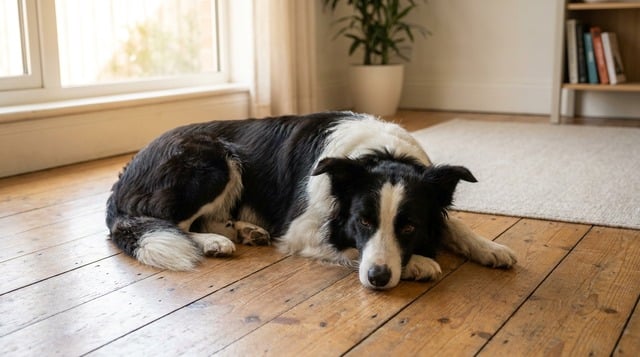
Licking releases endorphins, giving the dog a mild but real sense of relief. Over time, it becomes a coping mechanism and eventually a compulsion. Dogs can develop OCD-like behaviors, and repetitive licking is one of the most common forms. The dog licks to feel better, feels temporarily better, and so keeps licking.
Does your dog lick more when you leave the house? More at night? These patterns matter. Tell your vet exactly when the licking happens, because that information helps narrow down whether the trigger is physical or behavioral.
#3: Are Some Breeds More Prone to Lick Granulomas?
Yes, certain breeds are significantly more likely to develop lick granulomas than others. Medium and large dogs tend to be the most affected, and some breeds have a hereditary predisposition to anxiety-driven or compulsive behaviors that feed the cycle.
Breeds Most Prone to Lick Granulomas
- Doberman Pinscher – High anxiety breed, prone to compulsive licking
- Labrador Retriever – Especially Black Labs, often connected to hypothyroidism
- Golden Retriever – Allergy-prone, active, can develop stress-related behaviors
- German Shepherd – Highly reactive to stress and separation anxiety
- Irish Setter – Energetic breed prone to boredom-driven behaviors
- Great Dane – Joint issues and boredom both contribute to licking
- Weimaraner – Notoriously high-strung, needs extensive mental stimulation
Small dogs can develop lick granulomas too, but the condition is far more common in medium and large breeds.
How Are Lick Granulomas Diagnosed?
Your vet will typically start with a visual examination and a detailed history of when and how the licking started. From there, they may run tests to rule out underlying causes like allergies, thyroid disorders, or joint disease. A skin culture can identify bacterial or yeast infections that need treatment. In some cases, a biopsy confirms the diagnosis.
Don’t skip the diagnostic workup even if the wound seems obvious. Treating the wound without addressing the underlying cause almost always leads to recurrence. The lesion heals, the dog licks a new spot, and you’re back where you started.
#4: Treatment Options Your Vet May Recommend
There’s no quick fix for lick granulomas. Treatment is usually multi-pronged, addresses both the wound and the underlying trigger, and takes months. Your vet might suggest several of the following approaches in combination:
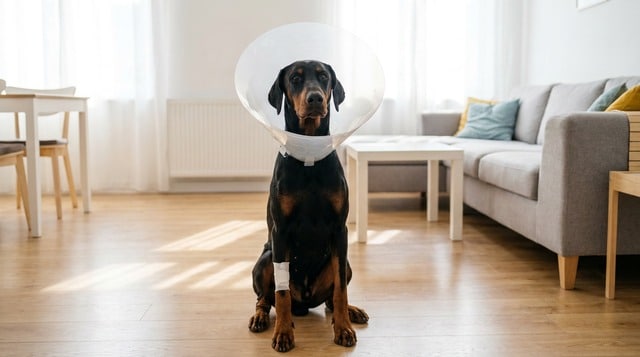
- E-collar or bandaging: Physically blocking access to the wound gives it a chance to heal. The frustrating reality is that some dogs will immediately start licking a different reachable spot.
- Long-term antibiotics: Because lick granulomas almost always develop secondary infections, antibiotics over 3 to 6 months are common.
- Cortisone creams: Applied once or twice daily, topical steroids reduce inflammation and itching that drives the licking urge.
- Laser therapy: Cold laser treatments can vaporize affected tissue with minimal bleeding, sealing nerve tissue to reduce the discomfort that triggers relicking.
- Acupuncture: Used in integrative veterinary practices with some documented success for chronic lick granulomas.
- Anti-inflammatory medications: Oral or topical medications to reduce swelling and pain.
- Anti-anxiety medications: When behavioral factors are driving the licking, your vet may prescribe medications that reduce anxiety-driven compulsions.
- Increased exercise and mental stimulation: More walks, puzzle feeders, training games, and enrichment activities to redirect that energy.
Topical home remedies can also help while you’re working with your vet. Manuka honey, applied 3 to 4 times daily, has antimicrobial properties and may reduce irritation. Fresh aloe gel and calendula tincture are other options that some integrative vets recommend. Always keep an e-collar in place when applying anything topical so the dog doesn’t lick it right off.
The Role of Nutrition and Omega Supplements
What your dog eats matters more than most people realize when it comes to skin health. A diet lacking in quality protein or essential fatty acids can leave the skin barrier compromised, making it more vulnerable to irritation and slower to heal.
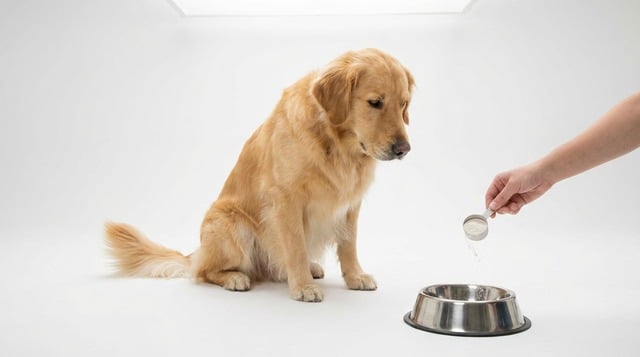
According to PetMD, adding omega fatty acids to your dog’s diet “can make a very real difference” in dogs with dermatological conditions. Omega-3, -6, and -9 fatty acids reduce systemic inflammation, support skin cell repair, and can help tamp down the allergic itch response that sometimes sets off lick granulomas in the first place.
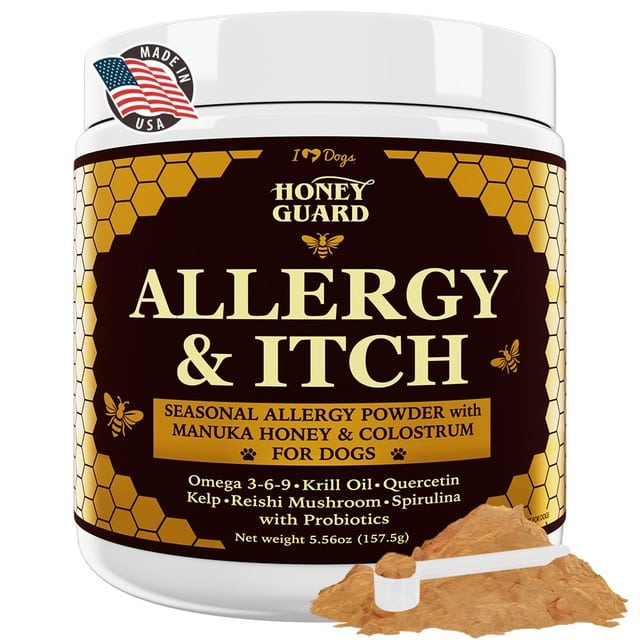
One option worth considering is Honey Guard™ Allergy & Itch Omega 3-6-9 Powder. It’s a daily powder supplement you mix right into your dog’s food, delivering a full spectrum of omega fatty acids to support skin health from the inside out. If allergy-related or nutritional skin inflammation is contributing to your dog’s licking, an omega supplement like this is a straightforward addition to their routine.
#5: How to Prevent Lick Granulomas
If your dog is a breed prone to lick granulomas, prevention is worth more than treatment. Catching the habit early, before a wound even forms, is far easier than treating an established granuloma.
Prevention Checklist
- Watch for early signs: Act at the first sign of obsessive licking, not after an injury has formed. Some granulomas develop within hours.
- Run your hands over your dog daily: Feeling for damp patches or sensitivity along the front legs takes 30 seconds and can catch a problem early.
- Check your dog’s hiding spots: Dogs that lick obsessively often do it out of view. Stained fur is a giveaway.
- Use a light wrap as a deterrent: If your dog is licking a spot but there’s no wound yet, an Ace bandage or a pet-safe bitter spray can break the habit before it escalates.
- Keep them mentally and physically busy: Daily exercise, puzzle feeders, training sessions, and interactive play reduce the boredom and anxiety that drive compulsive licking.
- Address anxiety proactively: If your dog struggles with separation anxiety, work with a trainer or behaviorist before it turns physical.
- Don’t wait to see your vet: If you notice repetitive licking starting, mention it at your next appointment, or call sooner if a wound is forming.
Treating the underlying cause, whether that’s allergies, pain, anxiety, or nutrient deficiency, is the single most powerful prevention tool available. And once you’ve been through a lick granuloma with one dog, you’ll know the warning signs to catch early the next time.
What Every Dog Owner Should Know Before It Happens
Lick granulomas test your patience. They can take six months or longer to resolve, and even after they heal, there’s always a chance the behavior restarts. That’s not a reason to give up. It’s a reason to stay consistent, work closely with your vet, and attack the problem on every front simultaneously.
Don’t try to treat this one on your own. The wound itself is manageable, but finding the underlying trigger requires professional guidance. Bring your vet a clear history: when did the licking start, where exactly is the spot, does the licking happen at predictable times, and has anything changed recently in your dog’s environment or diet?
The good news is that most dogs do improve with proper, patient treatment. The wound heals. The licking stops, or at least reduces. And you’ll have learned something important about what your specific dog needs to feel healthy and calm. That knowledge is genuinely useful long after the granuloma is gone.
Lick granulomas aren’t a death sentence for your dog’s skin, but they do demand your attention. Your dog is telling you something is wrong. Listen early, and you’ll be able to help them heal faster.
Frequently Asked Questions About Dog Lick Granulomas
1. Can a lick granuloma heal on its own?
Rarely, and only if the dog somehow stops licking before the wound progresses. In most cases, the licking perpetuates itself because it feels soothing. Veterinary treatment is almost always necessary for full healing.
2. How long does it take to treat a lick granuloma?
Expect a long road. Most cases require 3 to 6 months of treatment, and some stubborn cases take longer. Treating the wound alone without addressing the underlying cause usually leads to recurrence.
3. Should I wrap my dog’s leg to stop the licking?
Bandaging can help prevent licking while the wound heals, but many dogs will simply move to a different spot they can reach. An e-collar combined with bandaging, plus treatment of the underlying cause, is usually more effective than wrapping alone.
4. Can diet help with lick granulomas?
Yes, especially if allergies or poor skin health are contributing factors. Upgrading to a high-quality, meat-based diet and adding omega-3, -6, and -9 fatty acids can support skin repair and reduce the inflammatory response that drives itching.
5. Are lick granulomas contagious?
No. Lick granulomas are not infectious or contagious to other dogs or to humans. The secondary infections that develop are localized to the wound itself.
6. Can stress cause a lick granuloma?
Absolutely. Anxiety, boredom, separation distress, and OCD-like behaviors are well-documented triggers. If your dog’s licking increases when you’re away or during stressful events, behavioral treatment and sometimes medication may be part of the solution.
7. What’s the difference between a hot spot and a lick granuloma?
Hot spots are acute, moist, and usually respond quickly to treatment. Lick granulomas are chronic, thickened, and persist despite standard hot spot treatments. The location also differs: lick granulomas almost always appear on the front legs near the wrist, while hot spots can appear anywhere.
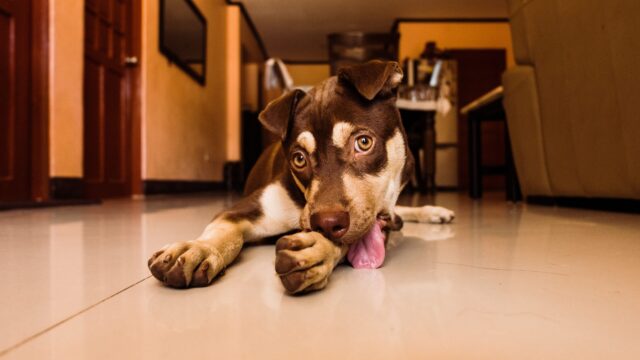
Helping Your Dog Recover From a Lick Granuloma Starts With Understanding the Cause
Lick granulomas are much more than a stubborn sore on your dog’s leg. They are often a sign that something deeper is going on, whether it’s allergies, chronic pain, anxiety, boredom, or another underlying medical condition. While the wound itself can look alarming, successful treatment depends on identifying and addressing the reason your dog can’t stop licking in the first place.
The sooner you recognize the warning signs, the better your dog’s chances of avoiding a chronic wound that can take months to heal. Working closely with your veterinarian, following the recommended treatment plan, and supporting your dog’s skin health through proper nutrition, mental enrichment, and routine care can make a significant difference. Consistency is key, even when progress feels slow.
If you’ve been wondering what a lick granuloma is, what causes lick granulomas in dogs, or how to stop a dog from licking the same spot, the most important takeaway is this: don’t ignore repetitive licking. Catching the behavior early may prevent a minor irritation from becoming a long-term medical challenge. With patience, the right treatment, and a focus on your dog’s overall physical and emotional well-being, most dogs can heal and return to living happy, comfortable lives.
 Toledo, United States.