
What’s the Big Deal With Dog Dental Care?
Dog dental care is about much more than keeping your pup’s breath fresh and their teeth looking clean. Just like people, dogs can develop plaque, tartar, gum disease, infections, and other painful dental problems when their teeth and gums aren’t properly cared for. Because dogs can’t tell us when a tooth hurts or when something feels wrong, dental issues may go unnoticed until they become more serious. Establishing a consistent dog dental care routine at home can help reduce plaque and tartar buildup, support healthier teeth and gums, and give you more opportunities to notice changes that may require a veterinarian’s attention.
Despite the importance of oral hygiene, brushing a dog’s teeth isn’t always part of an owner’s regular routine. The American Veterinary Medical Association (AVMA) President, Dr. Ted Cohn, stated that although daily tooth brushing is advised for the best dog dental care, only about 2 percent of dog owners follow through. So, what keeps so many dog parents from reaching for the toothbrush?
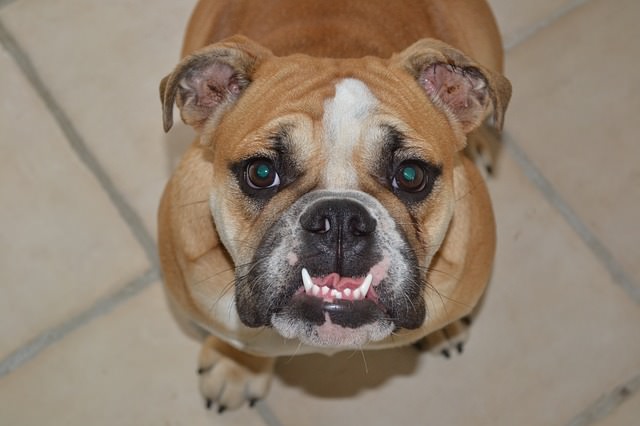
The most common reasons people don’t brush their dog’s teeth:
- My dog hates it and puts up a fight or fuss.
- I don’t have the time to do it.
- They get kibble, dog biscuits, and/or a chew toy, so they don’t need to brush.
And now the reality of those statements:
- You can slowly train a dog to accept, and even enjoy oral care.
- You can make the time if it means saving your dog’s life.
- Expecting a thorough cleaning from anything other than a specified dental product isn’t realistic. It is like us eating pretzels and expecting them to clean our teeth.
Periodontal disease can turn into a number of more serious issues. A friend of ours had a Yorkie who developed mouth cancer from it. They didn’t administer a dental plan and ended up with a broken heart and large vet bills. What was most crushing was that these issues were preventable with intentional care.
Home oral hygiene can make a tremendous difference in your dog’s comfort and health. There are several home care oral hygiene options available. Anything you can do to help prevent plaque and tartar accumulation will pay big dividends.
What is the alternative…what happens if this is neglected?
Once dental issues escalate to the point where action needs to be taken, a dental cleaning is usually scheduled at the vet. Dental cleanings are expensive, and not everyone has the means to do them. Some pets are also unable to be put under anesthesia for various reasons and every time an animal is put under, there are associated risks.

So… let’s talk preventative maintenance 🙂 With a good plan, you will increase the quality of life for your pup. It is not hard; it just takes consistency and patience in developing a dog dental care routine.
5 Ways to Build a Better Dog Dental Care Routine
1. Warm them up to a dog dental care routine/practice.
If you haven’t cleaned (brushed, wiped, sprayed, etc.) your dog’s teeth before, they aren’t going to be savvy to it. Some push back more than others. The key is to make the experience pleasant. Start by simply setting a time (every day or every other day) to spend a few minutes opening your pup’s mouth and touching their teeth. No cleaning – just get them used to your presence and treat them when you are done.
Dogs will get pretty wise to the fact that they allow you to touch their teeth and get a treat. Some will be fine pretty quickly, while others will take a bit. Try to do this for a couple of weeks before you start actually cleaning them.
2. Select a good doggy toothpaste and toothbrush (not human).
You will need a toothpaste and a toothbrush made specifically for dogs. DO NOT give them human toothpaste as it can make them sick or cause reactions. The great news is that most retail pet stores have flavors your dog will go nuts for – liver, beef, etc. It makes it more like a treated experience. Check in your local store, or the iHeartDogs Store dog dental care section!
3. Dog dental care takes time.
Start on one side first at a comfortable pace. Don’t brush too fast or too hard. Easy does it. One trick is to brush one side, give them a treat, and then brush the other side, followed by a treat. It gives them something to look forward to and, over time, becomes something they look forward to.
4. Offer dental sticks as part of your dog’s dental care upkeep plan
Brushing your dog’s teeth at some interval is super important because the contact and friction remove plaque and other particles. Alternating between brushing and other dental products (like dental sticks) is an option as well. Dental sticks are formulated to be a consistency optimal for chewing and removing particles from doggy teeth. Your plan for dental health will 100% depend on your dog and their specific hygiene. If you can swap a dental stick for a treat, you can win all day long.
(iHeartDogs.com offers a dental stick that is not only great for teeth but has probiotics that are important for a healthy gut. You can read more here. )
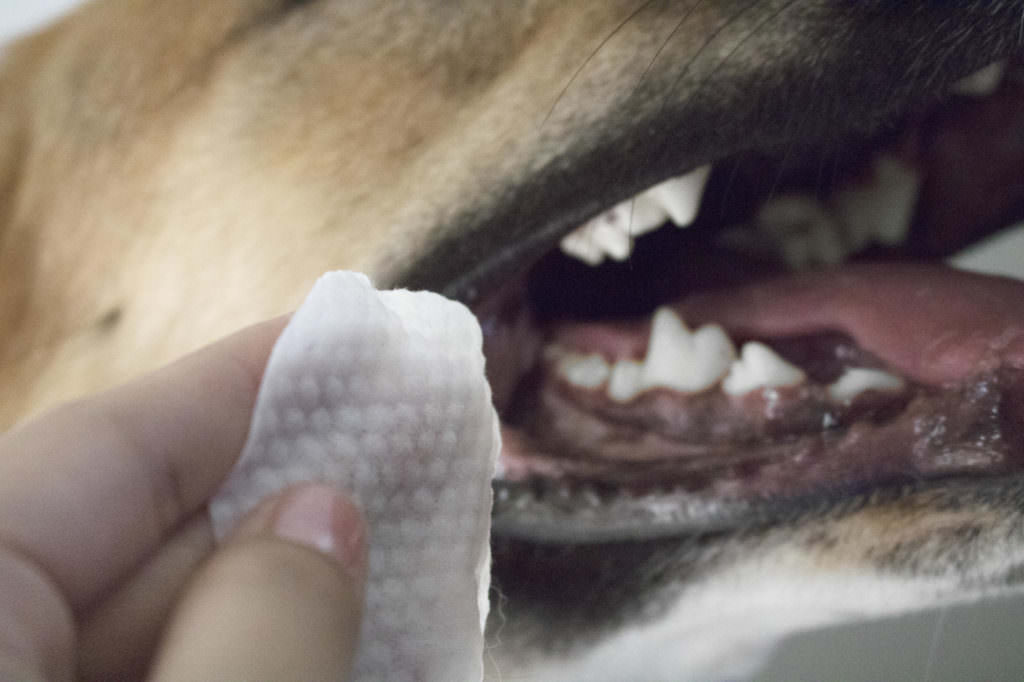
5. Adding dental spray and dental wipes can go really far in keeping up with your dog’s dental care routine.
Think about them as an enhanced “top off”. These products are great for keeping optimal cleanliness, plus they are super easy to administer. Because of how much of an additional impact these products can have, their popularity is on the rise, and with them, healthier dog teeth 🙂

Make Dog Dental Care a Healthy Habit
Taking care of your dog’s teeth doesn’t have to become an overwhelming part of your routine. Starting slowly, staying consistent, and making dental care a positive experience can help your dog become more comfortable with having their teeth and gums handled. Brushing with dog-safe products should be the foundation of at-home dental care, while dental chews, wipes, and sprays may provide additional support depending on your dog’s individual needs.
Most importantly, pay attention to changes in your dog’s mouth, breath, eating habits, or behavior. At-home care works alongside, rather than replaces, regular veterinary dental exams and professional care when needed. A little time devoted to your dog’s dental health today can help support a cleaner, more comfortable mouth for years to come.
These statements have not been evaluated by the Food and Drug Administration. This product is not intended to diagnose, treat, cure, or prevent any disease. The information on this website is not intended to replace a one-on-one relationship with a qualified health care professional.
 Toledo, United States.