
Sometimes the animals who look the most different have the simplest wish of all: to be accepted exactly as they are. Brodie often attracted curious glances before people had the chance to discover his personality, but his unusual face was only one small part of his story. Behind his crooked features was a cheerful, affectionate dog who loved attention, enjoyed making friends, and approached everyday life with remarkable enthusiasm.
Brodie wasn’t concerned with how different he looked. He simply wanted to play, feel safe, and share his happiness with the people willing to get to know him.
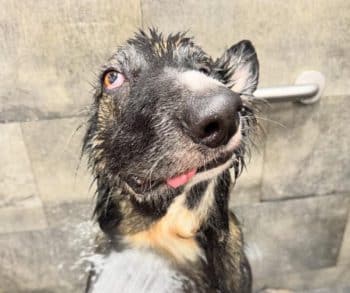
When Brodie was only a puppy, another dog bit him in the face. The severe injury permanently changed his appearance and affected his eyesight, leaving him able to see primarily through one enlarged eye. From that point forward, Brodie would experience the world a little differently. His face was noticeably asymmetrical, and navigating unfamiliar surroundings could require extra patience.
Brodie’s appearance may have been the first thing people noticed, but it was hardly the most memorable thing about him. He was playful, social, and comfortable around other dogs. He enjoyed affection and seemed far more interested in having fun than in anything that made him different.
Brodie Needed a New Place to Belong
Years after his injury, another major change entered Brodie’s life. His previous family could no longer care for him, and he eventually found himself at a rescue shelter needing a new home.
Losing familiar surroundings can be difficult for any dog, but Brodie faced an additional challenge. With limited vision, he had to learn unfamiliar spaces without being able to rely fully on his eyesight. New sounds, smells, voices, and surroundings all took time to understand.
Dogs with visible differences can sometimes be overlooked by potential adopters. A scar, disability, unusual feature, or medical history can attract attention before someone has the chance to discover the personality behind it.
But Brodie wasn’t looking for pity. He wanted what so many dogs want: someone to play with, people to love, and a place where he could feel safe. Eventually, he got that chance.
Brodie was welcomed into a family in Alberta, Canada. His new family understood that the effects of his puppyhood injury were permanent. His eyesight would remain limited, and he would continue experiencing his surroundings differently from dogs with full vision. None of that prevented him from having a happy life.
Instead of focusing on Brodie’s appearance, his family helped him become comfortable with the world around him. They gave him time to explore his surroundings, learn familiar spaces, and develop routines that allowed him to move through his new home with greater confidence.
For a dog with limited sight, familiarity can make an enormous difference. Knowing where furniture is located, recognizing a familiar voice, and learning where favorite resting places can be found can turn a confusing environment into one that feels safe.
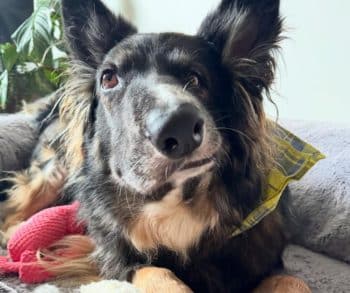
Little by little, Brodie’s new surroundings became home. Rooms that had once been unfamiliar became spaces he understood. Voices he didn’t recognize became sounds associated with comfort and affection. Before long, those voices belonged to his family.
With that security came the ordinary pleasures Brodie had always enjoyed. He could play, seek out attention, spend time with other dogs, and relax beside the people he trusted. His limited eyesight didn’t stop him from enjoying the life unfolding around him.
As the months became years, Brodie continued growing more comfortable and confident. He learned to find his way through familiar spaces and enjoyed the affection and companionship surrounding him.
The world might have looked different through his eyes, but it could still hold everything that mattered: safety, companionship, play, affection, and a family that understood him.
By the time Brodie was around seven years old, he had spent more than six years in a stable, loving home. His face hadn’t dramatically changed. His life had.
That is one of the most meaningful parts of Brodie’s story. Animal rescue isn’t always about a dramatic physical transformation. Sometimes, the biggest change is simply giving an animal the security to understand that the unfamiliar place around them is finally home.
The shelter gave Brodie another opportunity after his previous family could no longer care for him. His adoptive family gave him something equally important: permanence. They learned what he needed, respected the limitations caused by his injury, and allowed him to build confidence at his own pace. In return, Brodie filled their lives with something that had nothing to do with his appearance: joy.
He remained playful, affectionate, and social, enjoying other dogs and the people around him. Over time, the face that might once have caused strangers to stare became simply Brodie’s face. To the people who loved him, it belonged to the dog who played, trusted, sought affection, and filled their home with his personality.
Today, Brodie continues living with his family in Alberta, surrounded by the stability and affection he once needed someone to offer him.
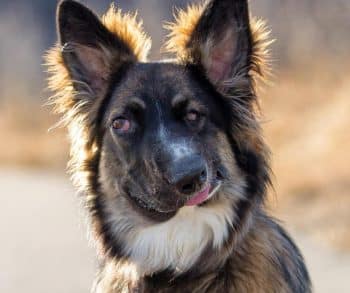
His story is a reminder of how little appearance can tell us about the animal standing in front of us. Brodie’s differences never erased the playful, affectionate dog underneath them, and limited vision never prevented him from enjoying the people, animals, and familiar places that made his life full.
Brodie never needed a perfect face to have a beautiful life. He didn’t need to become someone else’s idea of “normal.” He simply needed someone to look beyond what made him different and recognize what had been there all along: a dog worthy of love and a place to call home.
 Toledo, United States.