
If you’ve ever looked up Australian Shepherd photos and found yourself falling down a rabbit hole of coat patterns, you’re not alone. Aussies come in an almost overwhelming variety of colors and markings, and understanding which combinations are AKC-recognized, and why certain color pairings carry health risks, can save you a lot of confusion when choosing a puppy.
This guide covers every official Australian Shepherd color in 2026: the four AKC base colors, how tri and bi-color patterns work, what copper points and white markings actually look like, and the genetics behind the merle coat. You’ll also find a plain-English breakdown of double merle health risks that every prospective Aussie owner should know.
What the AKC Recognizes
The American Kennel Club recognizes four base colors for Australian Shepherds: black, red, blue merle, and red merle. Within those four, dogs can be bi-color (base color plus white, or base color plus copper) or tri-color (base color plus both white and copper). That combination creates a range of patterns that looks more like 10 or 12 distinct “colors” to the casual observer, but they all trace back to those four bases.
📊 Australian Shepherd AKC Color Quick Reference
| Base Color | Bi-Color Versions | Tri-Color Version | AKC Status |
|---|---|---|---|
| Black | Black bi (+ white or copper) | Black tri (+ white + copper) | ✅ Recognized |
| Red (Liver) | Red bi (+ white or copper) | Red tri (+ white + copper) | ✅ Recognized |
| Blue Merle | Blue merle bi | Blue merle tri | ✅ Recognized |
| Red Merle | Red merle bi | Red merle tri | ✅ Recognized |
The 4 AKC Base Colors, Explained
Blue Merle
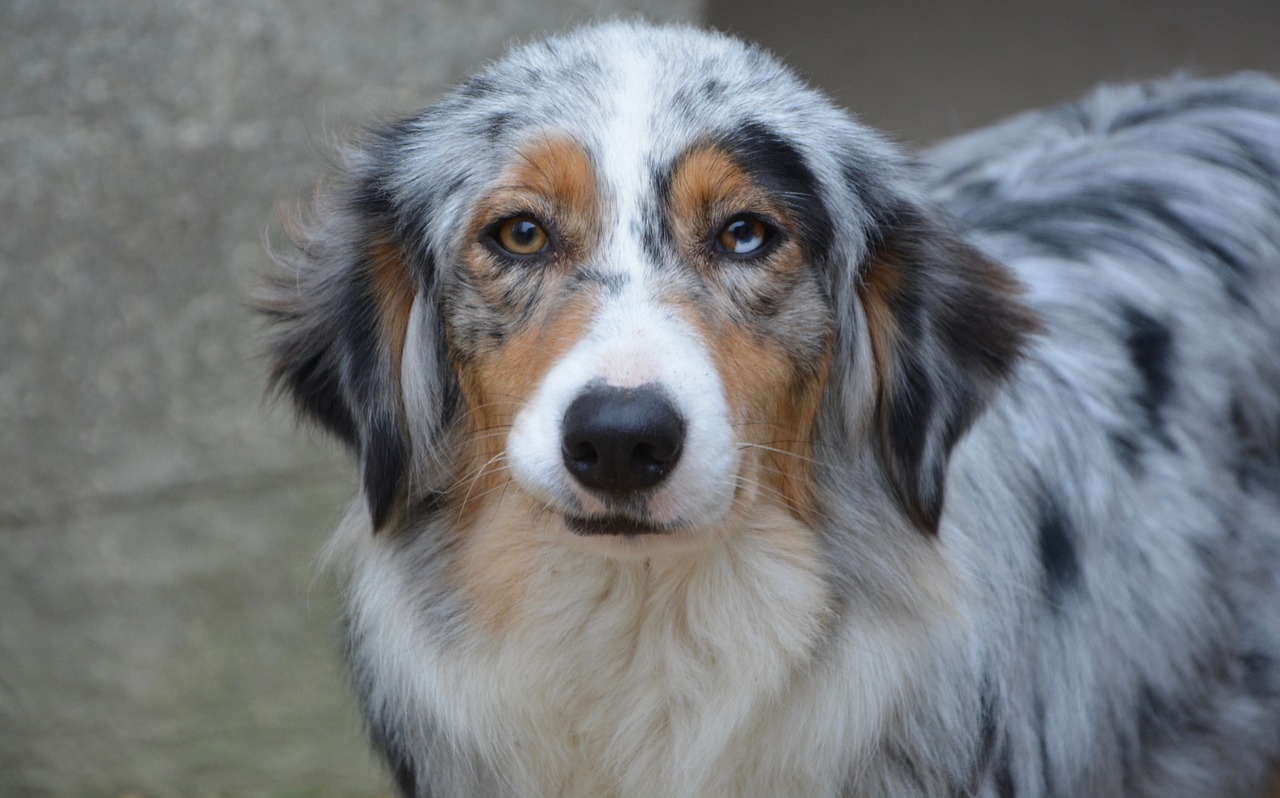
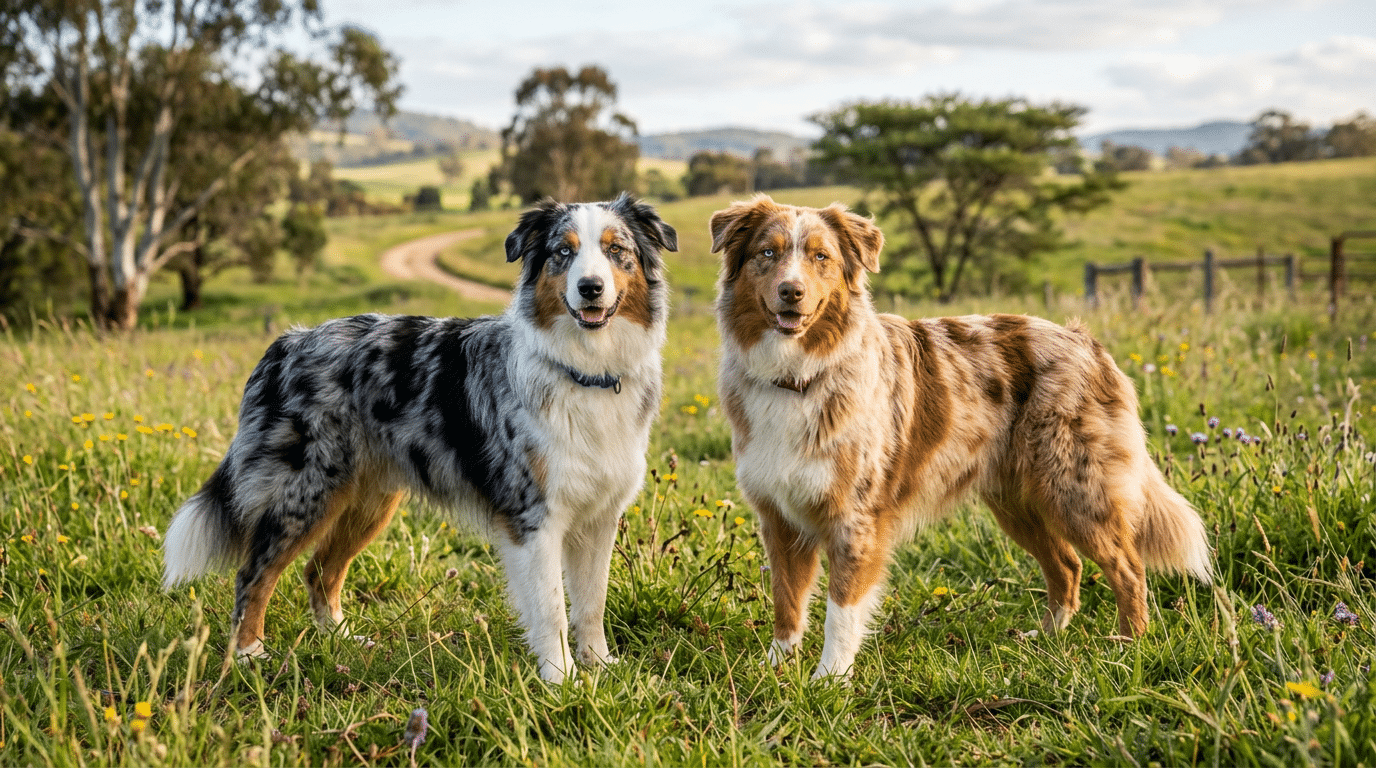
Blue merle is probably the most photographed Australian Shepherd color, and it’s easy to see why. The coat combines marbled patches of gray, black, and white, creating a pattern that looks almost painted on. No two blue merle Aussies have the same markings. Some show large dark patches over mostly silver-gray coats; others carry heavier black coverage with just hints of the merling effect.
Eye color gets interesting here. Blue merles often have blue eyes, and they’re also one of the breeds most likely to display heterochromia, meaning each eye is a different color. You might see one amber eye and one blue, or even a single eye that’s half brown and half blue. It looks striking, and it’s completely normal for this coat pattern.
Blue merle Aussies can be tri-color (with copper points and white markings), bi-color (just the merle pattern plus white OR plus copper), or sometimes just straight merle with minimal additional markings. Tri-color blue merles are the most common version you’ll see in show rings.
Red Merle
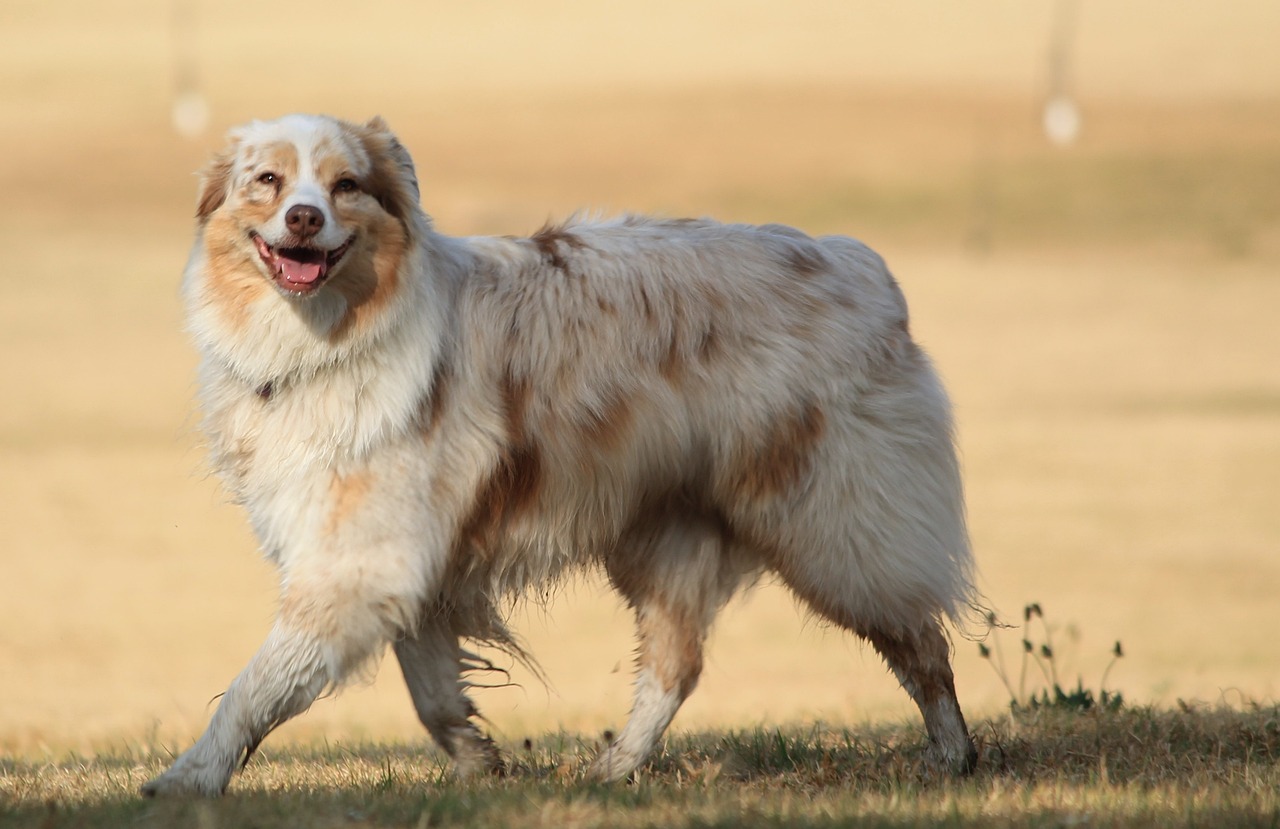
Red merle swaps the black pigment for red (also called liver), giving the coat a warm, cinnamon-and-cream marbled look. In direct sunlight, red merle coats can look almost luminous. The patches range from pale tan to a deep, rich rust-red, and the background color fills in with creamy white or light buff tones.
Eye color in red merles tends to run toward blue or hazel, and some dogs have amber or green eyes. Like blue merles, heterochromia is possible. Red merles can also carry copper points and white markings in tri or bi-color combinations.
Red merle is slightly less common than blue merle but just as sought-after, especially among owners who want something a little different from the stereotypical Aussie look. If you’re researching other merle dog breeds, you’ll find Aussies are considered to have some of the most varied and expressive merle patterning of any breed.
Black
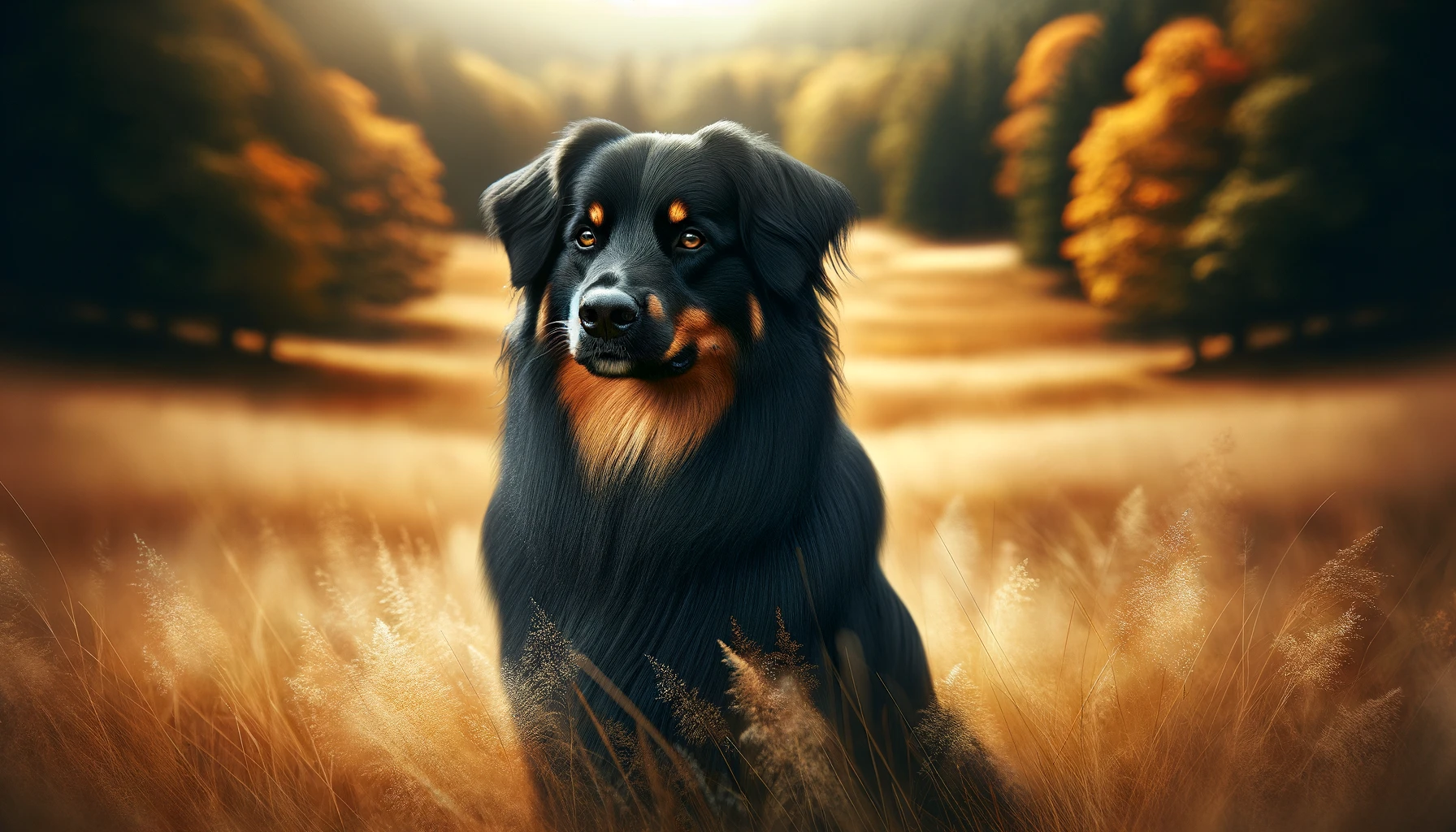
Black is one of the two solid base colors in the Aussie palette. A black Aussie without any additional markings looks sleek and intense; the double coat gives the black pigment real depth, especially in good light. But most black Australian Shepherds aren’t truly solid. They carry white markings, copper points, or both.
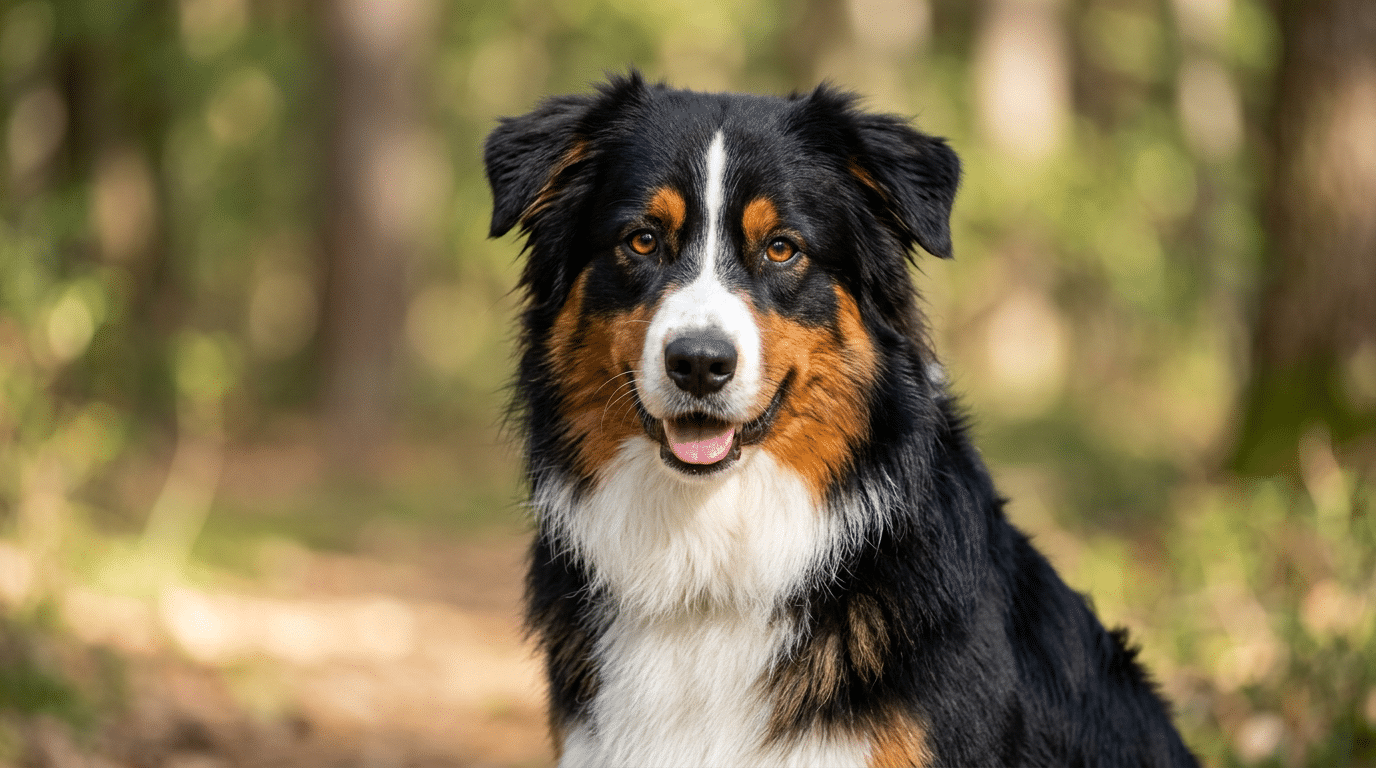
The standard black Aussie you’ll encounter is usually the black tri-color: a predominantly black dog with white on the chest, neck, face, and legs, plus copper (tan) shading above the eyes, on the cheeks, and on the lower legs. It’s a classic look and one of the most common color combinations in the breed.
Eye color in black Aussies is typically brown, ranging from light amber to a deep, rich mahogany. Blue eyes can occur but they’re less common in solid-base dogs than in merles.
Red (Liver)

Red Australian Shepherds (also called liver) carry a warm, earthy base coat that ranges from light cinnamon to deep chocolate-red. They’re less common than black-based dogs but just as capable in every working and sport context. If you’re choosing an Aussie purely for looks and want something that stands out, the red coat is hard to beat in golden hour light.
Red Aussies have liver-colored noses and lips rather than the black pigmentation seen in black-based dogs. Eye color typically runs amber, hazel, or brown. White markings and copper points follow the same placement patterns as in black dogs.
Red tri-colors are particularly striking: the warm red base coat, bright white chest and legs, and rich copper points create a three-tone palette that photographs beautifully. If you want inspiration for names that suit a dog with this kind of coloring, check out these male Australian Shepherd names or female Australian Shepherd names, several of the best ones draw directly from the breed’s distinctive appearance.
Tri-Color vs. Bi-Color: What’s the Difference?
Black Tri
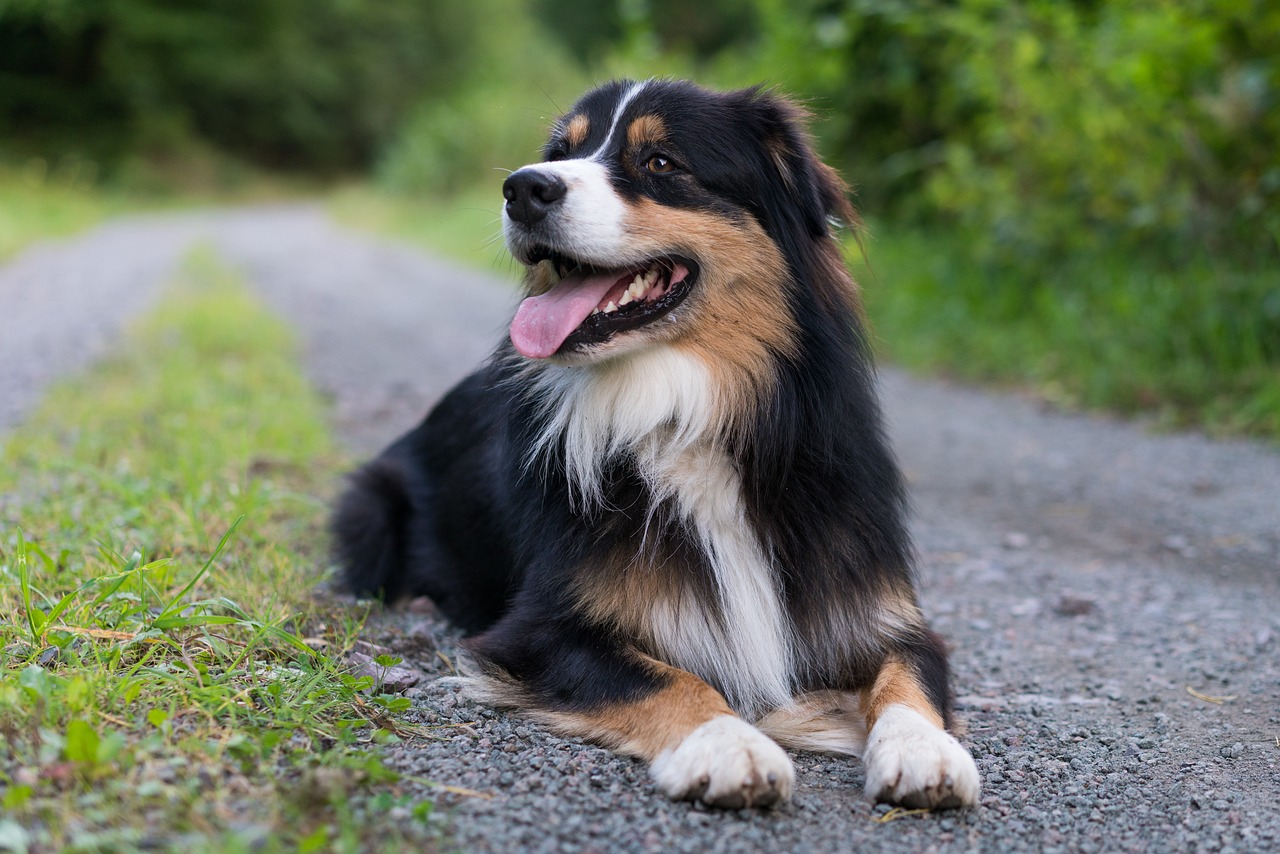
Tri-color means the dog shows three distinct colors: the base (black, red, blue merle, or red merle), white markings, and copper points. The black tri is the most common color combination in Australian Shepherds.
In a typical black tri Aussie, the black covers the back, sides, and top of the head. White appears on the chest, the muzzle or face, the collar area, the legs, and sometimes the belly. Copper (tan) touches show up above the eyes as small “eyebrow” dots, on the cheeks, at the base of each leg, and sometimes under the tail. The exact placement varies from dog to dog, some show heavy white coverage, others very little, but the three-color combination is always present.
Red Tri
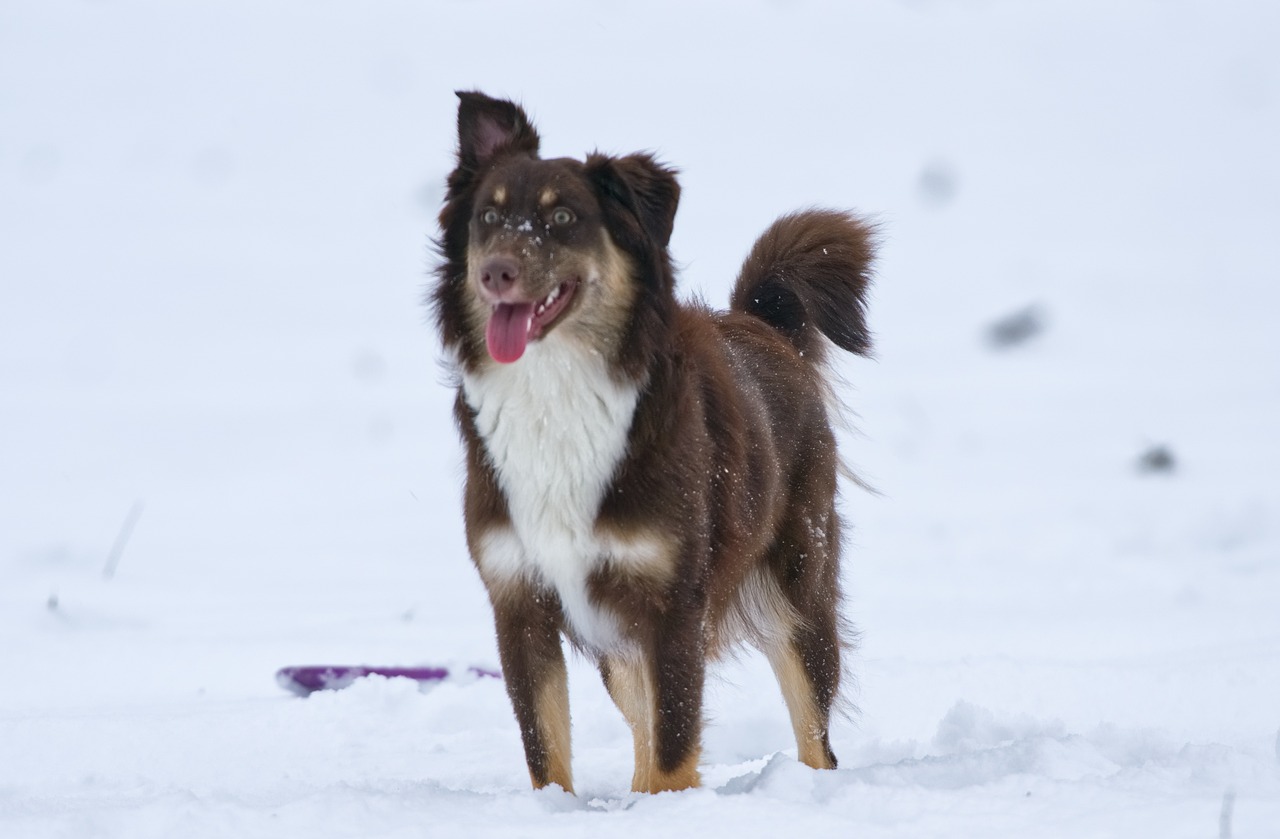
The red tri follows the exact same pattern as the black tri, just with red replacing black as the base coat. The warm contrast between the cinnamon-red body and bright white chest is a big part of why red tris get so much attention.
Bi-color dogs, by contrast, only show two colors: the base plus either white OR copper, not both. A bi-color black Aussie might have a black body with white markings but no copper points at all. Bi-color dogs are less common and sometimes mistaken for other breeds.
Both tri and bi-color patterns are fully AKC-recognized. Neither is considered superior in the show ring; it comes down to how well the dog conforms to overall breed standard.
Copper Points: What They Are and Where They Appear
Copper points (also called tan points) are the warm brown or rust-colored markings that appear on a subset of Australian Shepherds. They’re controlled by the agouti gene series (specifically the “at” allele), which triggers tan point expression in combination with the base color.
Here’s where copper points typically appear on a tri-color Aussie:
- Two small dots above each eye (the “eyebrow” dots)
- Cheek patches, often blending toward the muzzle
- Under the chin and along the throat
- On the inside of the front and rear legs
- Around the vent area
- A small patch on each side of the chest
The intensity of copper can vary a lot. Some dogs show deep, rich rust-red points; others have lighter, more golden tan. The placement tends to be fairly consistent across individuals, but the size and saturation of the markings differ.
Not every Aussie carries copper points. Bi-color dogs may show only white markings with no copper, and solid black or red dogs with no additional markings exist, though they’re rare.
White Markings: Where They Show Up
White markings in Australian Shepherds are controlled by the Irish spotting pattern, which is common in herding breeds. You’ll typically see white on the chest, collar area, face (often a blaze or full face mask), front and rear legs, and sometimes the belly or tail tip.
The AKC standard allows white markings up to and including the collar but notes that excessive white, particularly on the body, back, or above the hock on the rear legs, is discouraged. This isn’t just a cosmetic standard. There’s a genetic link between excessive white coverage and hearing or vision problems, especially in dogs that also carry the merle gene.
A white collar is common and perfectly normal. A dog that’s mostly white, however, is likely the result of double merle genetics (more on that below).
Blue and Other Dilute Colors
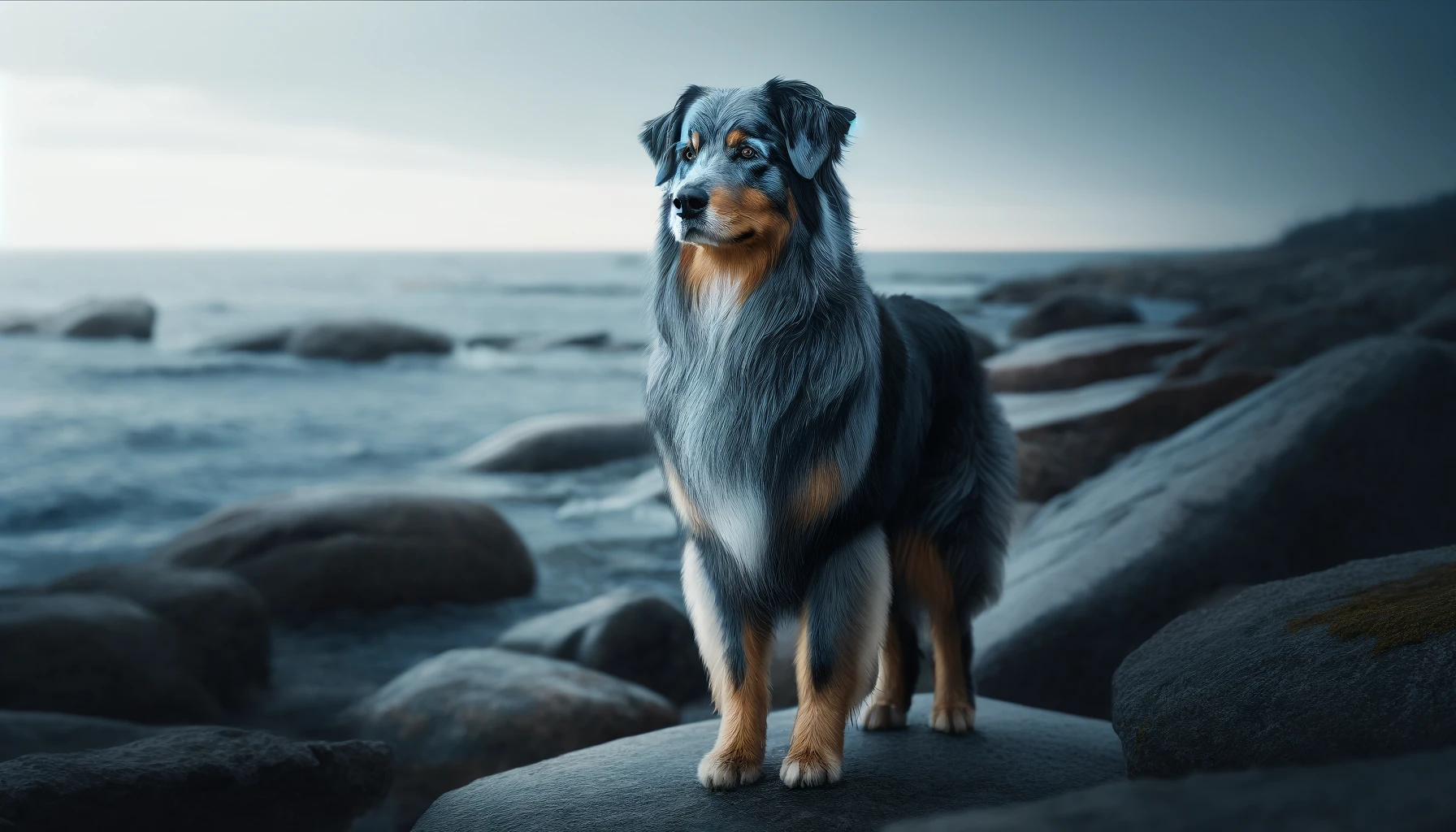
You’ll sometimes see Australian Shepherds described as “blue” – not blue merle, but plain blue. This refers to a dilution gene that lightens black pigment to a smoky charcoal or slate gray. These dogs aren’t officially recognized as a separate color by the AKC; dilute blue falls outside the four recognized base colors.
Similarly, “isabella” (a diluted liver/red) occasionally appears in Aussie lines. These dilute colors can look striking, but they’re generally considered non-standard. Responsible breeders don’t specifically breed for them, and you should be cautious of any breeder marketing “rare blue” puppies at a premium.
Merle Genetics and Why They Matter
The merle pattern comes from the M (merle) gene, which randomly dilutes patches of pigment in the coat. One copy of the merle gene (Mm) produces the classic merle pattern: the mottled, marbled look you see in blue and red merles. The gene works differently on black pigment (creating blue merle) vs. red pigment (creating red merle), but the underlying mechanism is the same.
Here’s the critical part: what happens when two merle dogs are bred together?
Each parent carries one copy of the merle gene. When two Mm dogs mate, about 25% of puppies will inherit two copies of the gene, one from each parent. These dogs are called double merles (MM).
Double merle Aussies often look mostly white with irregular color patches. The double dose of the merle gene disrupts pigment development far more aggressively, often affecting not just the coat but also the structures of the inner ear and eyes. The result is a significantly elevated risk of deafness, blindness, or both.
⚠️ Double Merle Health Risk Summary
| Factor | Single Merle (Mm) | Double Merle (MM) |
|---|---|---|
| Coat appearance | Classic mottled merle pattern | Mostly white, irregular patches |
| Deafness risk | Normal (not elevated) | Significantly elevated |
| Vision problems | Normal (not elevated) | Microphthalmia, blindness possible |
| AKC breeding recommendation | Fine to breed with non-merle | Breeding discouraged |
| Responsible breeder practice | Standard | Never breed merle x merle |
This is why reputable Australian Shepherd breeders never pair two merle dogs. A single-merle Aussie bred with a solid-colored dog produces 50% merle puppies and 50% solid puppies, no double merles, no elevated health risk. It’s straightforward to avoid, which makes merle x merle breeding completely preventable.
If you’re looking at a mostly white Aussie puppy, ask the breeder directly about parental color genetics. A responsible breeder will have this information readily available and will typically test for the merle gene before breeding. You can also explore breeds similar to Border Collies if you’re drawn to merle patterns across herding breeds generally.
Does Color Affect Personality or Working Ability?
Short answer: no. Coat color in Australian Shepherds is purely cosmetic. A blue merle Aussie and a black tri Aussie from the same breeding lines will perform identically in herding, agility, obedience, or any other discipline. The intense working drive, trainability, and energy levels that define the breed are not color-linked.
The only exception is the double merle situation, where health problems associated with that genetic combination can affect a dog’s ability to work or respond to training. But that’s a genetic health issue, not a color preference.
Aussies of every color are similarly demanding owners. They need a lot of mental stimulation, consistent training, and regular exercise. If you’re thinking about adding one to your home, the Australian Shepherd feeding guide is a good starting point for understanding their nutritional needs at different life stages.
If you love merle coats in other breeds, it’s worth reading about Dachshund colors or Corgi colors, both include merle variations with their own interesting genetics and visual appeal.
Frequently Asked Questions About Australian Shepherd Colors
What is the most common Australian Shepherd color?
Black tri-color is the most common color combination. The black body with white and copper markings is what most people picture when they think of an Australian Shepherd. Blue merle comes in a close second in popularity, though it’s somewhat less common in strictly numerical terms.
Are blue-eyed Aussies always merle?
Not always, but it’s the most common reason. Blue eyes in Aussies are most often linked to the merle gene, which affects pigment in the iris as well as the coat. However, some non-merle Aussies can have blue eyes due to the piebald gene or a separate modifier gene. It’s relatively uncommon but does happen.
What’s the difference between blue merle and a “blue” Australian Shepherd?
Blue merle refers to the merle-patterned coat with gray, black, and white marbling. A “blue” Aussie refers to a dog with a dilution gene that lightens black to a solid slate or charcoal color, with no merle pattern involved. Blue merle is AKC-recognized; plain “blue” is not a standard color.
Can Australian Shepherds be solid-colored?
Yes, though it’s uncommon. Solid black or solid red Aussies with no white markings and no copper points do exist. These dogs meet the breed standard but are less frequently seen than tri or bi-color dogs.
What is a double merle Australian Shepherd?
A double merle inherits the merle gene from both parents, giving it two copies (MM instead of Mm). These dogs are usually mostly white and face significantly elevated risks of deafness and vision problems. Double merles result from irresponsible merle x merle breeding.
Do Australian Shepherd colors fade as they age?
Some Aussies do experience mild coat lightening with age, particularly in the merle-patterned areas. Red-based dogs may lighten slightly over time. It’s typically gradual and doesn’t dramatically change the dog’s overall appearance.
Does coat color affect how much an Aussie sheds?
No. Shedding in Australian Shepherds is related to their double coat structure, not their color. All Aussies shed, quite a lot,, especially during the twice-yearly coat blow. Color doesn’t change that. A red tri sheds just as much as a blue merle.
Are certain Australian Shepherd colors more expensive?
Blue merle and red merle puppies often command higher prices from breeders simply due to demand. Prices can range from around $800 for a pet-quality Aussie to $2,500 or more for a show- or sport-prospect merle from working lines. Color should never be the primary factor in your decision, health testing and breeder reputation matter far more.
What colors are NOT recognized by the AKC for Australian Shepherds?
Colors outside the four recognized shades, such as dilute blue (solid slate), isabella, or sable, are not AKC-recognized. These can appear in Aussie lines but are considered non-standard. Be wary of breeders marketing these as “rare” colors at premium prices.
Can I tell a puppy’s adult color from its puppy coat?
Generally yes, though merle patterns can shift noticeably as puppies grow. A blue merle pup’s patches may darken or lighten over the first year. Solid-color puppies are usually a reliable indicator of adult color, but the intensity and exact placement of markings can develop further with age.
Bottom Line
Australian Shepherd colors are more structured than they first appear. Four AKC base colors (black, red, blue merle, and red merle) combine with tri or bi-color patterns to create the range of looks you see in the breed. Copper points and white markings follow predictable genetic rules. Merle genetics produce beautiful coats but require responsible breeding to avoid the serious health consequences of double merle combinations.
Whether you’re drawn to the dramatic marbling of a blue merle, the warmth of a red tri, or the clean simplicity of a solid black Aussie, you’re getting the same intelligent, high-energy, endlessly loyal dog underneath. Color is one of the last things that should drive your choice.
If you’re still in research mode, the guides on Bernese Mountain Dog colors and French Bulldog colors cover similar AKC color genetics in two very different breeds, good reading if you’re comparing options.
 Toledo, United States.