
Choosing the best food for your senior dog is one of the most meaningful things you can still do for them. Here’s what the research actually says.
You notice it in small ways first. Your dog takes a little longer to get up in the morning. They pause at the bottom of the stairs before deciding to climb. They sleep through things that used to bring them running. And you tell yourself it’s just age.
But part of you isn’t so sure. And that part of you is right to ask.
How a dog ages isn’t set in stone. What you feed a senior dog is one of the most controllable variables in that process, and the science behind it is a lot more interesting than anything on a pet food label.
What “Slowing Down” Actually Means

Most of us chalk it up to getting old. The stiffness in the morning, the slower recovery after a long walk, the afternoons spent napping when they used to be underfoot. It feels inevitable.
But “slowing down” is usually the surface-level version of something more specific happening underneath. And when you name what’s actually going on, it stops feeling so out of your hands.
Researchers studying canine aging have identified two key biological processes that explain a lot of what owners observe in senior dogs. One involves the gradual loss of muscle tissue over time. The other involves what’s happening at a cellular level, influenced directly by the type of food a dog has been eating for years.
Neither one is entirely inevitable.
That’s the part most people don’t hear. And it changes how you think about what goes in the bowl.
A Study That Surprised Researchers

In 2025, researchers at Cornell University published a metabolomics study looking at something no one had measured quite this precisely before: what actually changes inside a senior dog’s body when you switch their food.
They weren’t tracking symptoms. They were measuring biomarkers: compounds in the blood and tissue that reflect what’s happening in the body at a biological level. What they found in the first 30 days surprised them.
The study focused on AGEs. That stands for advanced glycation end products, which is a mouthful, so here’s the plain version.
When food is cooked at very high temperatures for long periods (the way most ultra-processed pet food is made), it produces these compounds. They accumulate in the body over time. And they’re associated with accelerated cellular aging.
Senior dogs carry a measurably higher AGE load than younger dogs. That part’s expected. What the Cornell study found is that diet has a direct and measurable effect on that load. Within 30 days of switching from processed food to fresh food, researchers observed a significant reduction in AGE biomarkers.
Thirty days. Not a years-long gradual shift. A month.
The researchers were careful not to overclaim, and this article will be the same. One study isn’t a guarantee. But it’s peer-reviewed, it’s specific to senior dogs, and it’s the most rigorous science available right now on this exact question. For anyone trying to figure out whether the food actually matters, that’s a meaningful answer.
If what goes in the bowl is changing what’s happening inside your dog’s body, it’s worth taking a look at what’s in it.
Your senior dog’s nutrition may be one of the most meaningful things you can still adjust.
See how The Farmer’s Dog approaches senior nutrition and what their fresh-food plans look like for aging dogs.
The Muscle Problem Most Dog Owners Don’t Know About
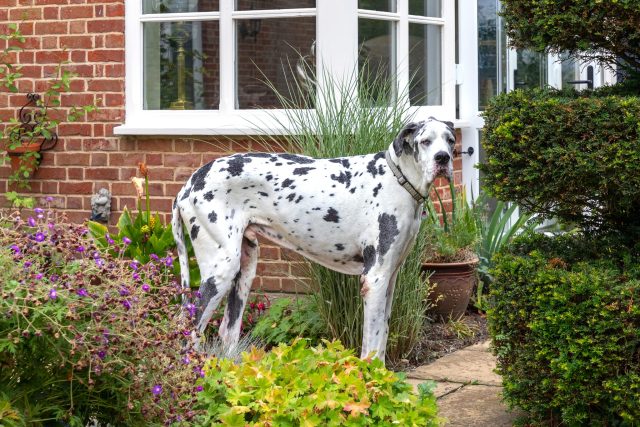
There’s a clinical term for something most owners just call slowing down: sarcopenia. It means age-related muscle loss. And it’s far more common in senior dogs than most people realize.
It doesn’t happen overnight. It builds gradually, and by the time it shows up in ways you’d notice: the hesitation before the stairs, the slower pace on walks, the mornings that take longer to get going. It’s usually been underway for a while.
Sound familiar?
Here’s why it matters beyond what you can see. Muscle tissue is what keeps your dog stable, comfortable, and moving. Less muscle means more joint stress, slower recovery, and less energy for the things they love most.
Protein quality is a key factor. Not just how much protein a dog eats, but how much of it their body can actually use. That’s digestibility. And this is where the type of food matters far more than most label comparisons would suggest.
Fresh, human-grade food is clinically shown to be highly digestible. Your dog absorbs more of the food’s powerful nutrients than from highly processed options, including the protein that supports muscle mass. That’s a real difference. Not a marketing claim.
What’s Actually in Most “Senior” Dog Food?
You’ve probably seen the labels. Senior formula. Joint support. Healthy aging blend. It feels like a meaningful step.
So what actually changes between a regular formula and a senior one? Is the food genuinely different, or is it mostly a different bag?
In most cases, reduced calories and added glucosamine. Those are real adjustments. But the underlying manufacturing process usually stays the same. Same cooking temperatures. Same ingredient sourcing. Same level of processing.
That matters because of what we now know about AGE accumulation. The label changes. The process that generates AGEs doesn’t.
This isn’t about shaming any particular feeding approach. Kibble is what most dogs eat, and it’s what decades of marketing and distribution have made the default. But when you’re asking whether there’s something more you can do for an aging dog, the processing question is the one most senior formulas don’t address.
Fresh food is a genuinely different approach. Not a premium version of the same thing. A fundamentally different thing: made from whole meats and vegetables, gently cooked at lower temperatures, and closer to food in the real sense of the word.
How The Farmer’s Dog Supports Aging Dogs
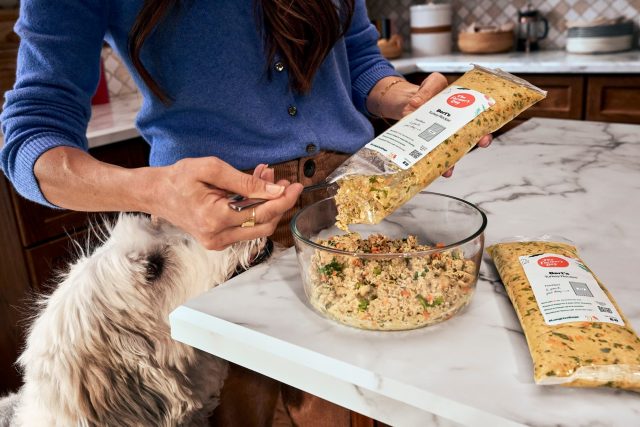
The Farmer’s Dog makes freshly made dog food and delivers it to your door. But for a senior dog owner, the useful frame isn’t what it is. It’s what it does.
Highly digestible. Fresh, gently cooked food made from whole meats and vegetables is clinically shown to be highly digestible, meaning your dog absorbs more of the food’s powerful nutrients than from highly processed options. That includes the protein that supports muscle mass as dogs age.
Formulated by on-staff Board Certified Veterinary Nutritionists®. Not reviewed by vets after the fact. Formulated by them from the start. The recipes meet or exceed AAFCO and WSAVA nutritional guidelines, the benchmarks for complete and balanced dog food.
Pre-portioned for your specific dog. Weight management is one of the most well-documented longevity factors for dogs. Lean dogs can live up to 2.5 years longer than dogs carrying excess weight. Pre-portioned packs take the guesswork out of that. Results may vary from dog to dog.
Full of moisture. That matters for older mouths and bodies in ways dry food simply can’t match.
Supports immune function and coat health. Gently cooked to preserve vital nutrients that help support your dog’s immune system. Healthy skin and a glossy coat tend to show up fairly quickly after switching.
Delivered on a schedule you control. No more hauling bags from the store or guessing at scoops. Freshly made, frozen for delivery, ready to serve when you thaw it.
The plans are personalized based on your dog’s age, breed, weight, and activity level. The recipes themselves aren’t customized, but the plan built around them is. If anything changes (a vet recommendation, a shift in weight, a new health consideration), the plan can change too.
Help your senior dog get more out of every meal.
Start their personalized fresh food plan now and get 50% off your first box of The Farmer’s Dog.
What to Expect When You Make the Switch
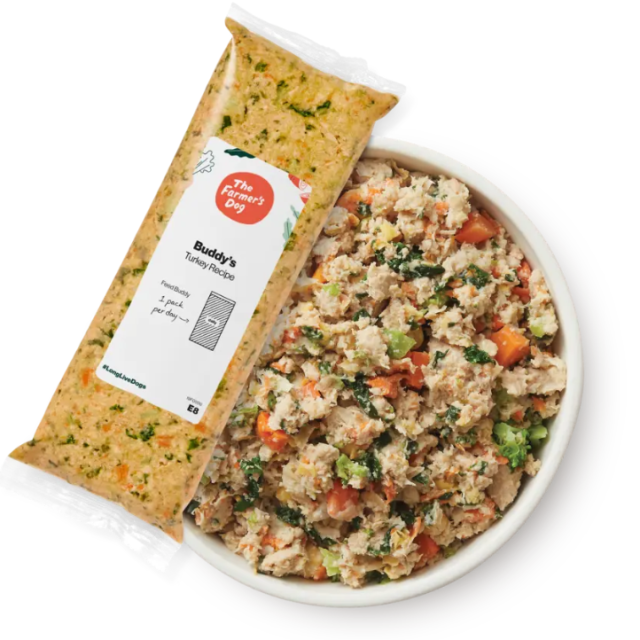 The transition shouldn’t be overnight. A gradual shift over about a week, mixing increasing amounts of fresh food with what you’re currently feeding, which helps your dog’s digestive system adjust without discomfort.
After that, the changes tend to show up in layers.
The Cornell study suggests measurable shifts at the cellular level begin within 30 days. What owners commonly report noticing sooner: improved coat condition, firmer and smaller stools, and, for many dogs, a bit more energy on walks. Results vary, and your dog’s age, breed, and health history all play a role.
If you have questions at any point during the transition, The Farmer’s Dog has a real customer service team available every hour of every day. Call, text, or email. US-based, real people, no chatbots. That kind of support is genuinely rare.
Frequently Asked Questions (FAQs)
What is the best food for senior dogs?
A highly digestible, fresh diet formulated for your dog’s specific age, breed, size, and activity level. Quality protein supports muscle maintenance, and moisture content matters especially for older bodies. Pre-portioned plans also make it easier to maintain a healthy weight, which is one of the most well-documented longevity factors for dogs.
Does diet really affect how long a dog lives?
Maintaining a healthy weight is strongly linked to longevity in dogs. Lean dogs can live up to 2.5 years longer than dogs carrying excess weight. Fresh, pre-portioned food makes weight management more consistent than conventional scoop-based feeding. Results may vary.
What are AGEs, and why do they matter for my dog?
Advanced glycation end products (AGEs) are compounds that form when food is processed at high heat, as in the production of ultra-processed pet food. A Cornell University study published in 2025 found measurable reductions in AGE biomarkers in senior dogs switched to fresh food within 30 days of making the switch.
Is The Farmer’s Dog good for senior dogs?
Yes. The Farmer’s Dog offers personalized fresh food plans based on your dog’s age, breed, weight, and activity level. Recipes are formulated by on-staff Board Certified Veterinary Nutritionists® and meet or exceed AAFCO and WSAVA guidelines. The food is highly digestible and full of moisture, both of which are especially beneficial for older dogs.
How do I know if my senior dog’s food is working?
Signs vary by dog and may include improved coat condition, firmer stools, increased energy, and easier weight maintenance. Results may vary. Consult your veterinarian for guidance based on your dog’s specific health history and any ongoing conditions.
Make A Commitment To Love Them Through Every Lifestage

You didn’t land here because you find dog food interesting. You’re here because your dog is getting older, and you love them, and you’re trying to figure out if there’s anything else you can still do.
There is. And now you have the science to back it up.
Diet is one of the most controllable variables in how a dog ages. The Cornell research gives you something real to hold onto. Not a miracle. Not a promise. Just a lever worth pulling, with real evidence behind it.
Your dog doesn’t need a different label on the same bag. They need a different kind of food.
Give your senior dog a plan built for where they are right now.
Get 50% off your first box of fresh food from The Farmer’s Dog.
 Toledo, United States.