
iHeartDogs is reader-supported. When you buy via links on our site, we may earn an affiliate commission at no extra cost to you.
Pugs are charming, affectionate dogs that can benefit from proper joint support to help maintain mobility and comfort throughout their lives. Choosing the best joint supplement for a Pug can support healthy joints, flexibility, and everyday movement, especially as your dog ages or becomes less active. With so many options available, understanding which ingredients and features truly matter can help you make a more informed decision. This guide covers six essential things every Pug owner should know before selecting a joint supplement.

#1: For Maximum Efficacy, Choose a Supplement for Your Pug with Multiple Active Ingredients
When most people think of a joint supplement for their Pug, glucosamine is the first thing that comes to mind. And while glucosamine is the most popular active ingredient, other powerful nutraceuticals include MSM, chondroitin, and turmeric (curcumin). If your supplement contains only one or two of these, you may be missing potential benefits. Different dogs respond to different treatments, so when in doubt, offer a broad spectrum of nutrients.
#2: Always Check The Amount of Active Ingredients
If the quantity of active ingredients (in milligrams) is not made available, the product likely contains low levels that are unlikely to have a therapeutic effect on your Pug’s joints. As a rule of thumb, your dog should receive 20 mg of glucosamine daily for each pound they weigh. Budget-oriented joint supplements (often in the $15-20 a bottle range) often contain levels too low to make any serious impact on your dog’s joint health. In addition, dry dog food manufacturers have begun adding small amounts of glucosamine to their products to woo consumers. Make sure your dog receives enough to matter!
#3: Always Buy Made in the USA
While you’d expect that most pet stores would have transitioned to only carrying consumable products that are made in the USA, this is simply not the case. Many budget-oriented pet stores, online retailers, and grocery stores still carry inferior supplements made in factories outside the USA with far lower production standards.
#4: Decide If You Want An Arthritis Supplement with or Without Hemp for Your Pug
The last few years have brought about exciting advancements in the use of Hemp for dogs. Several clinical trials have shown that hemp can improve the mobility of arthritic dogs. Some brands have begun to offer their Hip & Joint supplements with Hemp or without Hemp.
#5: Results Will Vary Based on Your Pug’s Age and Condition
Ideally, a joint supplement regimen should begin before signs of pain are present in your Pug. (ideally around 5 years of age, although large breeds may need earlier) In reality, however, we often don’t consider the need until signs of pain are apparent. If your dog is already showing signs of distress, a joint supplement can still offer substantial relief. However, it may take 1-2 months to show signs of improvement.
#6: Taste and Format Matters
The best joint supplement in the world is worthless if your dog refuses to eat it. The most popular formats of delivery for joint supplements are liquid, tablet chews, and soft chews, each with its own benefits and drawbacks. When it comes to palatability, soft chews and liquids tend to please the most canine palates. Because a soft chew can contain a wider variety of nutraceuticals (see item #1) it’s our preferred method.
Where Our Research Led Us (Our Preferred Joint & Joint Supplement for Pugs)
Our research in hip & joint supplements for dogs led us to develop & recommend the Happy, Healthy line of canine joint care supplements. A bonus of this brand is that each purchase goes towards helping provide food for animal shelters in need.
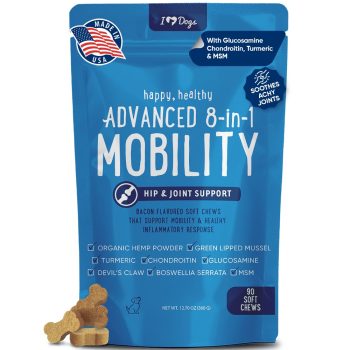
Supporting Your Pug’s Mobility and Comfort
Finding the right joint supplement for your Pug starts with understanding your dog’s unique needs and choosing a formula made with high-quality, proven ingredients. The best joint supplements can help support healthy cartilage, joint function, and everyday movement while promoting long-term wellness. By carefully comparing your options and consulting your veterinarian when needed, you can make a confident decision that helps your Pug enjoy a more active, comfortable, and healthy life.
Thank you for reading this guide. Remember to always consult your veterinarian when making changes to your dog’s diet and routine. These statements have not been evaluated by the Food and Drug Administration. No product is intended to diagnose, treat, cure, or prevent any disease. The information on this website is not intended to replace a one-on-one relationship with a qualified health care professional.
Top 9 Pet Insurance Plans for Pugs
- CBD for Pugs: What You Need to Know
- Best Supplements for a Senior Pug
- Best Flea & Tick Products for Pugs
- Best Online Dog Training Courses for Pug
- Best Hip & Joint Supplement for a Pug
- What Supplements Should I Give a Pug Puppy?
- The 9 Best Pug Puppy Foods
- Best Dog Beds for Pugs
- Improve Your Pug's Skin & Coat with This One Hack
- Giving This to Your Pug Daily Can Alleviate Itchy Allergies
- 6 Natural Ingredients to Fight Your Pug's Allergies
- 8 Ways to Stop Your Pug's Scratching
- 7 Ways to Calm Your Pug's Anxiety
- 6 Remedies for Your Pug's Diarrhea, Gas, or Vomiting
- 7 Best Dental Chews for a Pug
 Toledo, United States.