
Dog DNA testing has advanced significantly in recent years. What was once a niche service with limited data is now a powerful tool in proactive pet care. With advances in technology, today’s DNA tests can reveal not only your pup’s breed mix but also potential genetic health risks, dietary sensitivities, behavioral traits, and even connect you with your pup’s canine relatives.
Whether you’re a proud mutt parent, curious about your purebred’s lineage, or looking for clues to your dog’s health and behavior, a dog DNA test can offer life-enhancing (and sometimes life-saving) insights. Here’s what every dog lover should know about DNA testing.

What is Involved in Dog DNA Testing?
When dog DNA testing first hit the market in 2007, it required a vet visit and a blood sample. Fast forward to today, and it’s as easy as swabbing your pup’s cheek at home. Most kits include:
-
A sterile cheek swab
-
Instructions
-
A prepaid return mailer
-
Online access to your dog’s detailed DNA report
Once received, the lab processes your pup’s saliva and cross-references it with a database of hundreds of breeds and genetic markers. Within a few weeks, you’ll receive a personalized report on everything from ancestry to health and behavior.

Best Dog DNA Tests of 2025
Here are some of the top-rated dog DNA test kits available today:
Basepaws Breed + Health Dog DNA Test
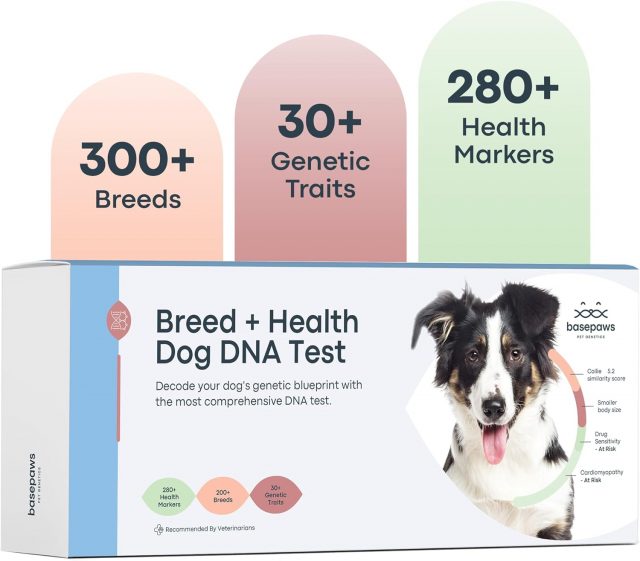 Most Accurate & Best Overall
-
Screens for 280+ genetic health markers and 30+ traits
-
Uses advanced Next-Generation Sequencing (NGS) for unmatched accuracy
-
Includes a 330+ breed database for detailed ancestry insights
-
Backed by ongoing research and professional support, not just a one-time report
DNA test kits are now 50% OFF when you buy two or more on the Basepaws site!


Embark Breed + Health Kit
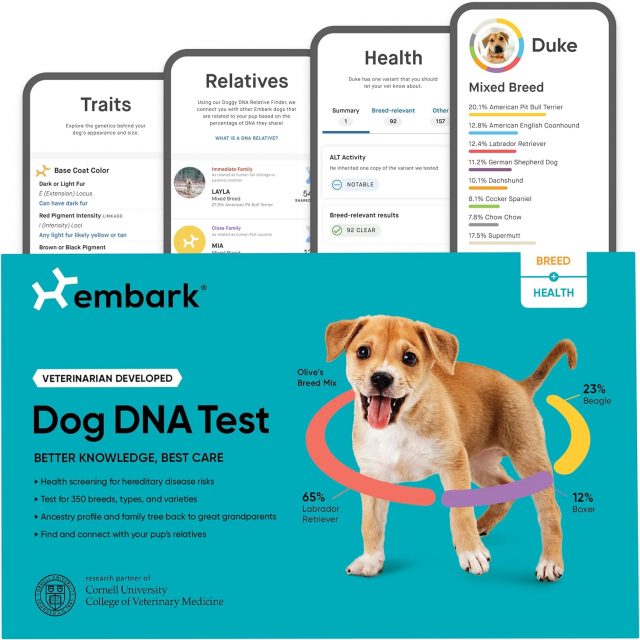
Best for Comprehensive Results
-
Screens 250+ health conditions and 35+ traits
-
Uses WGS and matches your dog with relatives
-
Developed in partnership with Cornell University College of Veterinary Medicine

Wisdom Panel Premium

Most User-Friendly
-
Tests for 200+ health conditions and 350+ breeds
-
Includes medication sensitivities
-
Offers a clear, mobile-friendly report
DNA My Dog
 Best Budget-Friendly Breed Test
-
Identifies breed mix and common personality traits
-
Health screening is available in higher-tier options
-
Less detailed than premium kits, but great for basic ancestry
NutriScan (by Hemopet)
 Best for Food Sensitivities
-
Tests for over 24 common food ingredients
-
Non-invasive saliva test, helpful for chronic skin or GI symptoms
Advancements in Dog DNA Testing
Breed Identification
The science behind dog DNA testing has undergone significant evolution, offering pet parents greater depth, precision, and utility. One of the most noticeable improvements is the expansion of breed libraries. Leading companies now analyze DNA samples against over 350 recognized breeds, types, and varieties, including rare and region-specific dogs that were previously unaccounted for.
Another groundbreaking advancement is the adoption of more powerful sequencing technologies. While some companies use Whole Genome Sequencing (WGS) to scan hundreds of thousands of markers, Basepaws has distinguished itself by using Next-Generation Sequencing (NGS), the same advanced method trusted in human genetics research. NGS provides a far more comprehensive and detailed analysis than traditional microarray testing, ensuring results that are both highly accurate and actionable for pet parents.
Predictive Genetics
The detection of health and disease markers has also expanded. Where earlier tests could identify around 100 conditions, today’s kits can screen for more than 250. These include silent yet serious issues like degenerative myelopathy, MDR1 drug sensitivities, and progressive retinal atrophy (PRA).
Basepaws has taken this a step further with its Breed + Health Dog DNA Test, which screens for over 280 genetic health markers. This empowers pet parents to work proactively with their veterinarians, addressing risks before they become problems and making care decisions with greater confidence.
Modern dog DNA tests now also provide detailed predictions of physical traits. Beyond standard insights into adult size, coat color, and shedding tendencies, Basepaws’ technology can identify unique features such as freckles, coat length, muzzle shape, and more—helping explain those quirky traits you already love about your pup.
Another exciting advancement is epigenetic age prediction, where DNA methylation patterns are analyzed to provide an estimate of biological age. This provides pet parents with a clearer understanding of how their dog is aging internally, which can inform decisions ranging from dietary adjustments to exercise routines. Basepaws is actively engaged in this area of research, helping to push the field forward toward more personalized wellness insights.
On the behavioral side, researchers continue to explore genetic links to traits such as anxiety, trainability, and prey drive. While environment and upbringing remain key, knowing your dog’s genetic predispositions can guide more effective training, enrichment, and bonding strategies.
Gene Matching
One of the more heartwarming and socially engaging features to emerge in the industry is canine relative matching. This allows owners to discover other dogs that share segments of their pup’s DNA, essentially long-lost family members scattered around the world. While several companies offer this, Basepaws pairs such features with ongoing updates and professional support, ensuring pet parents get both the fun of discovery and the peace of mind that comes with science-driven care.

How Dog DNA Testing Promotes Health & Longevity
Breed-Specific Conditions
A deeper understanding of your dog’s genetics can be a game-changer when it comes to making informed decisions about their health and wellness. One of the biggest advantages is the ability to anticipate breed-specific health risks. Certain hereditary conditions are closely associated with specific breeds. For instance, Labrador Retrievers are prone to hip dysplasia and obesity, Boxers have higher rates of certain cancers and heart problems, and Miniature Schnauzers often suffer from pancreatitis.
By identifying your dog’s breed composition, you can proactively monitor for early signs of these conditions and tailor preventative care, such as dietary adjustments or more frequent screenings.
Dietary Insight
Personalized nutrition is another area where DNA testing proves invaluable. Some kits can detect predispositions to issues like gluten intolerance, obesity, or sensitivities to specific proteins. This information can steer you toward a diet that aligns with your dog’s genetic needs. Tests like NutriScan even specialize in pinpointing food intolerances to common ingredients, helping dogs with chronic GI or skin issues.
For large breed puppies, genetic insights can forecast their adult size, allowing you to select appropriate puppy food formulations with the right calcium and phosphorus balance to support healthy skeletal development.
Activity Levels
Exercise requirements also vary dramatically between breeds, and DNA testing can help you customize an activity plan. While a Border Collie mix may need hours of daily mental and physical stimulation, a Shih Tzu might be content with a leisurely walk and some cuddle time. More importantly, some dogs carry genes linked to conditions like exercise-induced collapse or respiratory issues in brachycephalic breeds. Knowing these risks allows you to structure safer, more effective workouts for your furry friend.

Understanding Behavior Through DNA
Dog DNA testing doesn’t just tell you what your pup is made of physically—it also sheds light on who they are behaviorally. Many tendencies, such as prey drive, noise sensitivity, independence, and anxiety, are influenced by genetics. By analyzing behavior-related markers, DNA tests can help you anticipate potential challenges and tailor your training approach accordingly.
For example, if your dog has strong hound lineage, they may be naturally driven to follow scents and might excel with nose work games rather than agility drills. Understanding these genetic predispositions not only improves training outcomes but also helps in selecting enrichment activities your dog will genuinely enjoy. Early knowledge of behavioral traits also allows you to intervene and manage potential problems before they escalate, setting your pup up for a more balanced, contented life.
Related: Best Dog DNA Tests Reviewed
What to Look for in a DNA Testing Kit
-
Accredited Laboratories: Look for CLIA- or ISO-certified labs.
-
Transparency: Reputable companies don’t require a photo and clearly disclose their testing methodologies.
-
Depth of Results: Choose tests with comprehensive breed and health panels.
-
Customer Support: Access to vet geneticists or consultation adds value.
Veterinarians caution against cheap, no-name kits that promise quick results but fail to deliver accuracy or depth. If it sounds too good to be true, it probably is.

A Smarter Future for Your Dog’s Health
Dog DNA testing is no longer just a fun novelty—it’s a modern tool for informed, preventative pet care. By tapping into your pup’s unique genetic code, you gain valuable insights that can help your furry friend live a longer, healthier, and happier life.
With modern testing kits now more accurate, accessible, and affordable than ever, there’s never been a better time to decode your dog’s DNA.
ode your dog’s DNA.
 Toledo, United States.