
Every spring, the same thing. Your dog starts scratching more, licking their paws, and shaking their head. You chalk it up to pollen season and wait for it to pass. Sometimes it does. Sometimes it doesn’t. That gap is worth paying attention to.
Seasonal allergens are a real factor for a lot of dogs. But what often gets overlooked is that diet shapes how strongly a dog’s immune system responds to those triggers in the first place. The science on this connection is growing, and it points to something practical that pet parents can do something about.

What Spring Allergies Actually Look Like in Dogs
Here’s something worth knowing upfront: dogs show seasonal allergies very differently than people do. We sneeze and reach for antihistamines. Dogs itch. Specifically in their paws, ears, and belly, where skin is thinner, and allergen contact is higher. Common signs include:
- Persistent scratching, especially around the paws, face, and underarms
- Redness or irritation on the belly or between the toes
- Recurring ear infections or that familiar yeasty smell
- Excessively licking or chewing at the same spots
- Hot spots that flare and linger
Unlike people, dogs rarely get runny noses or sneezing fits from seasonal allergens. The response almost always shows up in the skin or digestive system.
Canine atopic dermatitis (the clinical term for environmental allergic skin disease) affects an estimated 3 to 15% of dogs, and its prevalence is rising. Research published in Veterinary Medicine: Research and Reports (2024) describes it as multifactorial, driven by genetic factors, immune dysregulation, skin barrier dysfunction, and environmental triggers. Pollen, grass, mold, and dust mites are the most common seasonal culprits.
The root issue isn’t the pollen itself. It’s the immune system’s reaction to it. And that reaction can be influenced by many factors, including what’s in the bowl.

Why Diet Is Part of the Conversation
Your dog’s diet isn’t separate from their immune health. They’re deeply connected.
A randomized crossover clinical trial published in Frontiers in Veterinary Science (2022) compared healthy dogs fed a whole food diet versus an extruded dry diet over 67 days each. Dogs eating the whole food diet showed significantly different inflammatory markers, including lower TNF-alpha to IL-10 ratios, a measure of the balance between pro-inflammatory and anti-inflammatory signaling. The researchers concluded that whole food diets could have immunomodulatory effects in dogs and called for further study in dogs with existing conditions.
What this means practically: what a dog eats day to day can influence the baseline state of their immune system. A dog whose diet supports lower chronic inflammation may respond more proportionally to seasonal allergens. A dog with underlying inflammatory signaling from their diet may tip more easily into symptomatic territory when pollen season hits.
The mechanism is straightforward. Skin is one of the body’s largest immune organs. Poor nutrient absorption compromises skin barrier function, meaning the skin’s ability to keep allergens out and moisture in. Better digestibility means more nutrients actually reach the cells that need them, including those responsible for maintaining the skin barrier and regulating immune response.

How The Farmer’s Dog Approaches This
This is where The Farmer’s Dog comes in, not as an allergy treatment, but as a practical approach to better baseline nutrition.
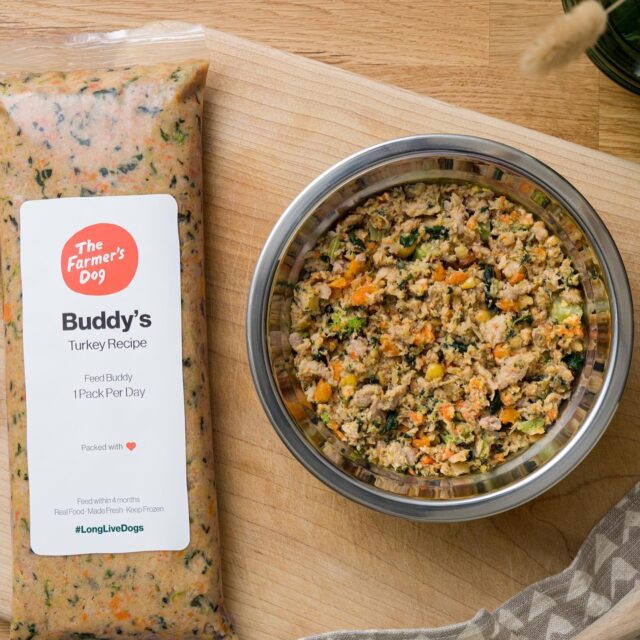
The food is made from whole meats and vegetables, gently cooked to preserve nutritional value. It’s human-grade, made in USDA-inspected facilities, and developed by on-staff board-certified veterinary nutritionists. The recipes are intentionally simple: real proteins, real vegetables, essential vitamins and minerals.
That simplicity matters for sensitive dogs. When food has 40 ingredients, identifying a trigger is nearly impossible. When it has a handful of whole, recognizable ones, it’s a lot more manageable.
Every plan is personalized to your dog’s specific profile: their age, weight, breed, and activity level. Meals arrive pre-portioned to their individual caloric needs. Consistency in a well-portioned, digestible diet supports the kind of stable nutritional foundation that the research above points toward.
See what a plan looks like for your dog.
Food Allergies vs. Food Sensitivities: What’s the Difference?
These terms get used interchangeably, but they’re not the same thing.
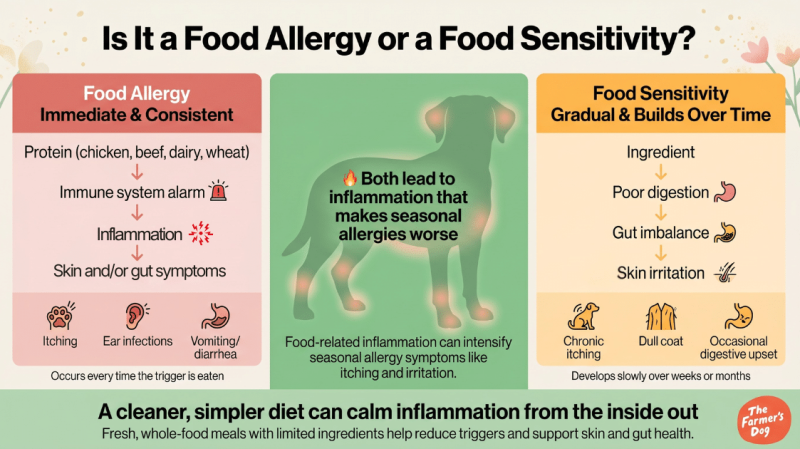
Food allergies are a true immune response. The body identifies a specific protein (usually chicken, beef, dairy, or wheat) as a threat and mounts a defense. Reactions tend to be consistent and can show up as skin issues, digestive upset, or both.
Food sensitivities are subtler. There’s no full immune response, but the digestive system still struggles with certain ingredients, and the fallout often appears in the skin. A sensitivity can develop gradually over months of eating the same food before it becomes obvious.
Both can contribute to chronic skin inflammation that makes spring symptoms more intense.
Research published in the Journal of Veterinary Internal Medicine (2022) followed over 4,000 dogs and found an association between early-life dietary exposures and the development of allergy and atopy skin signs later in life. Dogs fed non-processed food as puppies showed a lower prevalence of skin allergy signs compared to those fed conventional processed diets. The association adds to a growing body of evidence linking diet quality to long-term immune and skin health outcomes.
Signs That Food Might Be Playing a Role
Seasonal allergies flare in spring and fall and improve in winter. Food-related reactions don’t follow the seasons. They persist year-round.
Some things to watch for that suggest diet may be contributing:
- Itching, skin irritation, or ear problems that don’t fully resolve when pollen season ends
- Recurring ear infections despite treatment
- Digestive symptoms alongside skin issues, like loose stools, inconsistent digestion, or excess gas
- Minimal improvement even after managing environmental exposures like bedding, outdoor time, and paw cleaning
None of these are definitive on their own. But if your dog checks more than one of these boxes, it’s worth a conversation with your vet and a closer look at what’s in their bowl.
The Elimination Diet: Where Vets Often Start
If your vet suspects a food trigger, they may recommend an elimination diet. This is a structured process: feed a simplified, limited-ingredient diet for 8 to 12 weeks, then gradually reintroduce individual proteins to identify what triggers a reaction.
It requires real consistency. Even small amounts of excluded ingredients can throw off the results. And it works best when the baseline food is simple enough to serve as a clean starting point.
Even outside a formal elimination protocol, there’s a broader takeaway. Simpler, less processed food makes it easier to understand what your dog is actually eating and how they’re responding to it. That clarity is genuinely useful.

What Pet Parents Often Notice
Outcomes vary from dog to dog, and diet is one factor among many. But common things pet parents report after switching to fresh, whole-ingredient food include:
- A softer, shinier coat with less shedding
- Less scratching and paw-licking over time
- More consistent digestion
- More energy and general comfort
These aren’t overnight changes. Skin reflects what a dog has been eating for months, not days. But for dogs where diet was quietly contributing to the problem, removing that variable can make a real difference over time.
Results vary. If your dog has persistent skin issues, consult your veterinarian.
Managing Allergy Season: The Full Picture
Fresh food isn’t a replacement for allergy management. It’s a foundation for it.
A practical approach to spring combines several things:
- Nutrition: digestible, whole-ingredient food that supports skin health and immune balance
- Bathing and grooming: regular baths and paw wipes after outdoor time reduce allergen buildup on the coat
- Environmental management: washing bedding weekly, vacuuming regularly, and limiting outdoor time on high-pollen days helps reduce total allergen exposure
- Vet support: for significant or persistent symptoms, your vet may recommend antihistamines, medicated shampoos, or allergy testing
No single approach works alone. The goal is lowering your dog’s total allergen burden from every angle, so their immune system isn’t constantly working overtime.

The Bottom Line
Spring allergies in dogs are real, and they’re frustrating. But they’re not entirely outside your control.
Diet isn’t a magic fix. It’s a meaningful variable; one you can adjust. A dog eating food that genuinely supports their skin, digestion, and immune health is better equipped to handle what spring brings. The research is starting to reflect that in meaningful ways.
Fresh, real food. Appropriate portions. Simple ingredients you can recognize. That’s not a luxury. That’s just what dogs tend to do better on.
If you’re curious whether a different approach to feeding might help your dog feel more comfortable this season, building a plan tailored specifically to them takes about two minutes.
Build your dog’s personalized plan.
FAQ About A Dog’s Diet and Allergies
Q: Can my dog’s food play a role in seasonal allergy symptoms?
Not as a direct cause, since environmental allergens like pollen trigger spring symptoms. But research shows diet can influence how strongly the immune system responds. A dog eating highly digestible, whole-ingredient food may handle seasonal exposure better than one with underlying dietary inflammation.
Q: How do I know if my dog has a food allergy vs. a seasonal allergy?
Timing is usually the biggest clue. Seasonal allergies tend to flare in spring and fall and ease in winter. Food-related reactions persist year-round. If your dog’s symptoms don’t follow a seasonal pattern, or if they have recurring ear infections or digestive symptoms alongside skin issues, ask your vet about a food trial.
Q: What should I feed a dog with allergies?
Your vet is the right first stop for any dog with significant allergy symptoms. In general, simpler and more digestible food with fewer ingredients makes it easier to identify and avoid triggers. Fresh, minimally processed food is easier to evaluate from an ingredient standpoint than kibble with a long additive list.
Q: Does The Farmer’s Dog help with allergies?
The Farmer’s Dog isn’t marketed as an allergy treatment and isn’t a substitute for veterinary care. What it offers is fresh, whole-ingredient food that’s highly digestible, easy to understand, and developed by board-certified veterinary nutritionists. For dogs where diet quality is a contributing factor to skin health, that foundation can make a meaningful difference. Results vary.
Q: How long does it take to see improvement after switching food?
Skin and coat changes take time, usually a minimum of 6 to 8 weeks to see meaningful differences, since skin cells turn over slowly. Digestive improvements often come faster. Consistency matters: switching back and forth makes it harder to know what’s actually working.

A Smarter Way to Support Your Dog Through Allergy Season
While pollen and environmental triggers are out of your control, the quality of your dog’s diet is something you can actively improve. A fresh, whole-food approach can help support a healthier immune response, stronger skin barrier, and overall comfort during peak allergy months.
If your dog struggles every spring or deals with ongoing skin and digestive issues, it may be time to rethink what’s in their bowl. Starting with better nutrition can make a meaningful difference over time.
Explore a personalized plan from The Farmer’s Dog and get 50% off your first purchase.
Sources:
- Canine atopic dermatitis prevalence and pathogenesis (PMC, 2024): https://pmc.ncbi.nlm.nih.gov/articles/PMC10874193/
- Whole food diet and immune function in dogs, randomized crossover trial (PMC, 2022): https://pmc.ncbi.nlm.nih.gov/articles/PMC9447376/
- Puppyhood diet and allergy/atopy skin signs in adult dogs, Journal of Veterinary Internal Medicine (2022): https://onlinelibrary.wiley.com/doi/10.1111/jvim.16211
- The Farmer’s Dog Digest, “Do Dogs Get Seasonal Allergies?”: https://www.thefarmersdog.com/digest/do-dogs-get-seasonal-allergies/
- The Farmer’s Dog Digest, “All About Allergies: Spotting And Treating Your Dog’s Most Irritating Issue: https://www.thefarmersdog.com/digest/all-about-allergies-spotting-and-treating-your-dogs-most-irritating-issue/
- The Farmer’s Dog Digest, “Elimination Diet for Dogs”: https://www.thefarmersdog.com/digest/elimination-diet-for-dogs/
- The Farmer’s Dog Digest, “What Should I Feed My Dog With Itchy Skin?”: https://www.thefarmersdog.com/digest/what-should-i-feed-dog-with-itchy-skin/
 Toledo, United States.