
Dog Breed Colors 2026: The Complete Guide to Every Coat, Pattern, and Shade
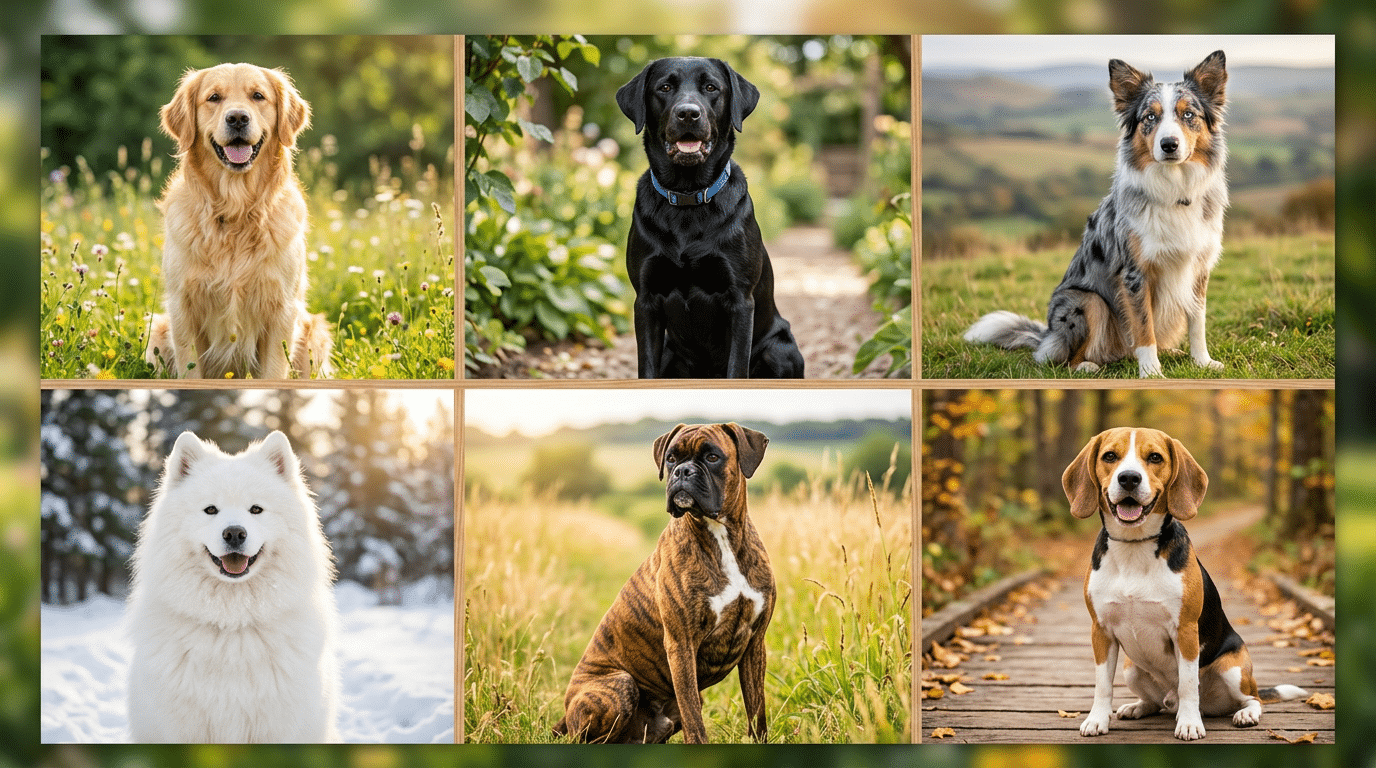
Your dog’s coat color is one of the first things you notice about them. It’s also one of the most fascinating aspects of canine genetics. From the jet-black Lab to the swirling blue merle Australian Shepherd, dog breed colors span a wild range that took centuries of selective breeding to produce. Some breeds come in just one or two shades. Others, like the Poodle, are recognized in more than ten distinct colors by the AKC.
So what actually determines whether a dog is black, red, brindle, or harlequin? And which breeds have the most impressive color variety? This guide breaks down how coat color genetics work, spotlights the most colorful breeds, and covers the rare shades that make certain dogs truly one of a kind.
Whether you’re picking a new puppy, competing in the show ring, or just curious about the science, here’s everything worth knowing about dog breed colors in 2026.
How Dog Coat Color Genetics Actually Work
Dog coat color comes down to two pigments: eumelanin (black/brown) and phaeomelanin (red/yellow). Every color you see on a dog is a variation of one or both of these. Genes control how much pigment is produced, where it’s distributed, and whether certain areas are diluted or blocked entirely.
A few key genes do most of the heavy lifting:
- The A (agouti) locus controls patterns like sable, black-and-tan, and solid colors.
- The B (brown) locus can shift black pigment to liver or chocolate.
- The D (dilute) locus lightens colors. Black becomes blue/grey, chocolate becomes isabella (fawn).
- The E (extension) locus determines if black pigment can even be expressed. Dogs with two recessive e alleles are yellow or red regardless of other genes.
- The M (merle) locus creates the swirling, patchy patterns in breeds like Australian Shepherds and other merle dog breeds.
- The S (spotting) locus controls white markings, from a small chest blaze to nearly full white.
These genes interact in complex ways. Two chocolate Labs can produce a yellow puppy if both carry the recessive e allele. A black German Shepherd can carry hidden sable genetics. That’s why color predictions aren’t always simple, even with genetic testing.
📊 AKC Coat Color Recognition by Breed
| Breed | AKC Recognized Colors | Notable Shades |
|---|---|---|
| Poodle | 10+ | Apricot, Cafe au Lait, Blue, Silver Beige |
| Border Collie | 17 | Blue Merle, Gold, Lilac, Sable Merle |
| Dachshund | 12+ | Isabella, Chocolate, Blue, Cream |
| Australian Shepherd | 4 base, many variations | Blue Merle, Red Merle, Black Tri, Red Tri |
| Siberian Husky | 9 | Agouti, Piebald, Sable |
| Labrador Retriever | 3 | Black, Yellow, Chocolate |
| German Shepherd | 11 | Sable, Black & Tan, Liver, Bicolor |
| Great Dane | 7 | Harlequin, Merle, Mantle, Blue |
Breed-by-Breed Color Spotlights
Some breeds are genetic chameleons. Others are locked into a single, signature look. Here’s what you’ll actually find when you dive into the most color-rich breeds.
1. German Shepherd
The German Shepherd’s color range surprises a lot of people. Most folks picture the classic black-and-tan saddle pattern, but German Shepherds come in 11 AKC-recognized colors. Sable is actually the original working color and remains the most common in working lines. You’ll also find solid black, bicolor (mostly black with tan feet), liver, blue, and the striking black and red seen in many show champions. White German Shepherds exist but aren’t AKC-recognized in that breed standard, though they’re a separate breed in some registries.
2. Australian Shepherd
Ask most dog owners to picture an Aussie and they’ll think of that swirling blue merle coat with bright blue eyes. But Australian Shepherd colors go well beyond that. The four base colors are blue merle, red merle, black, and red. Each of those can come in a “tri” version (with white and copper trim) or a cleaner two-tone version. Red merle Aussies, with their warm reddish swirls on a lighter base, often steal the show. No two merle coats look exactly the same, which makes each dog visually unique.
3. Labrador Retriever
Labs keep it simple on paper. Three AKC colors: black, yellow, and chocolate. In practice, yellow Labs range from nearly white (sometimes called “snow white”) to a deep golden-red, which foxier shade some call “fox red.” Chocolate Labs can vary from light milk chocolate to almost dark mahogany. And then there’s the unofficial debate: silver, charcoal, and champagne Labs, which are dilute versions of the three standard colors. The full guide to Labrador Retriever colors breaks down all the shades, including whether silver Labs are AKC-recognized (they aren’t officially, but they’re registered under chocolate).
4. Siberian Husky
Huskies come in nine AKC-recognized colors, but their patterns are what really make them stand out. From solid black to pure white, with everything in between: agouti, sable, piebald, black and white, copper and white. Husky colors and eye colors often go together in conversation because Huskies can have blue eyes, brown eyes, or heterochromia (one of each). The agouti Husky, with its wild-type banded fur, looks remarkably like a wolf. It’s rarer but genuinely stunning.
5. Poodle
Poodles might have the most diverse coat color genetics of any single breed. The AKC recognizes over 10 solid colors: black, white, apricot, red, silver, brown, cream, cafe au lait, silver beige, and blue (which is actually a faded black). And that’s just the solids. Parti Poodles (two-color coats with at least 50% white), phantom Poodles (specific tan point markings), and abstract Poodles (white patches on a solid base) add even more variety. If you’re looking for a specific shade, there’s likely a Poodle in that color.
6. Dachshund
Dachshunds have 12 AKC-recognized colors and three coat patterns (solid, dapple, and brindle). Dachshund colors include the common red and chocolate-and-tan, but also rarer shades like isabella (a diluted chocolate producing a warm fawn tone), blue (diluted black), cream, and wheaten. Dapple Dachshunds have a merle-like pattern with lighter spots on a darker base. Double dapple, where two dapple parents are bred together, can produce partially or fully white Dachshunds but carries significant health risks including blindness and deafness.
7. Bernese Mountain Dog
Unlike the breeds above, the Bernese Mountain Dog comes in exactly one color pattern: black, white, and rust tri-color. There’s no variation in that formula. The distribution of the three colors is where you see individual differences. Some Berners have a wider white blaze on the face, some have more rust on the legs, and the white chest marking (called the “Swiss cross”) varies in size and shape. For show purposes, a symmetric, clearly defined pattern is preferred. Don’t let the lack of variety fool you, Berners are one of the most visually striking breeds on any trail.
8. Boxer
Boxers come in three colors: fawn, brindle, and white. Fawn ranges from a light tan to a deep mahogany red. Brindle Boxers have dark stripes over a fawn base, which can be sparse or so dense that the dog looks nearly black with fawn “reverse stripes.” White Boxers aren’t albino, they have pigmented eyes and nose, but they’re not AKC show-eligible. About 25% of Boxers are born white due to the extreme piebald gene, and roughly 20% of those are deaf in one or both ears due to the lack of pigment cells in the inner ear.
9. Border Collie
With 17 AKC-recognized colors, Border Collies give Poodles a run for their money. Black and white is the classic look, but you’ll find blue merle, red and white, sable merle, gold, lilac, blue, and combinations of nearly every color with white or merle patterns. Border Collies can also carry the merle gene, making each dog’s coat as individual as a fingerprint. What’s interesting is that coat color doesn’t seem to affect working ability in Border Collies at all. Farmers and sheepdog trial competitors pay zero attention to color when picking a dog.
10. Great Dane
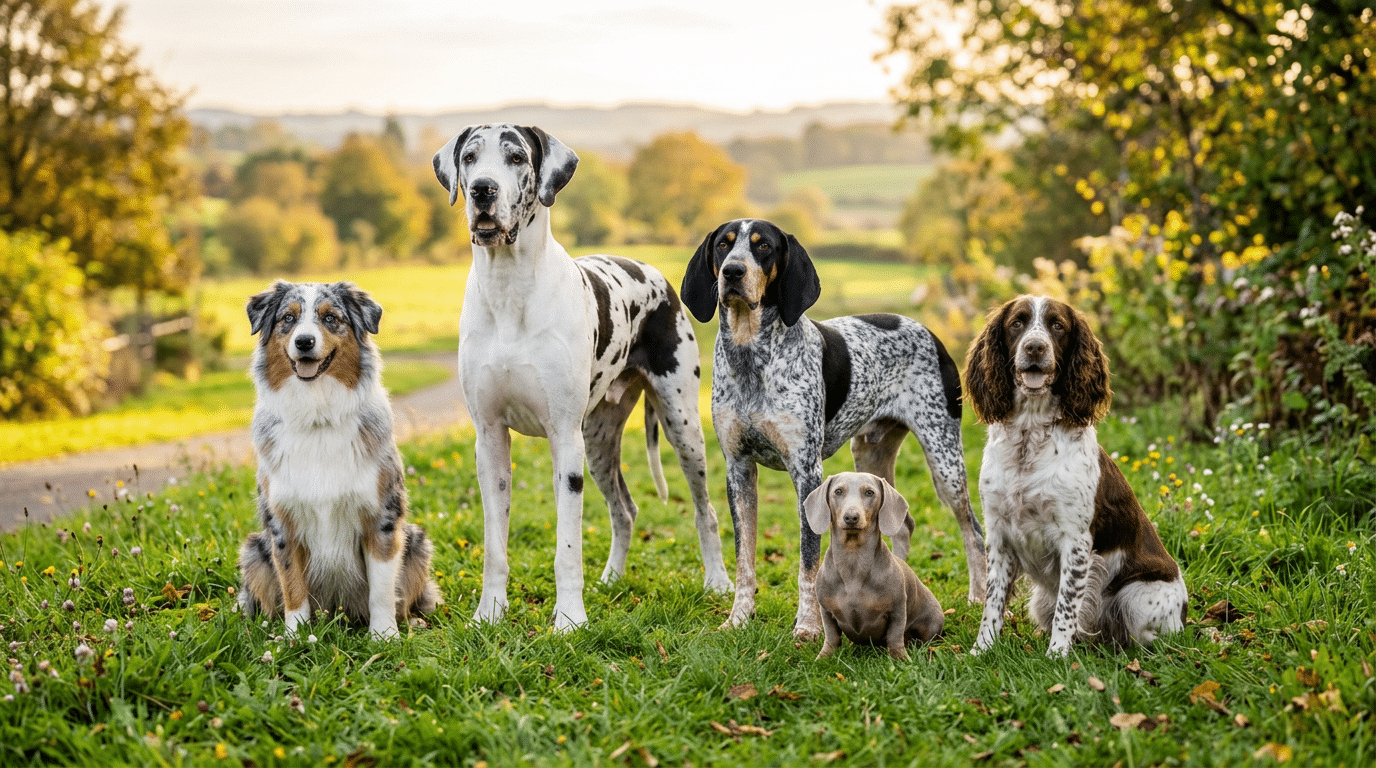
Great Danes look like living art. The AKC recognizes seven standard colors: fawn, brindle, blue, black, harlequin, mantle, and merle. Harlequin Danes are arguably the most dramatic, with a pure white base covered in irregular black torn patches. No two harlequins look alike. Merle Danes have a grey or silver base with darker patches. Mantle Danes have a black coat with white markings reminiscent of a blanket draped over the dog. One quirk: certain color combinations (like double merle breeding) are associated with health problems, so responsible breeders pay close attention to which dogs they pair.
Rare Dog Coat Colors Worth Knowing
🎨 Rarest Dog Coat Colors in 2026
| Color | What It Looks Like | Example Breeds |
|---|---|---|
| Isabella (Lilac) | Warm, dusty fawn-lavender | Dachshund, French Bulldog, Weimaraner |
| Blue | Grey with blue undertones | Chow Chow, Kerry Blue Terrier, Greyhound |
| Silver | Bright metallic grey | Weimaraner, Poodle, Labrador |
| Merle | Mottled patches, irregular pattern | Aussie, Border Collie, Great Dane |
| Harlequin | White base with torn black patches | Great Dane only |
| Liver | Deep chocolate-red with amber eyes | German Shepherd, Springer Spaniel |
| Brindle | Tiger-stripe dark over light base | Boxer, Mastiff, Greyhound, Basenji |
Some of these rare colors come with health considerations. Isabella dogs, produced by two dilute genes (dd) affecting both black and chocolate pigment, can be prone to Color Dilution Alopecia (CDA), a skin and coat condition causing hair thinning and patchy hair loss. Blue dogs (diluted black) also carry some CDA risk. That doesn’t mean every blue or isabella dog will develop problems. Many live perfectly healthy lives. But it’s worth asking breeders about the health history of dilute lines before committing.
Merle is another color that gets misused. A single merle gene produces the beautiful patchy pattern. Two merle genes (double merle) can cause missing or underdeveloped eyes, deafness, and other serious issues. Reputable breeders never breed two merle dogs together. If a breeder is advertising “double merle” puppies as a feature rather than a fault, walk away.
Frequently Asked Questions About Dog Breed Colors
What determines a dog’s coat color?
Coat color is controlled by genetics, specifically by several gene loci that regulate pigment production and distribution. The two base pigments are eumelanin (black or brown) and phaeomelanin (red or yellow). Modifier genes dilute, restrict, or pattern these pigments to create everything from solid black to harlequin. Breeding two dogs of the same color doesn’t guarantee same-colored puppies if either parent carries recessive color genes.
Which dog breed has the most coat color options?
Border Collies have 17 AKC-recognized colors, more than almost any other breed. Poodles and Dachshunds are close behind with 10-12 recognized colors. Australian Shepherds technically have fewer base colors (4) but the merle gene creates so many unique pattern combinations that no two merle Aussies look identical.
Do rare coat colors affect a dog’s health?
Some rare colors are linked to health risks. Dogs with the dilute gene (producing blue or isabella coats) can develop Color Dilution Alopecia, a condition causing patchy hair loss and skin problems. Double merle dogs (bred from two merle parents) face higher risks of deafness and vision impairment. White dogs with pink skin can be more susceptible to sunburn and skin cancer. Standard colors like black, brown, and yellow typically carry no color-related health risks.
What is the rarest dog coat color?
Harlequin (found only in Great Danes), true isabella/lilac, and merle in breeds where it’s uncommon are among the rarest dog coat colors. The exact rarity depends on the breed. A color that’s rare in one breed might be common in another. Within the Labrador, for instance, silver is extremely uncommon. In the Weimaraner, silver-grey is the only acceptable color.
Can you predict a puppy’s coat color from its parents?
Sometimes, but not always. Coat color prediction requires knowing which color alleles each parent carries, not just their visible color. A black Labrador can carry a hidden chocolate or yellow gene. Two yellow Labs can only produce yellow puppies (since they both need double recessive e alleles). DNA color testing kits are available and can tell you what colors a dog carries, which helps breeders make more informed pairing decisions.
What is the difference between merle and dapple coat patterns?
Merle and dapple are actually caused by the same gene, just named differently by breed communities. In Australian Shepherds, Border Collies, and Great Danes, it’s called merle. In Dachshunds, it’s called dapple. The genetic mechanism is identical: the merle gene randomly dilutes patches of pigment, creating a mottled or marbled appearance. The risks associated with double merle (breeding two merle/dapple dogs) are the same regardless of breed terminology.
Do AKC recognized colors matter if I’m not showing my dog?
Not really, for pet ownership purposes. AKC color recognition primarily matters for the conformation show ring, where dogs are judged against a breed standard. A non-standard color doesn’t make a dog less healthy, less trainable, or less of a good companion. Where color recognition does matter is in health contexts: some non-standard colors (like double merle) are associated with health risks that responsible breeders avoid regardless of show eligibility.
Why do some puppies change color as they grow?
Color fading and development are normal in many breeds. Poodles can shift dramatically, a puppy that looks black at birth might silver out to a medium grey by age two. This happens because some dogs have genes that cause progressive graying of the coat. Sable German Shepherds often look nearly black as puppies and develop their full sable pattern over the first year. Merle patterns also become more defined as the puppy coat transitions to adult fur.
What dog breeds come in the most unusual colors?
Several breeds stand out for unusual coat colors. The Chow Chow is one of the few breeds where a solid blue or silver coat is fully standard and accepted. The Weimaraner’s grey coat, often called “grey ghost,” is instantly recognizable. Xoloitzcuintlis (Mexican Hairless Dogs) can appear in various skin tone “colors” rather than fur colors. And the Catahoula Leopard Dog, Louisiana’s state dog, displays merle and brindle patterns so complex that no two look alike.
How does brindle coat pattern work genetically?
Brindle is produced by the Kbr allele at the K locus. It creates dark eumelanin stripes over a phaeomelanin (red/fawn) base. The darkness and density of the stripes varies. Some brindle dogs have sparse, clearly visible stripes. Others have stripes so dense they look almost solid black with a faint fawn ghost pattern underneath, called “reverse brindle.” Brindle can appear in Boxers, Mastiffs, Greyhounds, Great Danes, Basenjis, and several other breeds.
The Bottom Line on Dog Breed Colors
Dog breed colors are part genetics puzzle, part visual spectacle. Understanding what produces a certain color, whether it’s the dilute gene turning black into blue-grey or the merle gene scattering lighter patches through a coat, helps you make smarter choices when picking a puppy and understand what makes your current dog look the way they do.
If you want a deeper look at specific breeds, start with the ones that matter to you. The complete Labrador color guide settles the silver debate once and for all. The German Shepherd color breakdown covers everything from sable to liver to white. And if you’re fascinated by the merle pattern specifically, the merle dog breeds guide goes deep on which breeds carry the gene and the health implications of how it’s passed on.
One thing worth remembering: coat color is only skin deep. Your dog’s personality, trainability, and bond with you have nothing to do with their color. But it doesn’t hurt to appreciate the incredible range of patterns that centuries of canine genetics have produced.
 Toledo, United States.