
iHeartDogs is reader-supported. When you buy via links on our site, we may earn an affiliate commission at no extra cost to you.
If your Labrador Retriever has dry skin, a dull coat, or constant itching, the right nutrition can make a noticeable difference. One simple addition to your Lab’s daily routine may help support healthier skin, a shinier coat, and overall comfort. In this guide, you’ll discover how this easy hack works and why many Lab owners include it as part of their dog’s wellness plan.

What to do about dull coats and skin problems in Labs
On a recent visit to my vet, I asked if there was something I could do to help, and the vet asked if I gave the dogs an Omega supplement. I explained that I gave the dogs high-quality dog kibble that claimed to provide a balanced mix of nutrients, including Omega-3 fatty acids.
This is where I learned my first mistake.
My vet explained how dog food, even though it claims to contain Omega-3, rarely has any fatty acids that are biologically available to dogs. Biologically available? I had to have my vet expand on that one. Apparently, when dog food is processed, it is exposed to high heat. Omega fatty acids just so happen to be very sensitive to high heat. So by the time you pour Fido a bowl of kibble, the essential fatty acids are no longer in a state that is beneficial to your dog. In addition to dry, itchy skin and unhealthy coats, I was told that Omega-3 deficient diets also lead to:
-
Prolonged healing of wounds
-
Increased allergic reaction effects
-
Decreased immune system function
-
Painful joints
-
Excessive inflammation
-
Hair loss
-
Ear infections
-
Hot spots
-
Excessive itching
Fortunately, my vet offered a solution. She recommended that I start my dogs on an Omega-3 fatty acid supplement. Sounds easy? Not so much.
I also learned that not all supplements are created equal. The ingredients that are used to derive the fatty acids are key. I think most people know that salmon is high in Omega-3’s, but did you know that it’s also high in toxins, such as lead and mercury?
Related: Best Skin & Coat Supplements for Dogs
But Wait, There’s More Than Just Omega-3. Have You Heard of Omega-6 and Omega-9?
Omega-3, Omega-6, and Omega-9 fatty acids contribute significantly to the health and well-being of dogs. They aid in controlling inflammation, promoting healthy skin and coat, and bolstering the immune system. Omega-3, in particular, supports cardiovascular health and cognitive function and may mitigate the effects of arthritis. Omega-6 contributes to cellular health, while Omega-9, although produced naturally by dogs, when supplemented, can help regulate blood sugar and cholesterol. Thus, a balanced intake of these fatty acids helps maintain overall health and vitality, enhance the quality of life, and potentially increase the longevity of your furry companion.
The Solution to Your Lab’s Skin & Coat Issues
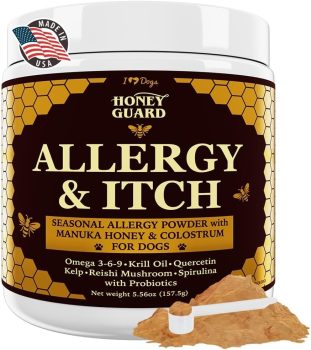
I was recently turned on to an amazing product called Honey Guard™ – Allergy & Itch Omega 3-6-9 Powder. (also available on Amazon) They are made from the highest quality krill oil, which contains a special type of Omega-3 that boosts absorption. Within a few weeks of having my dogs take the chews, I began noticing that they weren’t itching as much and their coats looked shiny and healthy. These were just the benefits that I could see.
The Right Omega-3 Makes All the Difference
So do yourself a favor…get your dog on a Honey Guard™ – Allergy & Itch Omega 3-6-9 Powder. My dogs seem to love the taste of the Omega-3-6-9 Krill chews. Plus, when you purchase these chews, you will also be providing up to 21 meals for shelter dogs. So talk to your vet. To friends. Find what’s best for your dogs. Just make sure you make an Omega-3 supplement part of your dog’s daily diet. Their lives are short enough; we think they deserve the best we can give!
Shop the Honey Guard™ – Allergy & Itch Omega 3-6-9 Powder on iHeartDogs.com
or available through Amazon Prime

Additional Benefits of Omega-3 for Labs
Omega-3 fatty acids are beneficial for dogs in various ways beyond skin and coat health. They contribute to cardiovascular well-being by supporting heart health. They play a crucial role in brain development in puppies and may improve cognitive function in older dogs. They can help reduce inflammation, which is particularly beneficial for dogs with joint issues or arthritis. They can also boost a dog’s immune system and help fight off diseases. Furthermore, they can contribute to eye health and potentially prevent certain eye conditions. Therefore, incorporating omega-3 into a dog’s diet is highly beneficial. You can learn more by visiting our review of the best fish oil for dogs or the best skin and coat supplement for dogs.
Top 9 Pet Insurance Plans for Labs
- CBD for Labs: What You Need to Know
- Best Supplements for a Senior Lab
- Best Flea & Tick Products for Labs
- Best Online Dog Training Courses for Lab
- Best Hip & Joint Supplement for a Lab
- What Supplements Should I Give a Lab Puppy?
- The 9 Best Lab Puppy Foods
- Best Dog Beds for Labs
- Improve Your Labs Skin & Coat with This One Hack
- Giving This to Your Lab Daily Can Alleviate Itchy Allergies
- 6 Natural Ingredients to Fight Your Labs Allergies
- 8 Ways to Stop Your Labs Scratching
- 7 Ways to Calm Your Labs Anxiety
- 6 Remedies for Your Labs Diarrhea, Gas, or Vomiting
- 7 Best Dental Chews for a Lab
 Toledo, United States.