
You love your cat. You’re also seriously thinking about getting a dog. And now you’re wondering: will my cat survive this? Will I? The good news is that plenty of dogs don’t just tolerate cats. Many actually thrive with them. Picking the right breed is probably the single biggest factor in how smooth that cohabitation goes.
The best dog breeds for cat owners tend to share a few key traits: they’re not intensely prey-driven, they warm up to new housemates without drama, and they don’t spend all their energy trying to stalk anything smaller than them. This list covers 12 breeds that regularly come up in multi-pet households as genuinely solid choices. Each one comes with a quick note on temperament, key traits, and tips for the introduction.
What Makes a Dog Good With Cats?
Not all dogs see a cat as a friend. Breeds developed to chase small, fast animals (terriers, some sighthounds, certain scent hounds) often have a prey drive that makes peaceful cat cohabitation difficult. That doesn’t mean every individual dog of those breeds is a threat. But when you’re choosing a first dog to bring into a cat household, starting with a breed that’s wired for cooperation rather than chase makes everything easier.
Three things matter most: low prey drive toward small animals, a sociable and adaptable temperament, and enough trainability that you can reliably interrupt unwanted behavior. The breeds below score well on all three.
Signs Your Dog Is Ready to Meet a Cat
- Calm, relaxed body posture when seeing small animals on TV or through a window
- Responds reliably to “leave it” or “stay” commands without repeating
- Has had positive, calm exposures to other pets before
- Settles down quickly after excitement or stimulation
- Shows curiosity without obsessive fixation (staring, stalking, constant whining)
If your dog checks most of these boxes, a slow, supervised introduction to your cat has a strong chance of going well.
1. Golden Retriever
Golden Retrievers are one of the most popular choices for cat owners, and the reason is pretty simple: they’re almost constitutionally friendly. This breed was developed to work alongside humans and other dogs, so they’re wired for cooperation rather than competition. Most Goldens greet a resident cat with the same gentle curiosity they’d extend to anyone new in the house.
Their mouths are famously soft, bred to retrieve game birds without damaging them, so even during play they’re unlikely to get rough. A Golden puppy’s energy can stress a cat out, though. Teaching a solid “leave it” cue before the first meeting is well worth the effort. Read more about the Golden Retriever’s temperament to see what you’re working with.
Key traits: Gentle, highly trainable, eager to please, minimal prey drive toward cats.

2. Cavalier King Charles Spaniel
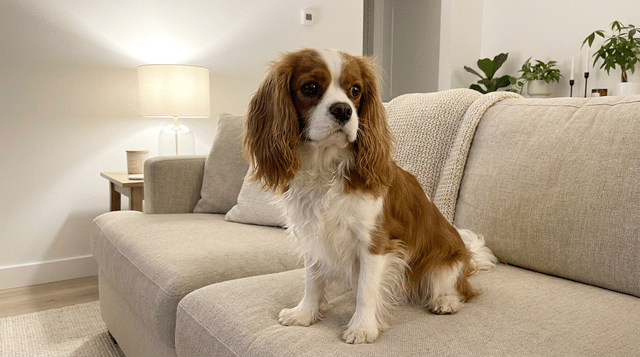
If any dog was built for apartment living with a cat, it’s the Cavalier King Charles Spaniel. They’re small, calm, and almost addicted to companionship. Left alone, they can get anxious, which actually means a resident cat can serve as a real comfort. Many Cavaliers bond closely with the cats they grow up around.
They rarely show prey drive toward cats. A Cavalier is more likely to try to groom the cat than chase it. Their even temperament and low energy indoors make them an easy fit for households where the cat doesn’t want major disruptions.
Key traits: Very low prey drive, affectionate, low-energy indoors, bonds easily with other pets.
3. Pug
Pugs are compact, good-humored, and genuinely uninterested in chasing anything that isn’t a treat. They don’t have the speed or sustained energy for prey behavior, and they much prefer lounging on the sofa to stalking anything across the room. Most Pugs and cats sort each other out within the first week.
Their flat faces mean they’re not built for long bouts of cardio, so you won’t deal with a Pug spiraling into a frenzied chase that panics your cat. The main thing to watch for: cats swatting at those big, exposed eyes. A sensible introduction handles that.
Key traits: Low energy, playful but not intense, not inclined to chase, adapts well to multi-pet households.

4. Basset Hound
Basset Hounds are scenthounds, bred to follow a nose rather than sprint after prey. Inside the house, they’re famously slow-moving, unhurried, and more likely to fall asleep on the cat’s favorite blanket than to chase them around. Most Bassets are so calm that cats figure out within days there’s nothing to fear.
They can be stubborn during training, so some basic obedience work early on is useful. But in terms of energy directed at a cat, the Basset Hound is about as non-threatening as a dog gets. They enjoy company, feline or otherwise.
Key traits: Slow and calm indoors, very low visual chase instinct, sociable, non-aggressive with other animals.

5. Labrador Retriever
Labs are bigger than most cats, but their easygoing nature makes up for the size. Labs were bred to work alongside humans and other animals cooperatively, and that shows in how they handle a resident cat. Most Labs are simply too interested in making friends to waste time being aggressive or predatory.
The real challenge with Labs is energy. A young Lab can overwhelm a cat: bouncing, jumping, wanting to play all the time. The fix is a solid exercise routine and a “settle” command before the first introduction. A tired Lab is a safe Lab. Check out the Labrador Retriever breed page for more on their energy needs and what first-time Lab owners should expect.
Key traits: Friendly, low prey drive, highly trainable, cooperative, good with other animals when exercised.

6. Beagle
Beagles are scenthounds, and their nose tends to be more interested in sniffing a trail than in chasing a cat. They’re pack dogs by nature, meaning they’re wired to get along with others, so they generally accept a cat as a housemate without much trouble, especially when socialized young. The Beagle breed guide covers their social nature in depth if you want to see how they typically behave around other animals.
One caveat: if a Beagle gets really excited and a cat bolts, the chase instinct can kick in briefly. This is exactly why a “leave it” command and a calm first introduction matter. Once they’re used to each other, though, Beagles and cats often become genuine companions.
Key traits: Pack-minded, generally good with other pets, low aggression, moderate energy, scent-focused rather than visually predatory.

7. Poodle
Poodles (Standard, Miniature, or Toy) are consistently ranked among the most intelligent dog breeds. They pick up training cues fast, which means you can teach them cat-friendly behaviors quickly. Poodles tend to be emotionally perceptive too: they read the room, and most figure out pretty quickly that the cat doesn’t want to be chased. The Poodle is one of those breeds that adapts well to almost any household dynamic.
Their low-shedding coats are a bonus for multi-pet households managing dander. Standard Poodles have more energy than Toys or Miniatures, but all sizes tend to be gentle and non-aggressive. If you want a dog smart enough to understand household rules fast, the Poodle delivers.
Key traits: Highly intelligent, gentle, reads social cues well, low-shedding, adapts to multi-pet households.

8. Cocker Spaniel
Cocker Spaniels are gentle, sweet-natured dogs with a moderate energy level that tends to work well in mixed-species households. The companion-line Cockers of today have quite low prey drive. They’re far more interested in snuggling than chasing. Most treat a resident cat with curious friendliness. The Cocker Spaniel breed page has more details on their social temperament and what to expect.
Their gentle mouths and easygoing personality make them a natural fit. They do need regular grooming, but in terms of pet compatibility, they check most of the boxes for cat owners looking for a first dog.
Key traits: Gentle, calm, low prey drive, affectionate, adapts well to other pets.

9. Four More Cat-Friendly Breeds Worth Adding to Your Short List
These four small companion breeds didn’t get their own full sections, but they belong on any honest list of the best dog breeds for cat owners. All four were bred purely as companions, with no prey-chasing and no hunting heritage, just people-pleasing temperaments that extend readily to other animals.
Maltese
The Maltese is a tiny companion breed with a big heart and very little interest in hunting anything. At 4-7 pounds, a Maltese is sometimes smaller than a large cat, which levels the playing field nicely. Most cats figure out quickly that this dog isn’t a threat. The Maltese, for its part, would rather be petted than start trouble.

Bichon Frise
Bichon Frises are cheerful, adaptable little dogs that tend to get along with almost everyone, cats included. Their playful nature can sometimes be a bit much for a grumpy cat, but most Bichons learn to read the cat’s cues fairly quickly. They’re also low-shedding, which is a bonus if you’re managing pet dander in the home.

Papillon
Papillons are tiny, alert, and very trainable. A well-socialized Papillon generally accepts a cat as a housemate without much fuss. Their intelligence means you can teach them to leave the cat alone on command, which takes most of the stress out of the introduction period.

Shih Tzu
Shih Tzus were bred entirely as companion dogs. No hunting heritage at all, which means nearly zero prey drive. They’re calm, gentle, and tend to move at a pace the cat can tolerate. Shelter staff frequently recommend them for multi-pet households. Their laid-back attitude indoors makes them a genuinely low-risk option for a first dog in a cat home.

How to Introduce Your New Dog to Your Resident Cat
Even the most cat-friendly breed needs a proper introduction. Rushing this part is responsible for most of the “they just don’t get along” stories you’ll hear. Slow is fast here.
Step-by-Step Introduction Protocol
- Scent first (days 1-5): Swap bedding between them. Let both animals investigate each other’s scent without any direct contact or stress.
- Baby gate buffer (days 3-7): Let them see and smell each other through a gate before face-to-face time. Don’t rush this stage.
- Controlled first meeting: Keep the dog on-leash. Let the cat approach on its own terms. Never force contact.
- Safe zones for the cat: The cat always needs high perches, separate rooms, or a cat door the dog can’t access. An escape route is non-negotiable.
- Watch for stress signals: Whale eye in the dog, flat ears in the cat, freezing, or obsessive fixation are all signs to slow down.
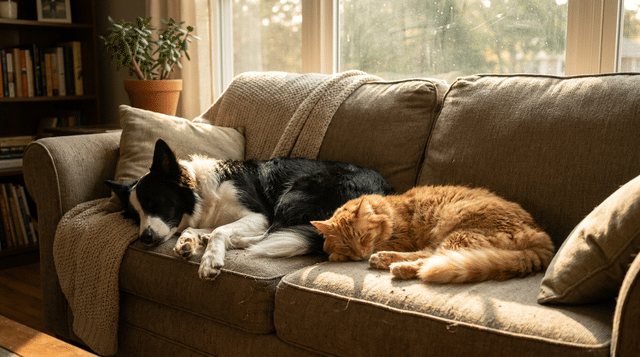
Most dogs and cats reach a stable, peaceful coexistence within 2-4 weeks of careful introductions. Some pairs bond quickly in the first few days. Others take 2-3 months. That’s normal, not a sign of failure.
10. Frequently Asked Questions About Dogs and Cats Living Together
What age is best to introduce a dog to a cat?
Puppies under 12 weeks are generally easiest to socialize with cats because their social window is still open. Adult dogs can absolutely learn to live peacefully with cats too, especially if they’re low prey-drive breeds. Age matters less than the individual dog’s temperament and how carefully you manage the introduction.
Should the dog or cat be introduced to the home first?
In most cases, it’s easier to bring the dog into a home where the cat is already established. The cat knows the territory and feels secure, which reduces stress significantly. If you’re adding a cat to a dog household, give the cat a private room to decompress in for the first few days before any face-to-face meeting.
What if my dog has a high prey drive: can they ever live with a cat?
High prey drive doesn’t automatically disqualify a dog from living with cats, but it requires more careful management, longer introductions, and sometimes help from a professional trainer. For some dogs, the drive is simply too strong for safe cohabitation with a cat. An honest assessment of your specific dog matters more than breed generalizations.
How do I know if my dog sees the cat as prey?
Watch for hard staring, stiff body posture, and intense fixation that doesn’t break even when you redirect. A dog that can’t look away from the cat, crouches low to stalk, or constantly tries to pursue is showing prey behavior. A dog that’s curious and sniffs but then goes back to its own business is showing social interest, which is much more workable.
11. When Your Dog and Cat Become the Best of Housemates
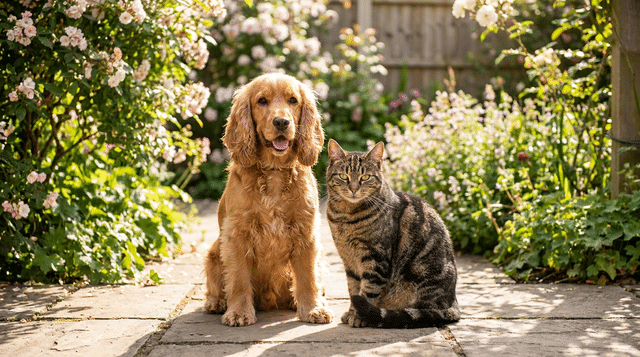
Living with both a dog and a cat isn’t always seamless at first. With the right breed choice and a patient introduction, it’s absolutely doable. The 12 breeds on this list have strong track records in mixed-species households because they’re genuinely gentle, sociable, and not wired to see your cat as something to chase.
The introduction process matters just as much as breed selection. Slow, careful introductions with barriers, scent-swapping, and plenty of escape routes for your cat handle most of the hard work. Most of the stories about dogs and cats that “just don’t get along” are really stories about introductions that were rushed or done without enough structure.
Pick a breed that fits your lifestyle and living situation, do the introduction right, and you might be surprised how quickly your cat and your new dog settle into a comfortable routine together. A lot of households manage it just fine. Yours can too.
 Toledo, United States.