
You know the drill: you scour every aisle and thoughtfully consider what toy your dog will like best. You pick out what you think is the perfect squeaky duck or oinky pig, but within minutes of presenting it to your dog, you’re picking it off the floor in pieces. There’s a pile of fluff over there, the squeaker somehow made it under the couch, and the culprit (your dog) seems completely satisfied with her crime.
Some dogs carry around their toys like precious family heirlooms, but that’s not your dog. Your dog is a destroyer of all things stuffed. She rips apart rubber and even tears her way through rope. Her sole mission in life is to turn your hard-earned money into nothing but scraps of fabric and bits of plastic. It’s frustrating when you can’t keep shelling out big bucks for five minutes’ worth of destruction. So why exactly do dogs destroy their toys? Is there anything you can do about it? Here’s a look into your toy-shredder’s mind.
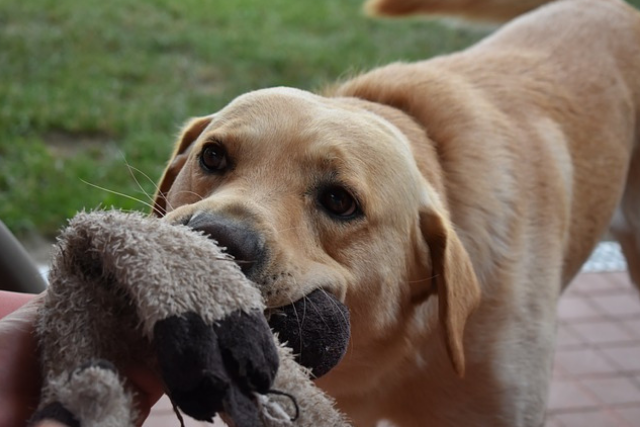
She’s Bored
The first time you catch your dog ripping into your shoe or freeing the stuffing from your pillows, you quickly teach her that what she did was naughty. (Hopefully you do it in a way that doesn’t involve yelling or hitting.) You make sure she has plenty of toys, and she soon learns which objects are hers to chew and which are yours to be left alone. This important lesson stops your dog from destroying your house, but it doesn’t solve the underlying problem: she’s bored.
While you’re working, talking with friends, or standing in line for overpriced coffee, your dog is at home with nothing to do. Eventually, all her pent-up energy needs to be released. If she can’t go for a long walk, wrestle with other dogs, or run around the yard chasing you, she’s going to focus that energy elsewhere. In most cases, her toys (or your furniture) take the brunt of that force.
The problem is that a flimsy toy is a short-lived outlet. Once it’s in pieces, the entertainment is over, and she’s right back where she started. A bored dog doesn’t need something to conquer in five minutes; she needs something she can work on for a long, satisfying stretch.
She Has a Prey Drive
Your pretty lapdog with the bow around her collar might not look like a vicious predator, but her instincts say otherwise. Descendants of wolves, today’s domesticated dogs still hold on to their wild ways. Some breeds are more inclined to hunt than others, but at a base level, all dogs are predators. It’s why they chase the neighbor’s cat and stalk squirrels. It could also be why dogs destroy their toys.
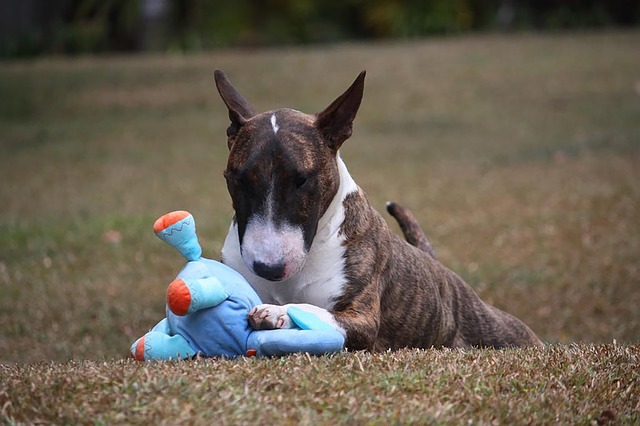
Veterinarian and iHeartDogs contributor Dr. Kathryn Primm says the sound of a squeaky toy triggers a dog’s instinctual drive to hunt. The toy looks like a critter, and it sounds like a critter when it’s caught. Hearing the high-pitched squeak touches a part of a dog’s brain that relates the act of destroying a toy to attacking prey. The squeak encourages prey-driven dogs to keep ripping until they’ve successfully ripped out the squeaker and rendered the toy “dead.”
Sound isn’t the only way to speak to those ancestral instincts, though. Taste and scent matter to a predator just as much, and for many dogs, gnawing on something that actually tastes like the real thing scratches that primal itch without the need to “kill” anything.
She’s Only Doing What You Taught Her
There are few things more adorable than a little puppy that thinks she’s the toughest mutt on the block. She grabs her plush bunny’s ears and snarls ferociously. Humans can’t help but melt with affection when this happens, and we encourage the behavior because we think it’s hilarious. We growl along with her and act generally pleased with her when she advances to the “chomp and shake” that wolves do when they catch their dinner. Her little puppy teeth are sharp like needles, but her bite force isn’t enough to do much damage…yet.
Eventually, that cute little puppy grows up. She’s still adorable, but now she’s capable of causing a lot more destruction. Your dog is also capable of remembering all the little lessons you taught her growing up. She’s a pro at “sit” and “stay,” and she remembers what you taught her about getting ferocious and aggressive with her toys. You laughed and praised her back then, so why wouldn’t you do the same thing now?
The good news is that habits can be reshaped at any age. Redirecting her toward toys meant for sustained chewing and praising her when she settles in with one teaches her a new lesson: this is the fun, rewarding way to play.
She Loves Interactive Toys
Playing by yourself is never as much fun as playing with friends. With friends, you can see the cause and effect of each action. The same concept applies to your dog and her toys. Chewing on something tasteless for the sake of chewing can be satisfying for dogs, but it’s even more satisfying when they can see the effect of their actions. That first little hole she makes after nibbling on a seam is like a battle won. It motivates her to keep going and gives her a goal to work toward.
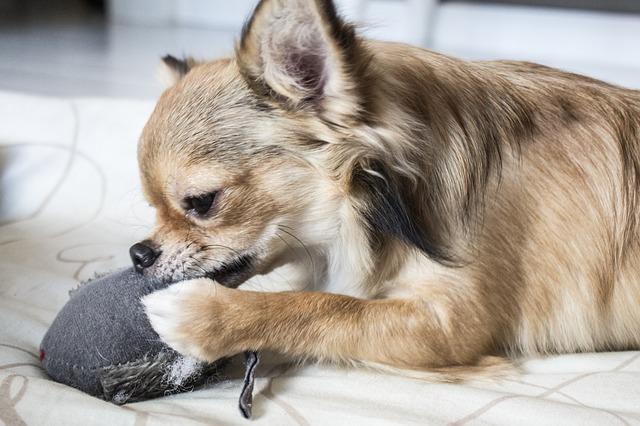
A squeak and a rip are like a toy “reacting” to your dog’s play. This type of play is typically more mentally stimulating than playing with an inanimate object that doesn’t change, no matter how hard your pup tries. She likes the idea that she’s causing something to happen, even if that something means her toy ends up in the trash.
That doesn’t mean a durable toy has to be boring. Flavor, texture, and interesting shapes all give a dog something to respond to. A toy with multiple ends to grip, or ridges and nubs to work over, keeps her engaged without falling apart in the process.
You’re Buying the Wrong Toys
Some dogs destroy their toys not on purpose, but because the toy can’t hold up against their regular play. Soft plush toys, for example, are bound to be ripped if your two big dogs like to play tug. The seams will pull apart because of how strong your dogs are, and not because it was their intent. The same goes for flimsy rubber toys and thin rope toys.
If you’re buying cheap toys that are poorly made, you can’t blame your dog when they rip them to pieces. You also need to make sure the toys you buy are appropriate for your pup’s size and breed. You can’t expect a 5-pound Chihuahua and a 120-pound Mastiff to keep the same toys. Bigger, stronger dogs need more durable toys, and yes, that means you’ll have to pay a little more out of pocket. But when you have appropriate, high-quality toys, they’ll last a lot longer than a few minutes.
It also helps to think about how your dog chews, not just how big she is. Some dogs are gentle nibblers, while others are determined power chewers. Many manufacturers now label toys by chew strength and weight range, which makes it much easier to match the toy to the dog in front of you.
The Bottom Line: Give Her Instincts a Better Outlet
Put all of this together, and a pattern emerges. Your dog isn’t destroying her toys to spite you. She’s bored and needs an outlet; she’s following predatory instincts that are thousands of years old; she’s repeating lessons she learned as a puppy; and she’s craving play that gives her something back. Too often, she’s doing all of that with toys that were never built to survive it.
The first part of the fix is on you: more exercise, more mental enrichment, and more time together. A dog who’s had a good walk, a game of fetch, and some training practice is far less likely to go looking for something to tear apart.
The second part is choosing toys that work with her instincts instead of against them. A destructive chewer needs something that holds her attention, and flavor is one of the most powerful ways to do that. Look for chew toys made with real chicken, bacon, bison, venison, or beef, which offer the savory taste that appeals to her inner hunter and gives her a reason to keep coming back.
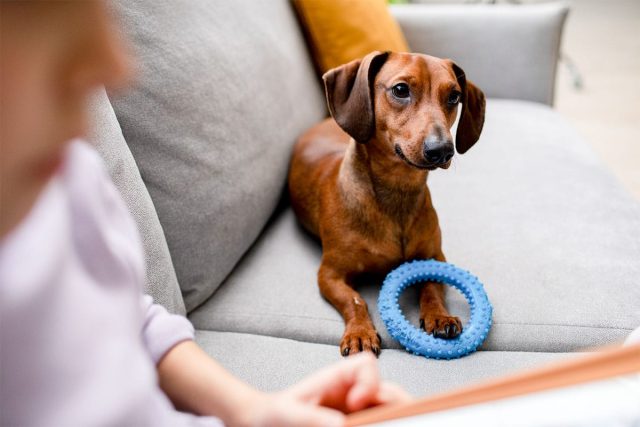
Shape matters too. Familiar, bone-inspired designs tap into her natural urge to chew, and variety keeps things interesting. Textured designs with ridges and nubs give her something to work over, and they help clean teeth and freshen breath as she chews.
Most importantly, the toy has to be made from long-lasting material that can hold up to vigorous chew sessions. That’s what turns five minutes of destruction into a healthy, non-destructive chewing habit. As with any chew toy, choose the size that fits your dog’s weight and chewing strength, supervise her while she chews, and replace the toy once it becomes worn or too small.
Your dog’s urge to chew isn’t going anywhere, and it doesn’t need to. With enough activity and the right toys, that urge becomes a healthy habit instead of a pile of fluff under the couch.
 Toledo, United States.