
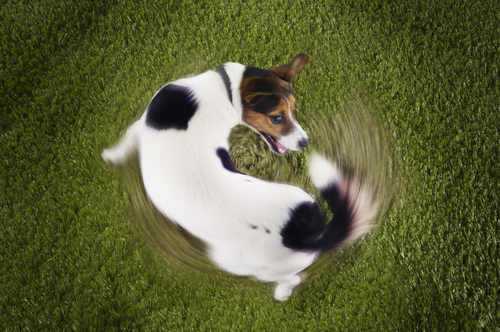
When your dog starts frantically spinning in circles to chase his tail, it might seem cute, funny, or even harmless. But while tail-chasing can be playful in puppies, in adult dogs it often points to a hidden health issue you shouldn’t ignore.
One of the most common medical causes of tail-chasing is irritation or pain related to the anal glands, two small but powerful scent glands located near your dog’s rectum. And if you’ve also noticed your dog scooting his butt across the carpet, licking under his tail, or leaving behind a strange fishy odor, it’s time to pay attention.
What Are Anal Glands in Dogs?
Anal glands (also called anal sacs) are two small pouches located just inside your dog’s rectum — one on each side. They contain a strong-smelling fluid used for scent marking. In nature, this helps dogs communicate identity and territory to other animals, kind of like a business card left behind on their poop.
Normally, the anal glands empty naturally during defecation. But when they don’t, the fluid builds up and causes pressure, discomfort, or infection. That’s when your dog starts trying to “fix” the problem themselves — by scooting, licking, or chasing that pesky tail.
Tail-Chasing: A Red Flag for Anal Gland Problems
While tail-chasing can be normal in puppies or high-energy dogs during play, frequent or obsessive tail-chasing in adult dogs may signal discomfort in the rear end — particularly from irritated or full anal glands. If your dog suddenly starts spinning in circles, seemingly trying to “catch” something near their backside, it’s worth investigating.
Many dogs show multiple signs of anal gland trouble, including:
-
Scooting (dragging their butt across the floor)
-
Excessive licking or biting under the tail
-
A fishy, foul odor coming from the rear or on bedding
-
Redness, swelling, or discharge near the anus
-
Sudden sensitivity when touched near the hindquarters
These symptoms can range from mild discomfort to serious infection — especially if left untreated.
Why You Shouldn’t Express Anal Glands at Home
For years, dog owners were encouraged to routinely manually express their dog’s anal glands during grooming. But veterinary experts now caution against this unless medically necessary. Regularly squeezing glands that aren’t causing problems can actually lead to inflammation, scarring, and trauma.
Even when glands are impacted, manual expression (especially by an untrained person) can be painful and risky. The anal area is packed with sensitive nerves, and improper handling can worsen the issue or force bacteria deeper into the tissue, especially if infection is already present.
If you suspect a problem, your vet is the best person to evaluate and treat it safely.
What Happens If Anal Gland Issues Are Ignored?
When the glands become clogged or infected, they can swell and eventually form an abscess, a painful pocket of pus that may rupture through the skin. This can look like an open wound near the rectum and is often accompanied by swelling, blood, or yellow-green discharge.
Once this happens, your dog will likely show constant scooting, licking, or restlessness, and may even whimper from discomfort. Immediate veterinary care is essential to clean the wound, treat the infection, and prevent complications.
What You Should Do If You Notice Scooting or Tail-Chasing
If your dog is chasing his tail more than usual, especially in combination with any of the signs listed above, it’s time to check things out. Here’s what you can do:
-
Inspect the area: Look for swelling, redness, or discharge near the anus.
-
Smell check: A strong fishy odor is often a telltale sign of anal gland leakage.
-
Watch for behavior changes: Scooting, licking, or signs of pain are worth noting.
-
Call your vet: Don’t wait for an abscess to rupture. Early treatment is easier (and less painful for your pup).
-
Avoid DIY expression: Leave this to the professionals, especially if your dog seems uncomfortable.
The Bottom Line
Tail-chasing might look funny, but it’s not always harmless. It could be your dog’s way of telling you something’s wrong — especially when it comes to anal gland pain or infection. Watch for related symptoms like scooting, licking, or foul odors, and don’t hesitate to talk to your vet.
Catching anal gland problems early can save your dog a lot of discomfort and save you from a stinky mess down the road!
 Toledo, United States.