
Reader-Supported: iHeartDogs may earn a commission from purchases made through links in this article, at no extra cost to you. We only recommend products we’d actually buy for our own dogs.
Best No Pull Dog Harness 2026: 8 Options That Actually Work
If you’ve ever had a dog drag you down the sidewalk while you flail behind them like a kite in a windstorm, you already know the struggle. A good no pull dog harness can change your walks from a workout to an actual pleasant experience. A bad one just wastes money and leaves your dog still pulling.
We put together this guide based on real-world use across dozens of dog breeds and sizes. Below you’ll find the 8 best no pull harnesses of 2026, a buying guide explaining exactly what to look for, and a quick measuring tutorial so you actually get the right fit the first time.
Bottom line: the right harness depends on your dog’s size, chest shape, and how determined a puller they are. Keep reading and we’ll match you up.
The 8 Best No Pull Dog Harnesses of 2026
1. PetSafe Easy Walk Harness
The PetSafe Easy Walk is probably the most widely recommended front-clip harness on the market, and for good reason. The front chest strap clips right at the sternum, so when your dog pulls forward, the leash redirects them sideways and off-balance. Most dogs figure out pretty quickly that pulling doesn’t actually get them anywhere.
Pros
- Works immediately with most dogs
- Easy to put on and take off
- Affordable ($20-30)
- Available in 6 sizes
- No neck or back pressure
Cons
- Can slip on narrow-chested dogs
- Not ideal for barrel-chested breeds
- Front clip only (no back clip option)
Best for: Medium to large dogs (30-100 lbs), Labs, Golden Retrievers, mixed breeds. Works especially well on dogs who are enthusiastic but not extreme pullers. If your dog is a stubborn breed that ignores commands, pair this with some training for best results.
2. Rabbitgoo No-Pull Dog Harness
The Rabbitgoo is the best budget option that doesn’t feel like a budget option. It’s got both a front clip and a back clip, which is genuinely useful. Use the front clip when you’re actively training, and switch to the back clip for casual walks once your dog has improved. The padding is solid, and it comes in a ton of sizes covering dogs from 10 lbs to 100+ lbs.
Pros
- Dual clip (front and back)
- Great padding, no chafing
- Very affordable ($25-35)
- Reflective strips
- 7 adjustment points for a custom fit
Cons
- More straps to manage
- Some sizes run large
Best for: Dogs of all sizes, owners who want flexibility between training and casual walking. Great starter harness for new dog owners.
3. Julius-K9 IDC Power Harness
If you have a large, powerful dog who genuinely tries to drag you, this is what you want. The Julius-K9 is built like a tank. It’s a back-clip harness, not a front-clip, which means it’s not technically a “no pull” tool in the traditional sense. But the chest strap and Y-shape design distribute pressure so well across the body that it reduces straining significantly. German Shepherd owners and Rottweiler owners tend to love this one.
Pros
- Extremely durable hardware
- Comfortable for all-day wear
- Velcro ID patch included
- Back handle useful for control
- Many size options including XS for small breeds
Cons
- Higher price ($50-80)
- Back clip only on standard version
- Takes time to fit correctly
Best for: Large and extra-large breeds (70+ lbs), working dogs, dogs with heavy pulling habits. Also good for high-energy breeds that need lots of exercise and tend to pull toward every distraction.
4. Ruffwear Front Range Harness
This is the go-to harness for active owners. It’s got both front and back clip points, padded chest and belly panels, and reflective trim on all four sides. It’s slightly pricier than some options, but the build quality is noticeably better. If you run, hike, or do any outdoor activity with your dog, the Front Range is worth every penny.
Pros
- Dual clip (front and back)
- Excellent padding, no hot spots
- Great for outdoor activities
- Durable materials and hardware
- ID pocket included
Cons
- Premium price ($50-70)
- Can be warm in summer
- Sizing can be tricky for deep-chested breeds
Best for: Active owners with medium to large dogs. Great for hikes, trail runs, and dogs who need more than a basic neighborhood walk.
5. 2 Hounds Design Freedom No-Pull Harness
The Freedom harness is one of the few that comes with a dual-connection leash in the box, letting you attach to both the front and back clips simultaneously. That dual connection actually does a lot of the training work for you. Pull on the front clip redirects the dog. Pull on the back clip keeps things controlled. Together, they’re pretty effective for stubborn pullers who need a bit more management.
Pros
- Dual-connection leash included
- Martingale loop reduces escape risk
- Excellent for reactive dogs
- Comfortable velvet lining
- Many color options
Cons
- Mid-range price ($45-60)
- Some dogs learn to wriggle out
- Takes practice to clip the dual leash
Best for: Reactive dogs, escape artists, owners who want maximum control on walks. Works well for dogs who lunge at squirrels or other animals.
6. Blue-9 Balance Harness
If your dog has an unusual body shape (very deep chest, narrow waist, short neck), the Balance Harness is probably the most adjustable option out there. It has six independent adjustment points so you can truly dial in the fit. This matters more than most people realize. A harness that doesn’t fit correctly won’t work, period. The Blue-9 all but eliminates that problem.
Pros
- Six adjustment points
- Works on unusual body shapes
- Front and back clip options
- Lightweight design
- Made in the USA
Cons
- More expensive ($55-75)
- Thinner straps aren’t as padded
- Not ideal for very strong pullers
Best for: Oddly-shaped dogs, Greyhounds, Whippets, French Bulldogs, Bulldogs, and any breed where standard harnesses never seem to fit right. French Bulldog owners especially tend to love this one alongside a good Frenchie skincare routine since proper harness fit also prevents skin irritation on sensitive skin.
7. Kurgo Tru-Fit Smart Harness
This is the harness for dog owners who also drive with their dogs regularly. It’s crash-tested and certified for car use as a seatbelt restraint. On top of that, it functions perfectly well as a walking harness with a front clip. If your dog travels in the car often and also pulls on walks, the Kurgo Tru-Fit solves both problems without buying two separate products.
Pros
- Crash-tested for car safety
- Front and back clip
- Steel nesting buckles (very strong)
- Padded chest plate
- 5 adjustment points
Cons
- Bulkier than walking-only harnesses
- Price ($45-60)
- Can be warm in hot weather
Best for: Dog owners who want a car safety harness and walking harness in one. Great for road trips and regular commutes with your dog in the car.
8. Chai’s Choice 3M Reflective Dog Harness
This one wins the value category for small breeds. Under $30, solid stitching, 3M reflective material on all edges, and padded interior. It’s not as customizable as the Blue-9 or as heavy-duty as the Julius-K9, but for a small dog who pulls moderately, it gets the job done well. Works great for small breeds that don’t shed and tend to be feisty walkers.
Pros
- Best value under $30
- 3M reflective stitching
- Padded interior
- Front and back clip
- Great for small and medium dogs
Cons
- Not suitable for large or very strong dogs
- Buckles aren’t the most durable
Best for: Small breeds (under 30 lbs), budget-conscious owners, dogs who pull but aren’t extreme about it.
Quick Comparison: 8 Best No Pull Dog Harnesses (2026)
| Harness | Price | Clip Type | Best Dog Size | Best For | Rating |
|---|---|---|---|---|---|
| PetSafe Easy Walk | $20-30 | Front | M-XL | Everyday pulling | ★★★★★ |
| Rabbitgoo | $25-35 | Front+Back | XS-XL | Budget pick, all sizes | ★★★★★ |
| Julius-K9 IDC | $50-80 | Back | M-XXL | Large, strong dogs | ★★★★★ |
| Ruffwear Front Range | $50-70 | Front+Back | XS-XL | Active/outdoor dogs | ★★★★★ |
| 2 Hounds Freedom | $45-60 | Front+Back | XS-XL | Reactive dogs | ★★★★☆ |
| Blue-9 Balance | $55-75 | Front+Back | XS-XL | Unusual body shapes | ★★★★☆ |
| Kurgo Tru-Fit | $45-60 | Front+Back | XS-XL | Car+walk combo | ★★★★☆ |
| Chai’s Choice 3M | $20-28 | Front+Back | XS-M | Small breeds, budget | ★★★★☆ |
No Pull Harness Buying Guide: What to Look For
Front-Clip vs. Back-Clip: Which One Actually Stops Pulling?
This is probably the most misunderstood part of buying a no pull harness. Here’s the short version:
Front-clip harnesses attach the leash at the dog’s chest, right in the center. When the dog pulls forward, the leash steers them sideways and off-balance. It physically interrupts the forward momentum. This is why front-clip harnesses are so much better for actual pulling problems than back-clip designs.
Back-clip harnesses attach the leash at the top of the dog’s back. This is comfortable and great for dogs who already walk nicely. But for a dog who actively pulls? A back-clip harness basically just gives them a comfortable way to keep doing it. You’re not redirecting anything.
So: if your dog pulls, start with a front-clip harness. Once they’re walking better, you can switch to a back-clip for everyday walks. Many harnesses offer both, which is the best of both worlds. If you’re also working on obedience, pairing a harness with an online dog training program can cut your training time significantly.
Fit: Why Most Harnesses “Don’t Work”
The number one reason a harness fails isn’t the product. It’s the fit. A harness that’s too loose lets the dog slip out or wriggle forward past the chest strap. One that’s too tight causes chafing and makes the dog fight the harness instead of walking calmly.
You want the harness snug enough that two fingers slide under any strap, but not loose enough to shift around. The chest strap should sit across the breastbone, not up near the neck. And the girth strap (around the belly) shouldn’t ride up into the armpits.
Material and Padding
Short walks don’t need much padding. Long walks and hikes are a different story. If your dog wears a harness for 30+ minutes at a time, look for padded chest panels and smooth interior lining. Hard nylon edges create friction over time, especially on dogs with short coats.
Hardware Quality
Cheap plastic buckles fail. If you have a large or powerful dog, look for metal hardware or high-impact polymer clips rated for strong tension. The Julius-K9 and Ruffwear harnesses are good examples of hardware that actually holds up.
How to Measure Your Dog for a Harness
Sizing charts vary by brand, so always measure before buying. You’ll need a flexible measuring tape (the kind used for sewing works great). Here’s what to measure:
- Chest girth: Wrap the tape around the widest part of your dog’s ribcage, just behind the front legs. This is the most important measurement for harness fit.
- Neck circumference: Measure around the base of the neck where a collar would sit.
- Back length (for some brands): Measure from the base of the neck to the base of the tail.
- Weight: Useful as a secondary reference, but chest girth is the primary sizing measurement for most brands.
Quick reference:
| Dog Size | Typical Weight | Chest Girth Range | Suggested Size |
|---|---|---|---|
| Extra Small | 5-15 lbs | 12-18 inches | XS |
| Small | 15-30 lbs | 18-24 inches | S |
| Medium | 30-55 lbs | 24-32 inches | M |
| Large | 55-90 lbs | 32-42 inches | L |
| Extra Large | 90+ lbs | 42+ inches | XL+ |
When between sizes, size up. You can always tighten straps, but you can’t make a too-small harness fit.
Tips for Getting Your Dog Used to a Harness
Some dogs take to a harness immediately. Others act like you’ve just tried to put them in a medieval torture device. If your dog’s in the second category, here’s what helps:
Start by leaving the harness on the floor near your dog’s bed or feeding area for a day or two. Let them sniff it, walk over it, ignore it. No pressure. Then offer treats while holding it near their body without putting it on yet. Gradual association with good things goes a long way.
When you do put it on for the first time, keep the session short (5-10 minutes) and immediately do something fun. A short walk, some playtime, or a training session with treats. You want the harness to predict good things. Dogs learn patterns fast.
If your dog freezes or refuses to walk when wearing the harness, that usually means it’s too tight or hitting them in an uncomfortable spot. Check all adjustment points and compare against the sizing chart. Most harness issues are fit issues. This is also worth reading more about if you have a naturally stubborn or independent breed who needs a bit more patience during training.
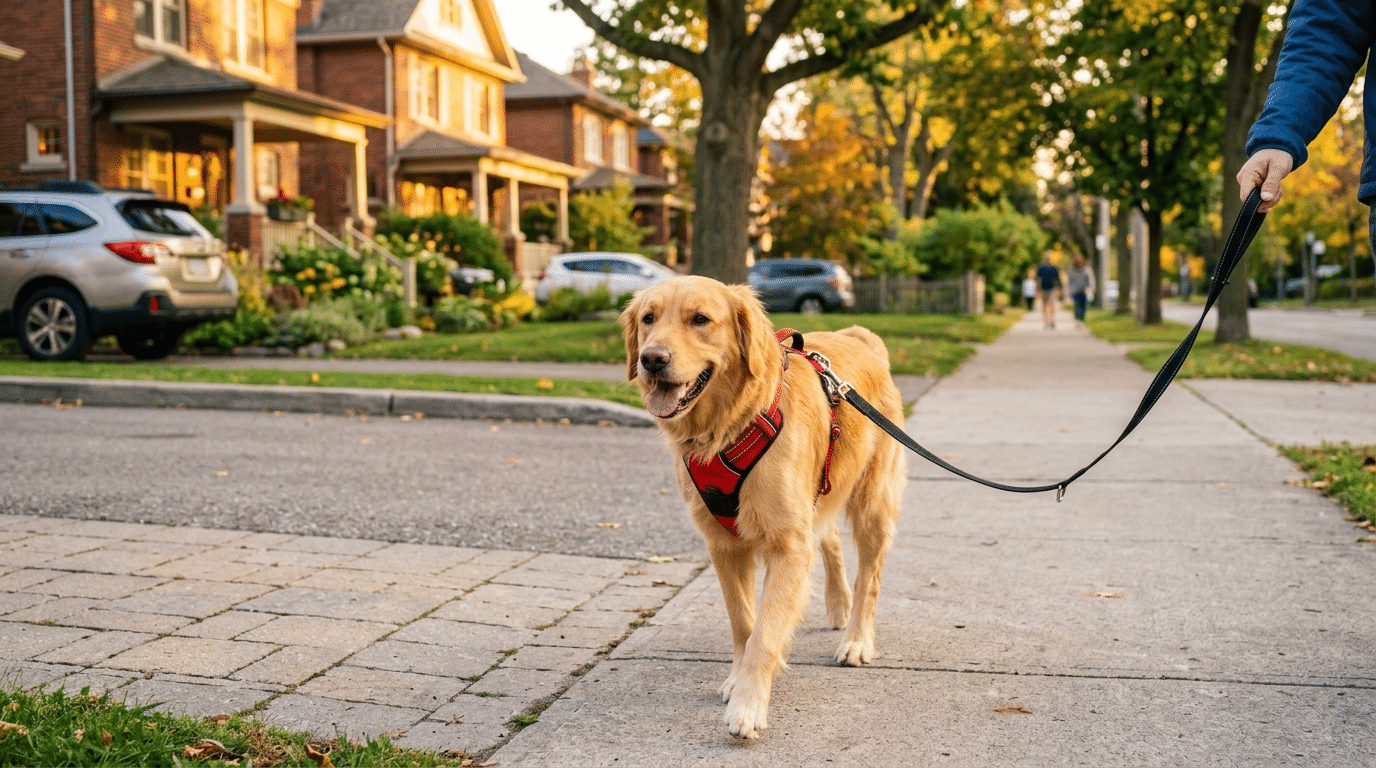 A well-fitted front-clip harness redirects pulling dogs naturally during walks.
Frequently Asked Questions
Does a no pull harness actually stop a dog from pulling?
A front-clip no pull harness redirects your dog’s momentum when they pull, making it harder for them to drag you forward. It doesn’t train the dog on its own, but it makes consistent leash training much easier. Most owners notice improvement within the first few walks when they combine the harness with a stop-and-wait approach (stop moving the moment your dog pulls, only continue when the leash is loose).
Are no pull harnesses safe for puppies?
Yes, as long as you size correctly and adjust as the puppy grows. Puppies grow fast, so check the fit every 2-3 weeks. A harness is actually safer than a collar for puppies because it doesn’t put any pressure on their developing neck and trachea. Start harness training as early as 8-10 weeks if possible.
What’s the difference between front-clip and back-clip harnesses?
Front-clip harnesses attach at the chest and redirect the dog sideways when they pull, breaking the forward momentum. Back-clip harnesses attach at the back and are more comfortable for everyday use but don’t discourage pulling. For a dog who actively pulls, front-clip is always the better starting point.
Can a dog escape from a no pull harness?
Some dogs can back out of harnesses that aren’t fitted correctly, especially if the chest strap is too loose. Dogs with narrow chests or large heads (like Greyhounds and Whippets) are most prone to this. A properly fitted harness shouldn’t come off. If your dog is an escape artist, the 2 Hounds Freedom Harness has a martingale loop specifically designed to prevent backing out.
How long does it take for a no pull harness to work?
Most dogs show noticeable improvement within 1-2 weeks when you consistently stop walking every time they pull. Without any training technique, the harness alone might reduce pulling somewhat but won’t eliminate it. Combine the front-clip harness with the “tree method” (stop completely when they pull, only move when the leash is loose) for the fastest results.
Can my dog sleep or be left alone with a harness on?
It’s best to remove the harness when your dog is unsupervised. Harnesses can snag on crate bars or furniture, which is a safety hazard. They can also cause skin irritation from extended wear, especially in areas where the straps contact skin for hours at a time. Use the harness for walks and active time only.
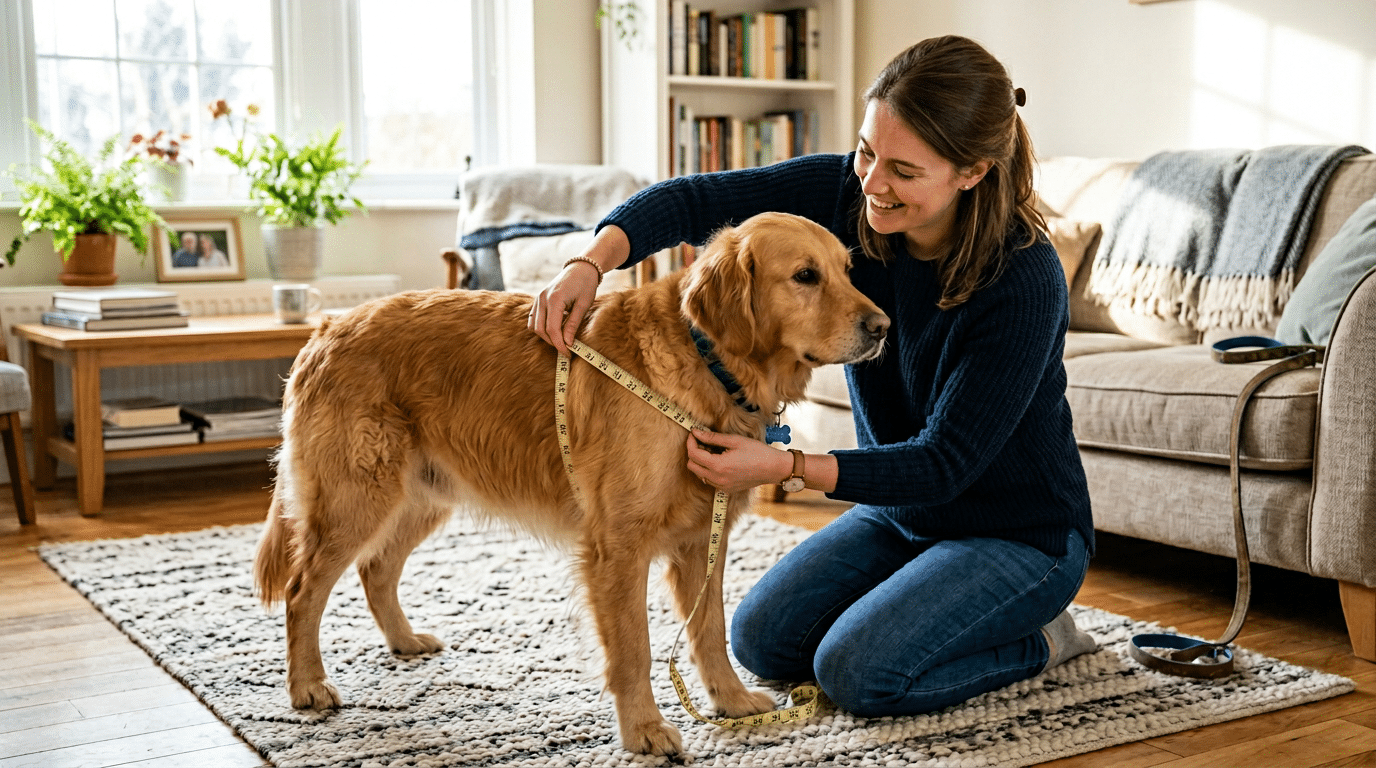 Getting the right fit is the most important step. Measure chest girth before ordering.
The Bottom Line
The best no pull dog harness is the one that fits your dog correctly and works with your training approach. Don’t expect any harness to magically stop pulling without some consistency on your end. But the right harness makes the training process dramatically easier.
For most dogs and most budgets, the PetSafe Easy Walk or Rabbitgoo are the best places to start. If you have a large, powerful puller, look at the Julius-K9 or Ruffwear Front Range. Unusual body shapes like Frenchies and Greyhounds do better with the Blue-9 Balance.
Measure your dog before ordering, check the fit when it arrives, and stick with a consistent training method. Within a few weeks, you should have walks that are actually enjoyable. If you’re not sure where to start with training, there are solid online dog training options that walk you through leash manners step by step. And if your dog is one of those breeds who just seems naturally wired to test every boundary, check out this roundup of the least obedient dog breeds to see if patience is just part of the deal.
 Toledo, United States.