
 Reviewed by:
We do everything we can to keep our dogs safe, from choosing the best food to scheduling regular veterinary care. But some of the greatest dangers aren’t outside the home at all. They can be hiding in plain sight among the everyday items we use without a second thought.
Dogs explore the world with their mouths, noses, and paws, making ordinary household objects potential choking hazards, toxins, or sources of life-threatening injuries. Taking a few minutes to identify these hidden risks can help prevent an emergency and give you greater peace of mind. Here are 17 surprisingly common household items every dog owner should keep on their radar.

Watch Out for These 17 Hidden Dog Hazards in Your Home
1. Clothing
Dogs are naturally drawn to anything that smells like the people they love, which is why socks, underwear, T-shirts, and other clothing items are common targets. Unfortunately, these soft fabrics don’t break down in the digestive tract and can become lodged in the stomach or intestines, creating a potentially life-threatening blockage that often requires emergency surgery. Keep laundry in hampers with secure lids and store clothing out of reach, especially if your dog has a history of stealing or chewing fabric.
2. Bedding
Many puppies chew bedding while teething, and older dogs may shred blankets, pillows, or carpets out of boredom, anxiety, or compulsive behavior. Swallowing fabric or foam stuffing can lead to dangerous intestinal blockages, while some bedding materials may contain dyes, flame retardants, or other chemicals that can cause stomach upset or toxicity. If your dog is a chronic chewer, choose durable chew-resistant bedding, provide plenty of appropriate chew toys, and address the underlying cause of the behavior with training and enrichment.
Related: The 9 Best Chew Proof Dog Beds For Heavy Chewers
3. Kid’s Toys
Children’s toys often resemble dog toys, making it easy for curious pups to mistake them for something they’re allowed to chew. Unfortunately, many contain small detachable parts, batteries, magnets, sharp plastic pieces, or toxic paint that can pose serious health risks. Even larger toys can break apart under powerful jaws, creating choking hazards or causing injuries to the mouth and digestive tract. Teach children to put toys away after playtime and supervise dogs around play areas.
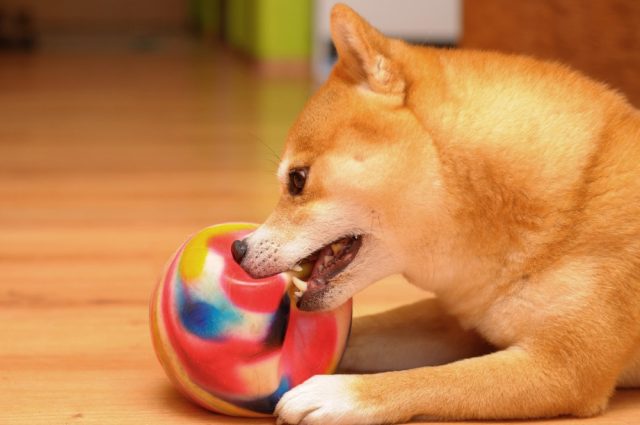
4. Dog Toys
Even toys designed specifically for dogs aren’t completely risk-free. Balls that are too small can become lodged in the throat, while damaged chew toys may break into sharp pieces that can be swallowed. Some toys have even been linked to dangerous suction injuries or become stuck around a dog’s jaw or tongue, cutting off circulation and requiring emergency veterinary care. Always choose toys that are appropriately sized for your dog’s breed and chewing style, inspect them regularly for damage, and replace worn toys before they become hazardous.
Related: 15 Made in USA Dog Toys
5. Batteries
Batteries are among the most dangerous household items a dog can swallow. Button batteries, in particular, can cause severe burns within hours because they generate an electrical current when they come into contact with saliva. Larger batteries may leak corrosive chemicals or become lodged in the digestive tract. Signs of battery ingestion include drooling, difficulty swallowing, vomiting, mouth pain, or refusal to eat. If you suspect your dog has chewed or swallowed a battery, seek emergency veterinary care immediately—do not wait for symptoms to appear.
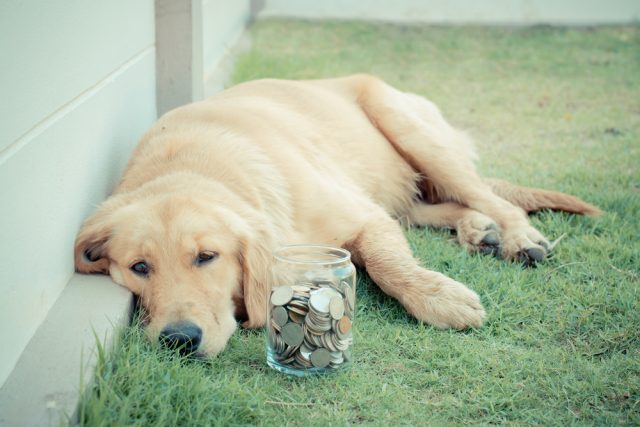
6. Coins
Coins may seem harmless, but they pose two serious risks. First, they can become lodged in the esophagus or intestines, causing choking or blockages. Second, many U.S. pennies minted after 1982 contain large amounts of zinc, which is highly toxic to dogs. Zinc poisoning can destroy red blood cells and lead to vomiting, weakness, pale gums, jaundice, kidney damage, and even death if left untreated. Any suspected coin ingestion warrants a prompt call to your veterinarian.
7.”Junk” Drawer Items
That catch-all drawer in the kitchen or office is often filled with hazards for curious dogs. Hair ties, rubber bands, string, buttons, sewing needles, thumbtacks, batteries, screws, beads, and other small objects are easily dropped and quickly swallowed. Some can puncture the digestive tract, while string-like objects may cause a dangerous condition called a linear foreign body, which can cut through the intestines as they move. Periodically getting down to your dog’s eye level is a great way to spot tempting objects you may have overlooked.
8. Wires
Electrical cords are especially tempting to puppies and young dogs because they’re easy to grab and chew. Biting into a live wire can result in severe burns to the mouth, electrocution, heart rhythm abnormalities, lung damage, or even sudden death. Loose cords can also become strangulation hazards if wrapped around a dog’s neck or legs. Use cord protectors, hide cables whenever possible, and unplug devices that aren’t in use.
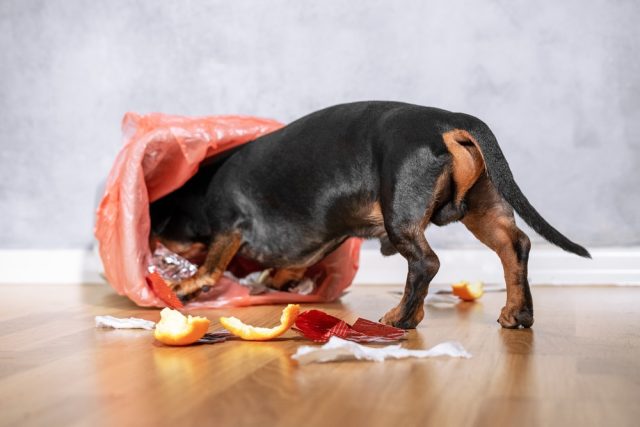
9. Garbage
Your trash can may contain dozens of hidden dangers for dogs. In addition to toxic foods like chocolate, grapes, onions, xylitol-containing products, and coffee grounds, garbage often contains moldy leftovers, greasy foods that can trigger pancreatitis, sharp bones, aluminum foil, skewers, medication packaging, and cleaning products. Even spoiled food can make your dog seriously ill. Use a dog-proof trash can with a locking lid or store garbage behind a closed cabinet or pantry door.
Related: 8 Best Dog-Proof Trash Cans
10. Bones
Despite popular belief, cooked bones are never a safe treat for dogs. Cooking makes bones brittle, causing them to splinter into sharp fragments that can puncture the mouth, throat, stomach, or intestines. They can also become lodged in the esophagus or create painful intestinal blockages. If you’d like to offer your dog a long-lasting chew, ask your veterinarian about safer alternatives that are appropriate for your dog’s size and chewing habits.
11. Rawhide Chews
Rawhide chews may last a long time, but they aren’t without risks. As dogs chew, large pieces can soften, swell, and be swallowed whole, creating choking hazards or intestinal blockages that may require surgery. Some rawhide products may also contain preservatives or chemical residues from the manufacturing process. If you choose to offer rawhide, supervise your dog closely and remove it once it becomes small enough to swallow.
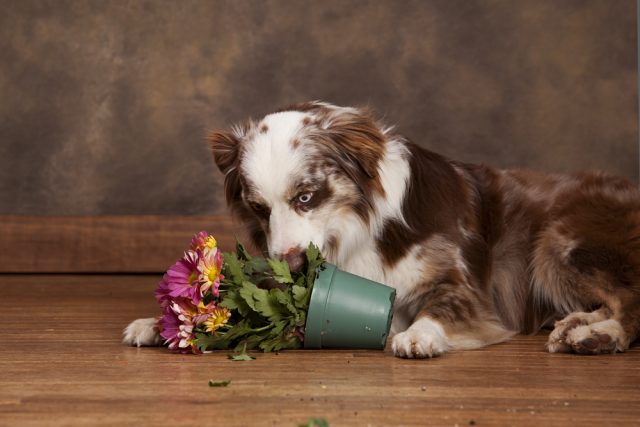
12. House Plants
Many popular houseplants are toxic to dogs, and some can cause life-threatening poisoning. Lilies, sago palms, dumb cane (Dieffenbachia), elephant ear, pothos, aloe vera, and many others can cause symptoms ranging from excessive drooling and vomiting to kidney failure, liver damage, heart abnormalities, or severe mouth irritation. Before bringing any new plant into your home, verify that it’s pet-safe. When in doubt, choose artificial plants or varieties known to be non-toxic to dogs.
13. Rocks & Sticks
Dogs, especially puppies, sometimes chew or swallow rocks, gravel, mulch, or sticks during play. Rocks can crack teeth or cause dangerous intestinal blockages, while sticks often splinter into sharp pieces that can puncture the mouth, throat, lungs, stomach, or intestines. Even seemingly harmless games of fetch with sticks can end in serious injuries. Rubber or durable synthetic fetch toys are much safer alternatives.
14. Containers
Empty peanut butter jars, chip bags, plastic food containers, yogurt cups, glass jars, and plastic bags can all become deadly traps. Dogs may stick their heads inside while trying to lick out leftovers and become trapped, leading to panic, overheating, or suffocation if no one is home. Chewed pieces of plastic or glass can also cause choking, cuts, or intestinal blockages. Always dispose of containers promptly or rinse and recycle them before your dog has a chance to investigate.
15. Over-the-Counter Medications & Supplements
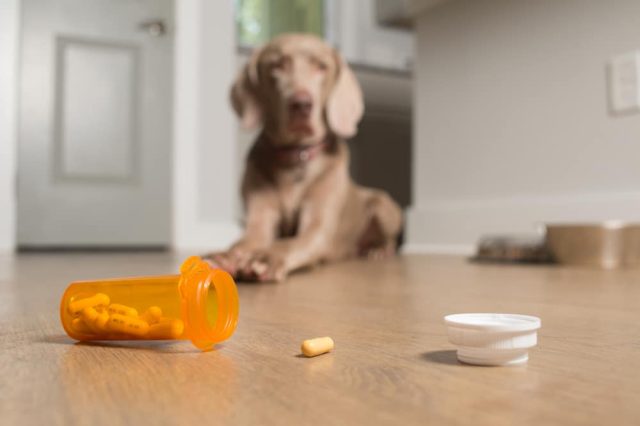
Many medications that are safe for people are extremely dangerous for dogs, even in small amounts. Pain relievers like ibuprofen, naproxen, and acetaminophen are among the most common causes of pet poisoning, but vitamins, iron supplements, sleep aids, cold medications, and herbal supplements can also cause severe illness. Never assume a supplement is safe simply because it’s “natural.” Keep all medications and supplements securely stored in cabinets that curious paws cannot access.
Related: Best Postbiotics for Dogs
16. Mothballs
Mothballs contain pesticides designed to kill insects, making them highly toxic to pets. Depending on the active ingredient, exposure can cause vomiting, tremors, seizures, difficulty breathing, damage to red blood cells, liver injury, or other serious complications. Even inhaling the fumes over time may be harmful. If a dog swallows even a single mothball, it should be treated as a medical emergency requiring immediate veterinary attention.
17. Pesticides
Products designed to kill pests can also pose serious risks to pets. While some household insecticides cause only mild stomach upset, rodenticides are among the most dangerous toxins a dog can encounter. Depending on the type, rat and mouse poisons can cause internal bleeding, kidney failure, brain swelling, seizures, or fatal heart complications. Fertilizers, slug bait, weed killers, and ant baits can also be harmful if ingested. Always follow label directions carefully, keep pets away from treated areas until they’re safe, and store all pesticides in secure, inaccessible locations.
A Few Simple Changes Can Save Your Dog’s Life
The good news is that most household accidents involving dogs are preventable. Storing dangerous items out of reach, choosing safer alternatives when possible, and supervising curious pups can dramatically reduce the risk of a life-threatening emergency.
Even the most careful pet parents can’t anticipate every situation, so if you ever suspect your dog has swallowed something dangerous or been exposed to a toxic substance, contact your veterinarian or an emergency animal hospital immediately. Acting quickly can make all the difference. By staying aware of these everyday hazards, you’ll help keep your best friend safe, healthy, and right where they belong—by your side.
 Toledo, United States.